CORPUS CHRISTI, Tx — In 2017, Corpus Christi leaders outlined a plan to concentrate the cost of a desalination plant on the city's largest industrial water users, so residents would not subsidize it. Nine years later, the plant has not been built, and voters will decide in November whether to end the fee those industries pay.
The drought surcharge exemption fee is 31 cents per 1,000 gallons. It allows industrial users to avoid drought surcharges if they are triggered. Those surcharges have never been levied by the city.
A document obtained by KRIS 6 News shows how the fee was first outlined.
The 2017 plan
On Oct. 25, 2017, then-Mayor Joe McComb emailed then-City Attorney Miles Risley a document titled "A Path to Non-Curtailment for Industrial Customers."
The document says the city's drought plan required industry to cut water use by 10 percent, with surcharges for companies that did not. Industries asked the city for relief. The document says a desalination plant could provide it.
It says desalinated water costs more than the city's other water, and the city did not want residential ratepayers to subsidize industry.
"The City seeks to concentrate the desalination cost on industries," the document says.
It lays out options, including a new rate class for industry with a possible choice to opt out. The money would go into a restricted account used only for drought-proof water supplies, such as desalination.
The 2018 vote
On Aug. 28, 2018, City Council considered an amendment to the drought contingency plan. Frank Brogan, a consultant to the city, presented it.
Customers using at least 100,000 gallons a day would pay an extra 25 cents per 1,000 gallons. Brogan said the money would be "reserved for construction of a drought-resistant water supply" and would not be used for operation and maintenance.
The fee would be charged unless a customer chose to opt out. Customers who opted out would face lower allocations in a drought and surcharges of up to 12 times the block rate.
A Flint Hills Resources representative spoke for the five largest industrial water users. "We appreciate the city being willing to provide us with an option where we can make an additional payment on our regular water bills," he said.
Councilman Greg Smith said the revenue would give the city that ability "without impact on our rates."
McComb called it "a giant step toward getting us an uninterruptible, non-curtailable source of water."
The ordinance passed. In 2024, council raised the fee from 25 cents to 31 cents per 1,000 gallons.
What happened to the desalination plant
In August 2020, council voted 6-3 to accept the first $11.4 million of a $222 million state loan for a 10-million-gallons-a-day desalination plant. City officials estimated the average ratepayer would eventually pay $1.82 to $3.12 more a month to help cover the plant's cost.
"It won't impact the rates for several years, and in many degrees, it will have a very minimal impact," McComb said at the time.
The plant size later grew to a proposed 30-million-gallons-a-day.
By August 2025, at 10 percent design, its estimated cost had climbed to $1.2 billion. In September 2025, council voted to end its contract with Kiewit.
Two months later, council approved an agreement with a new team, Corpus Christi Desal Partners. In February 2026, the new estimate was about $978 million, and council voted 5-3, with one abstention, to advance a contract.
On Sept. 1, 2026, a motion to approve a design contract failed. City Manager Peter Zanoni said the vote was not a "no" on the project. The project remains alive heading into the November council elections.
The drought test
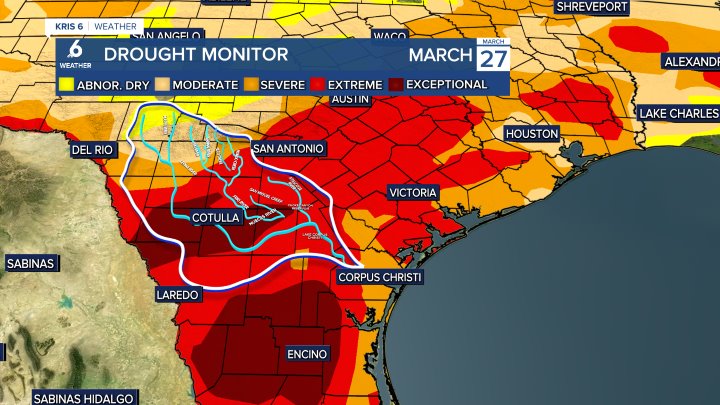
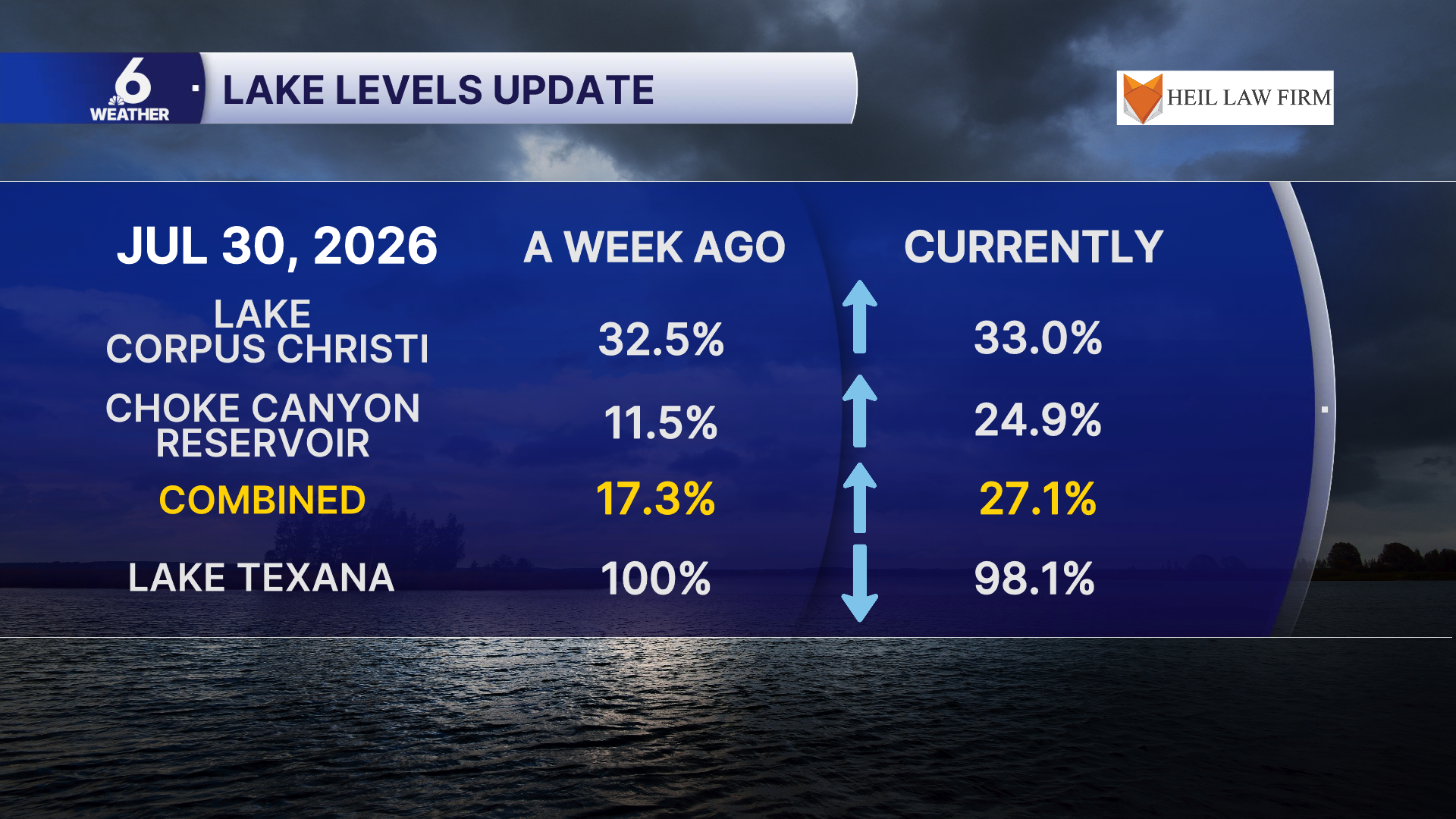
In May, combined storage at Choke Canyon and Lake Corpus Christi stood at 8.2 percent.
In late March, the city told council that users who paid the fee would not face surcharges during a Level 1 water emergency. District 5 Councilman Gil Hernandez said he believed the exemption applied only through Stage 3.
"So were we misinformed or misled the entire time?" Hernandez asked. "I can't answer that," Corpus Christi Water COO Nick Winkelmann replied.
The city also said state law allows it to cut water to any exempt industrial user that fails to reduce use during a water emergency.
In May, Zanoni reversed that position. He said the city would recommend that fee payers pay surcharges during a Level 1 emergency, regardless of any other fee they paid.
"A $500 fine is not going to do anything to a multi-billion dollar corporation," Zanoni said. "Surcharges, we think, would be a better tool to keep them within line."
On Aug. 11, council voted to place the Fair Water Amendment on the November ballot. The petition had 12,788 verified signatures.