CORPUS CHRISTI, Tx — KRIS 6 News is part of an initiative with ProPublica and The Texas Tribune to report on state and federal efforts to restrict local control.
The Corpus Christi region, in the midst of an ongoing water crisis, has experienced another setback: Design work has halted on a pipeline that’s supposed to deliver water to communities across the state because the tiny river authority that promised to develop the project hasn’t offered them a renewed contract, KRIS-6 has learned.
Two years ago, the Nueces River Authority, which has historically been responsible for managing river resources and facilitating regional water projects, pledged to develop a $6 billion to $7 billion seawater desalination plant and underground pipeline to carry the water to customers. Communities started paying fees up to $2.7 million to book future desalinated water. The agency collected $4.1 million in fees.
Construction on the project is still nowhere close to starting, the pipeline delay being the latest blow. The engineering firm hired to develop the pipeline, Lockwood, Andrews & Newnan, ran through its contract and is waiting on a new work order that has not come, company leaders confirmed.
Now, the NRA’s funding for the desalination project is months from running out.
"Conceivably, we're out of money at the end of August in desal," board member Dan Suckley said at the agency’s June 25 meeting.
NRA CFO Robin Murray did not dispute him. "If we don't receive these additional payments — yes," she confirmed.
NRA Executive Director John Byrum has pointed to a possible financial lifeline: federal money he has told public audiences is coming from President Trump, though no commitment has ever been made and the record of what was actually requested remains unclear.

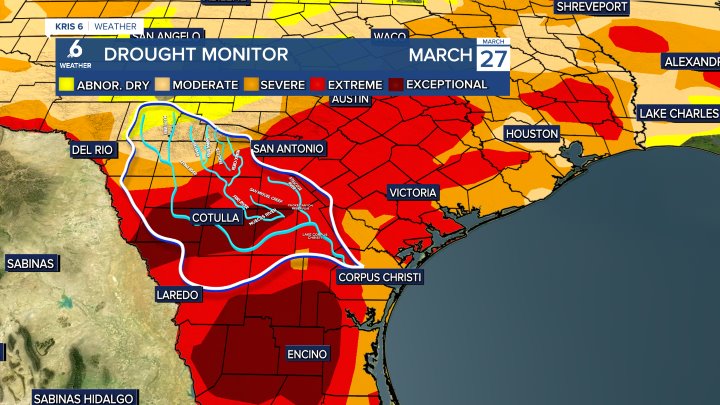
What happens to the NRA and its seawater desalination project could have huge consequences for the Corpus Christi region, which has been facing an unprecedented water supply crisis. This spring, the city of Corpus Christi announced that a persistent drought could trigger a Level 1 Water Emergency, in which the city reaches 180 days from the point at which total water supply can no longer meet total water demand.
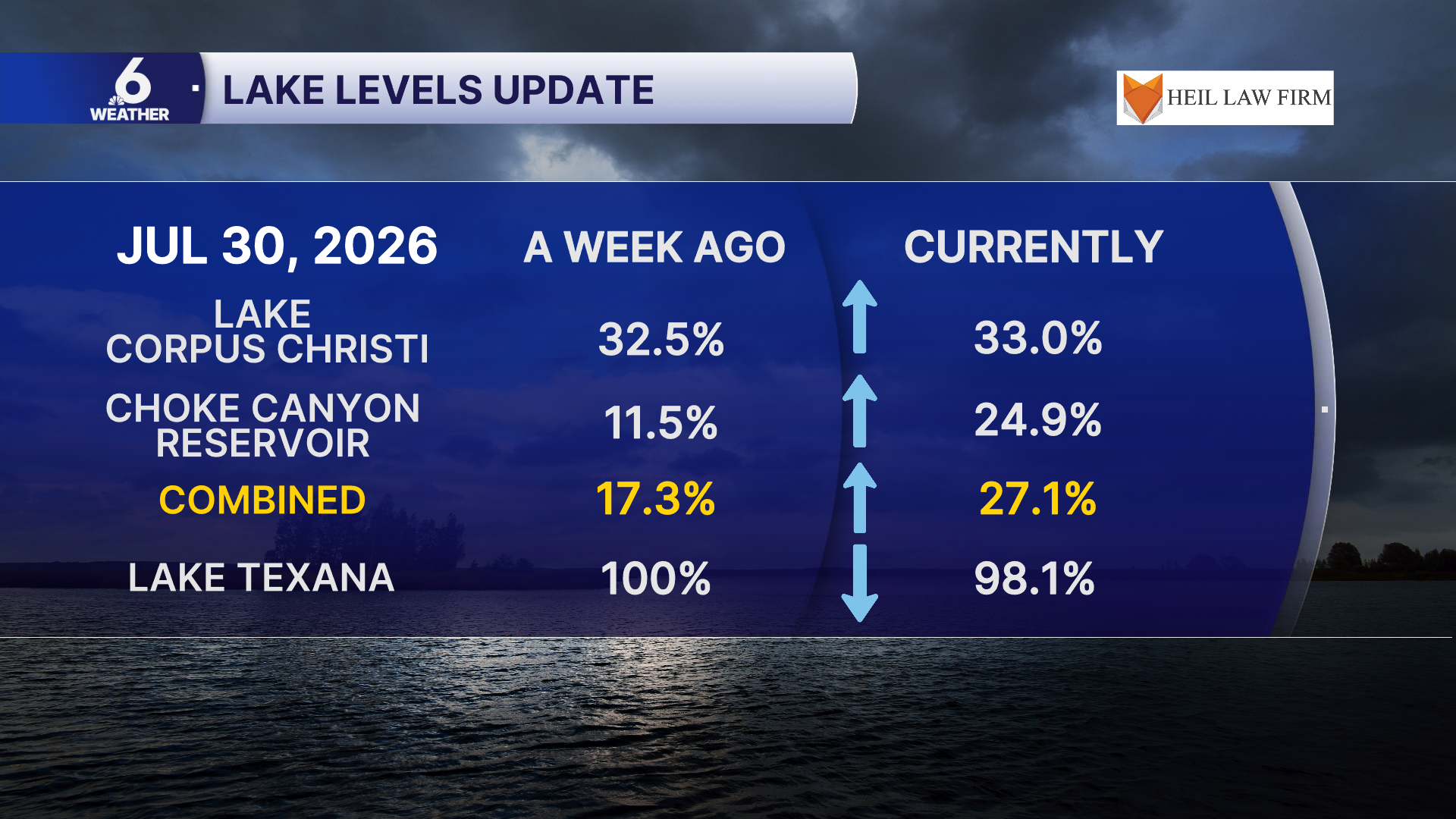
Although recent rains have refilled reservoirs, prompting Corpus Christi leaders to say the emergency has been delayed until September 2027, regional water planners project the area will need roughly double its current supply within a decade, a gap the NRA’s Harbor Island desalination project is meant to help address. But the NRA had never before taken on such a project. For years, the Port of Corpus Christi Authority had been laying the groundwork for a desalination facility on Harbor Island, securing permits, but it never intended to build or own the plant. In 2024, the river authority sent an unsolicited offer to the port, offering to find private companies to finance, design and operate it.
The NRA project is separate from the city’s plans for its own owned and operated desalination plant on Inner Harbor. The city’s project carries a nearly $979 million price tag and has had a turbulent path. A Corpus Christi City Council meeting that stretched past 2 a.m. in early June ended without a decision on whether to continue to design the project, with the vote on a $78.6 million design contract tabled until Sept. 1.
The NRA project will draw water from the Gulf of Mexico and pipe it up to 200 miles inland, serving cities, water districts, and industries across South and Central Texas. The agency has called it a generational investment. Eighteen municipalities and water supply corporations have paid non-refundable fees to reserve their place in line.
How the NRA pays its bills — and why that matters
Unlike most local government agencies in Texas, the NRA cannot levy a property tax and has no guaranteed funding from the state or federal government. The agency earns money the way a small business does — by charging for services. It operates water systems under contract for small cities across the state and collects fees for regional water planning work.
Five of these bread and butter contracts ended, and grants dried up. A utilities contract with McMullen County that had been providing steady monthly income ended because, Byrum said, the NRA didn’t have the expertise or manpower to handle the demands of the contract.
"We didn't do a very good job,” Byrum told the board last week. “I'm just gonna be honest with you."
Other NRA contracts disappeared, like one for more than $100,000 to do watershed education. The Texas Department of Agriculture froze a colonia planning and needs assessment grant at a loss of just over $150,000. The agency was also spending far more than it was taking in, according to emails and budget documents KRIS 6 news obtained and Murray’s own statements to the board last week.
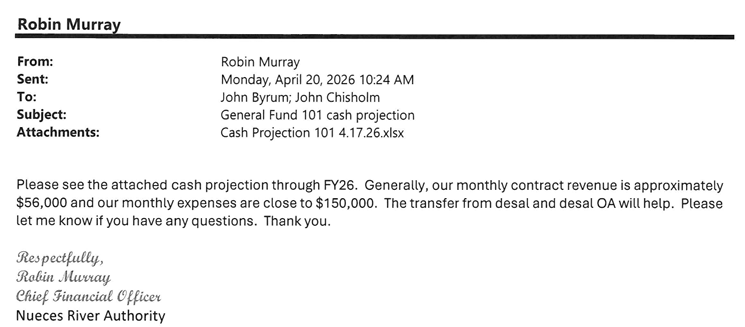
So the NRA turned to the one fund that still had money: fees that cities and water districts had paid for the promise of future water from the planned desalination plant. Most of Byrum's salary, for example, was shifted onto that fund, Murray told the board in May.
A financial transfer from the desalination fund was required just to keep the organization running, according to an email Murray sent to executive leadership in April that KRIS 6 obtained through an open records request.
The fees cities paid — and what they got
Starting in early 2025, the NRA began signing reservation contracts with cities and water districts across Texas, offering them a spot in line to buy water from the Harbor Island plant, once it was built.
Every customer agreed to the same critical condition: the fees are non-refundable and do not count toward any future water purchase. If the plant is never built, the money is not returned.
When a Kyle city council member asked in October 2025 how the NRA could be trusted to honor its commitments, then-Chief Operating Officer Travis Pruski offered a direct answer: "We're a subdivision of the state. We have full backing of the state of Texas to fund these types of projects."

However, the agency receives no guaranteed state or federal revenue. Recently, its application for a low-interest state loan from the Texas State Water Development Board was ranked low and the agency received no funding. Federal programs cited in NRA planning documents as potential sources of funding represented possibilities — not commitments.
Kyle Mayor Yvonne Flores-Cale, who took office in December in that central Texas community, said she warned the city council before the contract was signed.
"When I watched the gentleman (Pruski) from the Nueces River Authority stand up and speak to the council, it was literally like somebody, like a salesman,” Flores-Cale recalled. “He said, 'I know that (price) sounds really high, but the days of cheap water are over, and this is gonna be the cheapest water you can get.' To me, it was like, he's trying really hard to convince them." She said she will recommend that the city council not renew its fees with the NRA.
In an interview with KRIS 6 News, Pruski said he provided information in good faith, using official NRA materials he was directed to present by Byrum, the executive director, and that “the executive director’s own weekly updates to the board repeatedly referenced his meetings with the Governor’s office as validation of the project’s momentum and state support.”
Gov. Greg Abbott's office wrote in a statement to KRIS 6 News, “the ‘full backing’ statement was not from the Governor’s Office. The project is included in the State Water Plan and eligible for TWDB funding. The state has not provided any formal financial commitment.”
Second payments that may not come
The cities that paid reservation fees had no way of knowing that and now second payments are coming due.
With the exception of Corpus Christi, which paid a lump sum, all of the cities and water districts that paid reservation fees to NRA for access to the desalinated water must renew them annually.
By the NRA's June 25 board meeting, some of that money was arriving late or not at all. Three entities had been billed and had not paid. When a board member asked deputy director John Chisholm directly whether the money was coming, his answer offered little reassurance. "Possibly coming," he said of one. Of the other two: "I don't think we know."
KRIS 6 reached out to nine entities with desalination contracts expiring before Aug. 31. The Spring Hill Special Utility District, located in Seguin, said it will renew its contract. The contract for East Central Special Utility District, west of San Antonio, expired two months ago; the board has not decided whether to enter into a new agreement, said General Manager Brandon Rohan. He said they see the challenges with the project, but also see the challenges with water supply availability, adding they are scheduling a meeting with the NRA in July.
Three others declined to comment, writing that the renewal had not yet been presented to their boards. Another said it has not yet received an invoice. The remaining three did not respond to requests for comment.
Murray told the board the agency was on the same spending trajectory as the previous fiscal year, taking in far less than it was spending.
Board member Dr. Chasey Sanchez urged caution on making any decisions based on a budget banking revenue they might not have. "We don't know."
Earlier this spring, Pruski accused Byrum in a letter to the board of misleading board members about water sales figures and directing staff not to speak to them, according to an email obtained by KRIS 6 News. A board-commissioned investigation found no evidence of intentional wrongdoing.

But in the wake of those allegations, in May the board agreed to begin meeting monthly, though it is only required to meet once a quarter, and ordered Byrum to provide regular financial reports — basic oversight mechanisms that had not previously been in place.
At last week’s meeting, Suckley said he still had not received a full-year cash flow projection after waiting more than a year. What he got instead, at that meeting, was a three-month snapshot showing the agency could run out of desalination money by August.
"Anybody that's looking at these three months should have some real concerns about what transpires starting in September," Suckley said.
After the meeting, Byrum told KRIS 6 News he was not worried. If the desalination fund ran dry before new contracts came in, he said, the agency could borrow its way forward.
The 'big ask' that has not come
Bryum told a public audience in April that a $2.5 billion “big ask” had been made to President Trump and that a funding announcement for the NRA desalination project was weeks away.
Last week, after the board meeting, Byrum told KRIS 6 News the agency was still waiting. He said a White House meeting was now three to four weeks away and that some money was available this year, with the remainder coming over the following three to four years.
When KRIS 6 News contacted the White House and could not confirm any request had been made or received, Byrum told KRIS 6 News the NRA had not made the ask; it was the Port of Corpus Christi Authority that made the request when the president visited in February.

Port CEO Kent Britton told KRIS 6 News that is also not accurate. He said Port staff met with U.S. Secretary of Energy Chris Wright the night before the president spoke and not with Trump directly. “During the visit port staff discussed several infrastructure projects, critical to growth and economic development in the region, including water resources. But no formal requests were made at that time,” Britton said.
He said no official request has ever been made by the port for $2.5 billion tied to the NRA’s Harbor Island Project.
“There is no guarantee of any money amount from the federal government,” Britton said. “The port is advocating for all desalination solutions in the region.”
When pressed about his earlier public statements, Byrum said the NRA had made its needs known through trips to Washington and conversations with members of congressional appropriations committees. He could not confirm anything had been put in writing.
Corpus Christi City Manager Peter Zanoni said in a written statement to KRIS 6 News that he was not aware of the NRA's specific request but knew they’d sought help from the federal government.
Zanoni noted that Corpus Christi had pursued its own, separate $500 million request to President Trump, made through Congressman Michael Cloud, for the city's proposed Inner Harbor desalination facility. He wrote that the city has requested an earmark in the federal budget and as well as increased grant funding through existing federal programs.
On Tuesday, the Corpus Christi City Council voted 5-4 against pursuing a separate, federal grant worth up to $120 million for its desalination project.
In a written statement to KRIS 6 News, Byrum said the NRA is “working with State and Federal leadership and communicating the water needs of the South Texas area and my concern is not one of the project failing, but can it move forward quick enough to meet the water demands of a growing region.”
Flores-Cale, the mayor of Kyle, said Byrum’s claims of funding on the way is not enough assurance for a water customer like her city. "I find it extremely difficult to support spending $270,000, especially when our city isn't in such a huge deficit," she said, "on something that may or may not ever come to fruition."