

CORPUS CHRISTI, Tx — Editor's Note: This story has been updated to include a statement from the City of Corpus Christi following the publication of this story.
Corpus Christi is in a race against time to secure its water future, spending hundreds of millions of dollars through emergency procurement while waiting on state and federal help that City Manager Peter Zanoni says has yet to materialize in the form of actual funding.
At Tuesday's city council meeting, where the council approved more than $400 million in emergency water projects, Zanoni made a pointed statement about where the city stands financially in its effort to avoid a Level One water emergency.
"The federal government knows we need money and the state knows we need money, but guess what — no one is writing out any checks," Zanoni told the council. "So if they wanted to, they would have written them out by now. But we need to keep the pressure on. I know we went to D.C. to ask for funds for the two desalination plants and we continue to talk to our delegation. It is without any doubt that federal and state assistance is needed for this city. The ratepayer can't afford all of this, and our industry here supports the nation and the international community."
That statement came after City Councilman Eric Cantu shared concerns about how much money the city is spending without going through formal procurement processes and questions about whether declaring an emergency at a city or county level would increase options for state or federal funding.
KRIS 6 News reached out to the governor's office for a response to the city's water situation. Press Secretary Andrew Mahaleris this statement:
"Corpus Christi is an important economic driver not only for Texas but also the nation," he wrote. "The State of Texas has made significant investments into ensuring the Corpus Christi area has the water resources it needs to serve citizens and industry alike. This past session, Governor Abbott was proud to sign into law the largest investment in water in Texas history, providing $20 billion to tap into new water supplies and repair existing pipes to save billions of gallons of water each year. Governor Abbott will continue working with the legislature to ensure Texans have a safe, reliable water supply for the next fifty years."
The state budget committed $30 million for groundwater wells in the Corpus Christi area and $16 million to upgrade the Mary Rhodes Pipeline. The Texas Water Development Board has committed to funding the Inner Harbor desalination plant, and said the state has said it wants Corpus Christi to lead the way and build the state's first marine desalination plant as a long-term water source.
The City of Corpus Christi is aware of recent media coverage regarding comments made by the City Manager concerning state funding for our new water infrastructure. We wish to clarify that these remarks, shared during an extensive City Council deliberation on $408 million in new water supply projects, were intended solely to emphasize that while additional state and local funding are being pursued, there is a critical urgency for the city to authorize the local funding measures to pay for new water supply projects currently before the Council.
'The City of Corpus Christi remains deeply grateful for the $46 million grant investment provided in the budget and the $757 million in SWIFT loans from the State of Texas,” City Manager Peter Zanoni said. “This funding is vital to our mission of securing a sustainable water supply for more than 500,000 residents across the Coastal Bend. Our priority is to maintain and strengthen our productive relationships with both state and federal partners as we work together to ensure the long-term water security of our region.'
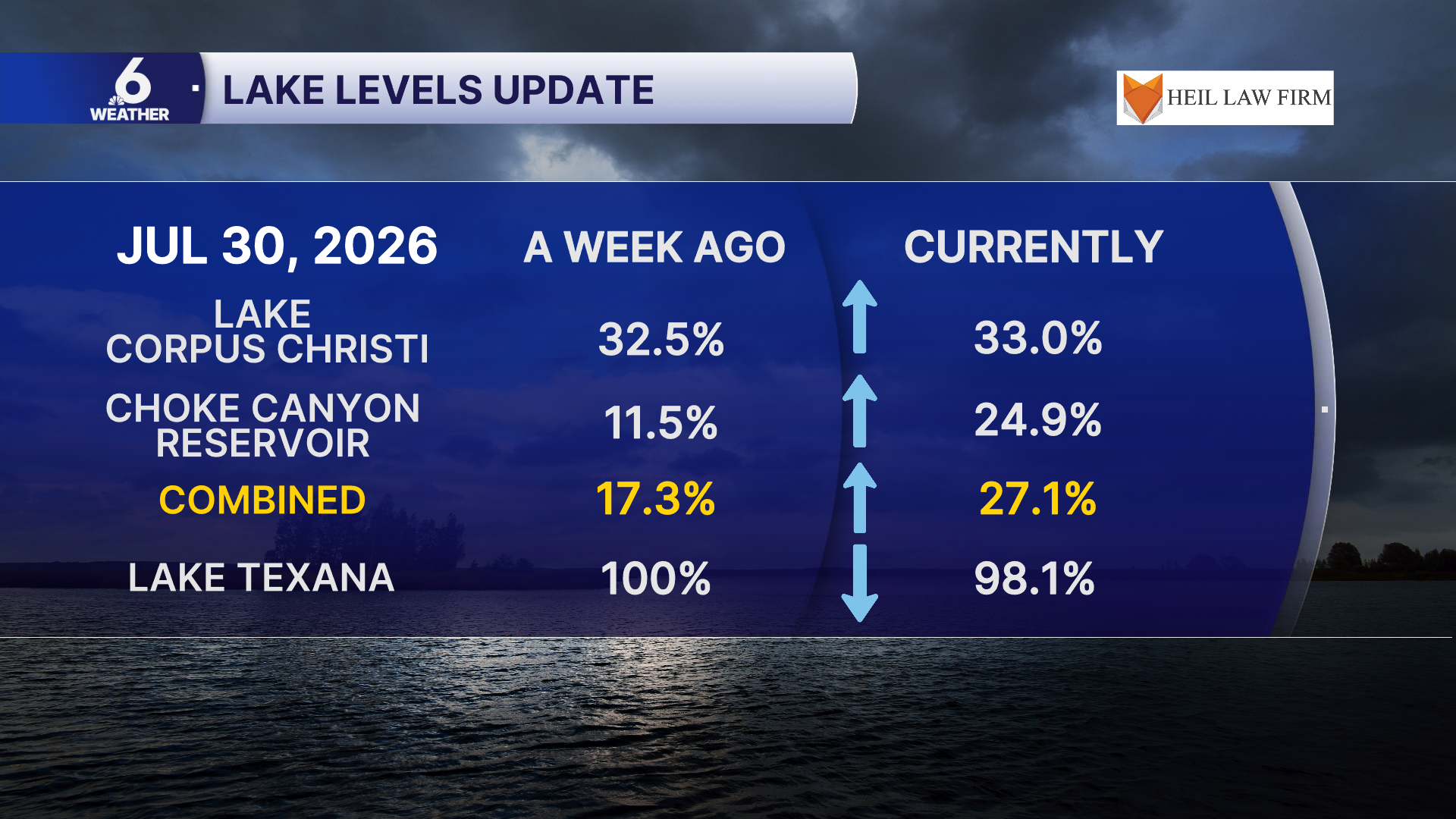
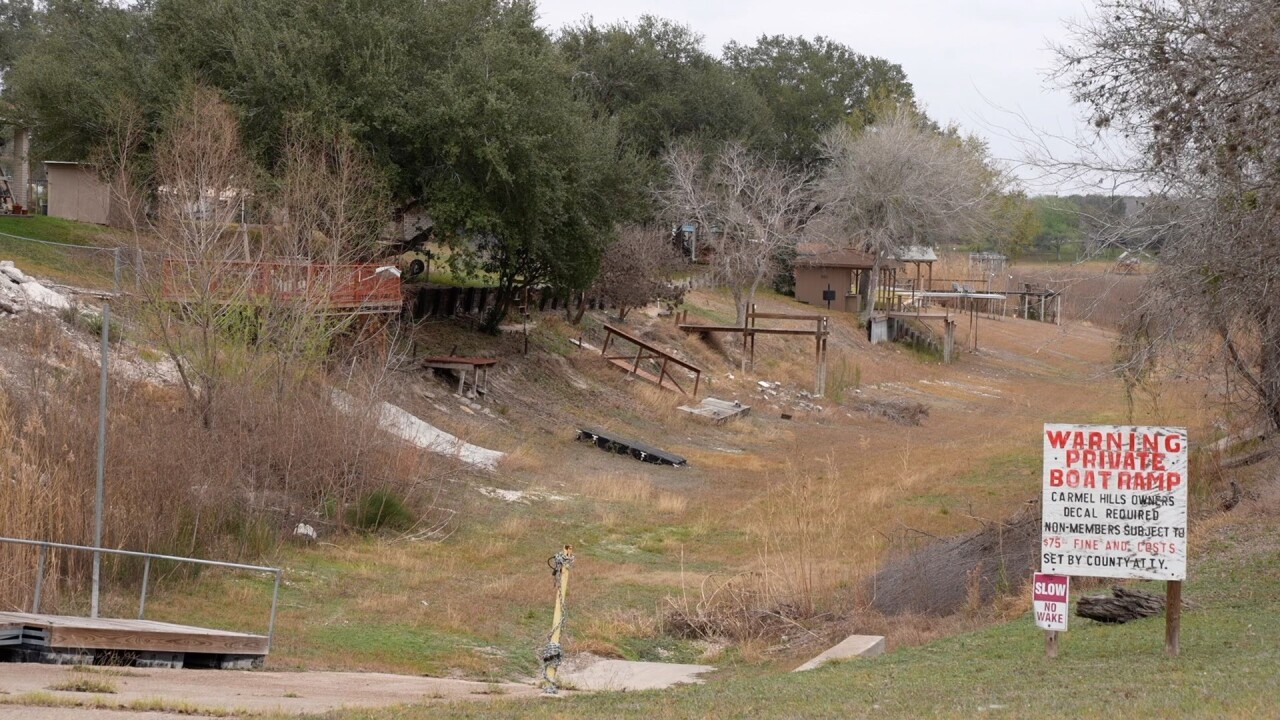
As KRIS 6 News has reported, Corpus Christi's western reservoirs — Lake Corpus Christi and Choke Canyon — have fallen to a combined 9.5% capacity with no signs of natural recovery. The city remains under Stage 3 drought restrictions. Officials have projected a Level One water emergency — which would require a mandatory 25% cut in water use for homes, businesses and industry — could arrive as early as November, and Zanoni told KRIS 6 News this week that timeline could move up.
Zanoni said the National Weather Service has warned that if drought conditions continue, the Nueces River itself could go dry. He also told the council that Lake Texana, one of the city's eastern water sources that currently supplies the majority of the city's water, is declining fast enough that regional curtailment from that supply could begin around mid-April.
"Choke Canyon, Lake Corpus Christi — those for decades have been the workhorse for water supply, but they are in dire condition today and they're not going to rebound with one storm or one hurricane," Zanoni told KRIS 6 News earlier this week. "Maybe a year ago we were expecting them to recharge, but at this point we're almost to the point where we're expecting them not to."
As KRIS 6 News has reported, Fitch Ratings has placed a "negative" outlook on the city's water and utility bonds, citing mounting debt and the uncertainty surrounding project timelines. Moody's has also flagged concerns, noting that the city's projected completion dates for water projects line up closely with when the city expects to reach an emergency — leaving little margin for permitting or construction delays.
On Tuesday, the council approved two major projects intended to add new water supply.
The first was a nearly $175 million brackish water desalination plant at the O.N. Stevens Water Treatment Plant, approved 8-1. The project involves a contract with FCC Aqualia USA Corp. of Katy, Texas, for a containerized reverse osmosis system, along with a 13-mile pipeline from the Western Well Field. Nick Winkelmann, interim chief operating officer of Corpus Christi Water, told the council the plant could deliver a first phase of treated water within 11 months, with full capacity of approximately 21.3 million gallons per day reached within two years.
The second was a unanimous vote to approve more than $213 million in contract amendments with Pape-Dawson Engineers and Garney Companies to advance the Evangeline Groundwater Project in San Patricio County — a plan to drill 22 new wells and build roughly 35 miles of pipeline connecting that water to the city's existing system.
Both projects were approved using the city's emergency procurement authority, which bypasses competitive bidding. The authorization stems from the Texas Governor's drought disaster declaration for the region. Zanoni told the council a traditional procurement process would take 10 to 12 months.
Several council members said publicly that bypassing that process — on contracts totaling hundreds of millions of dollars — was troubling, even given the urgency.
Council member Gil Hernandez questioned why Aqualia was selected without soliciting competing proposals. Zanoni acknowledged to the council that no company-to-company price comparison was conducted.
"I'm a little leery of the procurement process, but we're in a situation," Hernandez said.
Council member Eric Cantu said he was concerned the city was making decisions under pressure, it may later regret. "I just feel like this is a sales pitch," Cantu said of the Evangeline project discussion. "Spending $100 million in two weeks? That just blows my mind."
Cantu also said the council had been meeting since 10 a.m. and raised concerns about making decisions worth hundreds of millions of dollars after 9 p.m.
"This kind of stuff needs to be at the front of the agenda because this is the most important stuff that we're doing," Cantu said.
Chris Noe of Pape-Dawson Engineers told the council that to keep Evangeline on schedule to deliver water by November, the city would need to commit to purchasing approximately $100 million in materials — pipeline, well pumps and electrical equipment — in the near term. Noe clarified that committing to those purchases does not mean immediate payment, as payment on long-lead items is typically not due until materials arrive on site.
Zanoni defended the pace, telling the council that water supply equipment is in demand globally and that every day without a placed order represents lost time.
"Once tomorrow an order is not placed, you lose a day," Zanoni said. "Every day matters when you're trying to get equipment that there's international demand for."
As KRIS 6 News has reported, the City of Sinton and the St. Paul Water Supply Corporation have formally protested the drilling and transport permit applications tied to Evangeline, arguing that large-scale pumping from the Evangeline Aquifer could affect their own water supplies. A preliminary hearing before an administrative law judge is expected as soon as March 2, where a judge will determine whether the protesters have legal standing to continue contesting the permits. Zanoni told the council that if standing is granted, the Evangeline project could be delayed by one to two years.
Mayor Paulette Guajardo said the pending hearing shaped her concerns about the vote.
"My concern is taking on $197 million of debt capacity today on a project we don't know we can deliver," Guajardo said. "The ratepayer is going to be affected."
Zanoni told the mayor the city would not make major spending decisions without bringing them back to the council, and said orders could be halted and materials returned if circumstances change — with a restocking fee.
"But in our minds, that's better than running out of water," Zanoni said. "We won't have a ratepayer if we don't have any water."
Council member Mark Scott said he would support the contracts but flagged concerns about financial exposure if standing is granted.
"I am concerned that they get standing and it puts us in a negotiation bind," Scott said. "We're going to be $100 million in this and it will be difficult to exit. I hope I'm wrong, but I will vote yes."
Scott also told the council he was troubled by what he described as commitments made to the council last July about the permitting process for Evangeline. "Transfer permit — it's just a formality. Transfer permit is not an issue," Scott said. "I'm a little sensitive that I think we bought into this project based on a set of commitments that haven't been made."
Tuesday night, Corpus Christi's director of intergovernmental relations, Ryan Skrobarczyk, spoke during public comment at the Sinton City Council, asking the city to enter negotiations over the permit dispute.
"We're asking that you come to the table," Skrobarczyk said. "Let's have a direct conversation about what you need, about what you're concerned about — and hear your concerns so that we can address them without sacrificing the time, money, or our region's water security."
Sinton City Manager John Hobson said his city was open to dialogue. "We will be meeting tomorrow to discuss the initial agreement and what we need added to it," Hobson said. "I feel like by the end of this week, at the latest next week, I think we'll be able to sit down and have that conversation."
As KRIS 6 News has reported, Hobson has previously said Sinton's protests are not intended to deny Corpus Christi water. "We're doing the same thing the City of Corpus Christi is doing," Hobson told KRIS 6 News. "We're protecting the rights of our residents to have water."
Zanoni relayed to the council that Sinton's response was a positive sign, noting that if the city of Sinton and other protesters withdrew their protests before March 2, the San Patricio County Groundwater Conservation District could consider and potentially approve the permits without a hearing.
Zanoni told the council that a curtailment update is expected to come before the council in March. He said the city expects to know by Friday whether the March 2 administrative law judge hearing is officially confirmed — a decision that carries direct consequences for the Evangeline project timeline.
"We may have to pay a price for the risk if we lose," Zanoni said Tuesday. "But that's better, in my opinion, than not having any water come November."