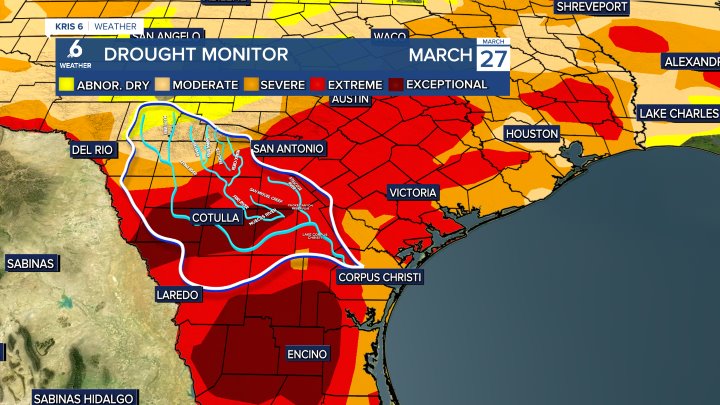
Corpus Christi Water secured a new groundwater permit and learned it will not face immediate curtailment from one of its last major water sources — two developments that provide some relief, but do not resolve the city's water crisis or the growing concerns of rural residents whose land and water sit in the middle of it.
The Texas Commission on Environmental Quality (TCEQ) granted the city a Temporary Water Use Permit — known as a Bed and Banks Permit — on March 18, according to a memo from Corpus Christi Water Chief Operating Officer Nicholas Winkelmann to City Manager Peter Zanoni.
The permit authorizes the city to discharge groundwater from its Western and ERF Well Fields into the Nueces River. Production is expected to begin Thursday at an initial rate of 5 MGD, with output increasing as additional wells come online. All production must comply with the Western Well Field Groundwater Monitoring Plan.
The permit is classified as temporary, effective March 18, 2026, and expires after three years or when the Governor's Drought Disaster Proclamation ends, whichever comes first.
The city's Eastern Well Field is currently limited by its groundwater management plan. The Eastern Well Field is running at an average of just over 4 MGD — less than half its permitted capacity of 10 MGD. Zanoni confirmed the reason is water quality: "Because of the management plan that we have for water quality on salt, on TDS, we're not able to put 10 million in, and we haven't been for the past couple of months."
The city has applied to TCEQ for an emergency order to unlock the remaining 6 MGD.
The city has previously said it intends to seek a waiver of a similar management plan for the Western Well Field. No such waiver has been granted. Until waivers are approved, management plan restrictions remain in effect and may limit total well production.
The city's well fields sit in rural Nueces County, and residents there say they are already measuring consequences — concerns that Wednesday's permit does not address.
During public comment at Tuesday's City Council meeting, Trey Cranford — who is working to establish Nueces County's first groundwater conservation district — challenged the city's production figures, saying the numbers have shifted repeatedly. "For months, this council and the public were told that the well field would produce 10 to 11 million gallons a day. Then it became eight. And now, with actual transparency, we're seeing it's closer to 2 to 3 million gallons per day. That's not a rounding error. That's a massive overstatement."
Cranford told the council that residents are taking matters into their own hands. "We have had significant financial support step up and we are now installing monitoring equipment in all directions around your Western and Ed Rachal (ERF) well fields. We will soon have real-time, cloud-based data that shows exactly what is happening in the aquifer. Any extreme drawdown or any water quality changes will be fully transparent and available to the public."
Lake Texana: No immediate cut
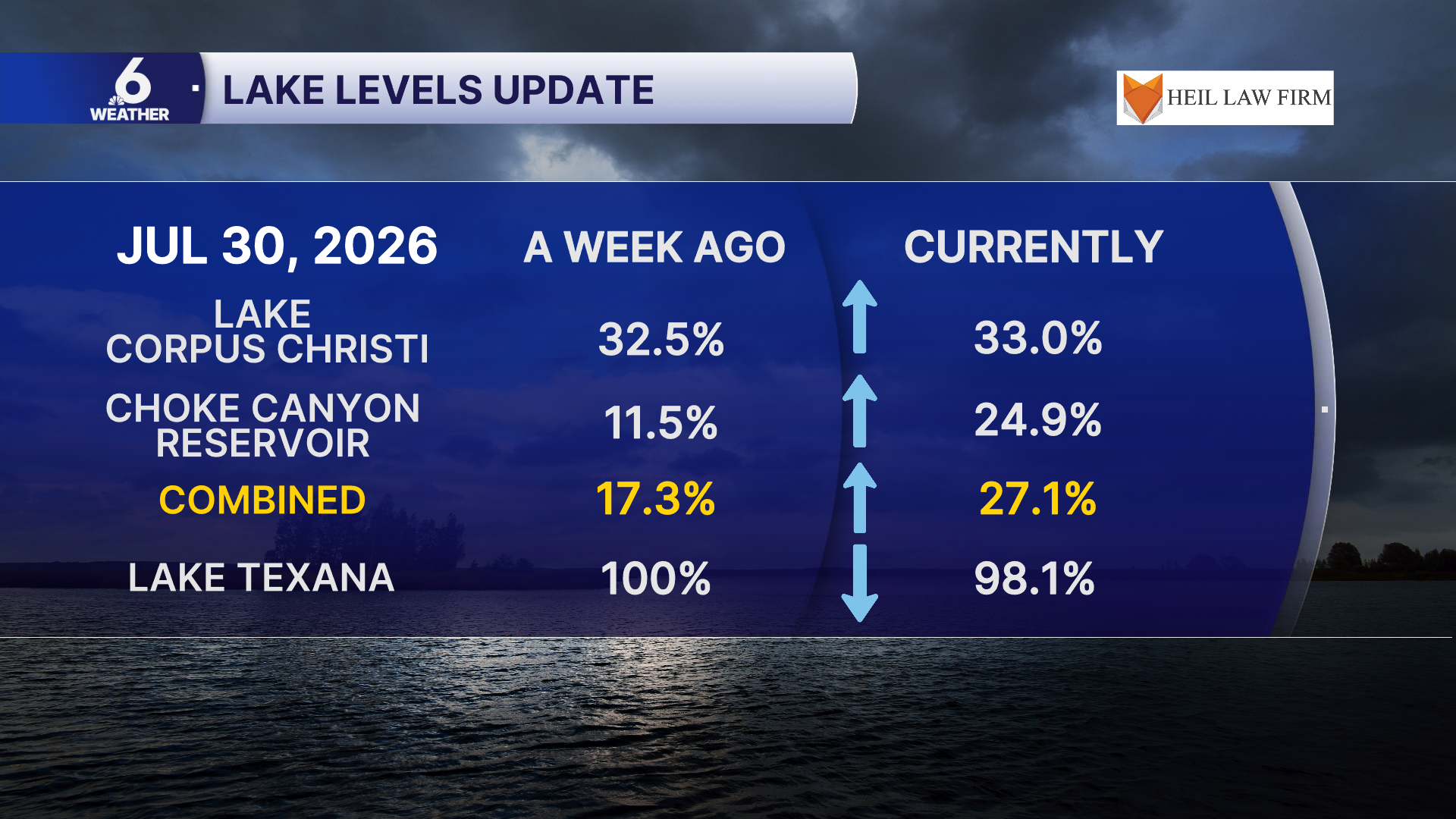
In a second memo, Winkelmann updated city leadership on the status of water deliveries from Lake Texana, which the Lavaca-Navidad River Authority manages and which currently sits at 56% capacity.
At its Monday board meeting, LNRA General Manager Patrick Brzozowski said his intention is to make no immediate reduction in the volume or schedule of water delivered to the city. That is significant because LNRA's drought contingency plan calls for a pro-rata reduction once the reservoir reaches 50% — a threshold the lake is approaching.
However, the reprieve is not complete. Winkelmann's memo notes that a calculated reduction could still be applied against the city's total contractual water allotment at year's end, even if deliveries are not physically cut in the near term. Brzozowski also told his board that the same type of actual curtailment would become necessary if Lake Texana falls below 40%.
The city's contract with LNRA covers 31,440 acre-feet annually, with an option for 12,000 additional acre-feet if made available — which has not happened in 2026. The city also purchased 10,000 acre-feet from Formosa Plastics for the calendar year. The Mary Rhodes Pipeline currently operates at 72 MGD — roughly 40 MGD from Lake Texana and 32 MGD from the Lower Colorado River.
Governor Abbott's role
Governor Greg Abbott waived regulations allowing TCEQ to issue temporary water permits on an expedited basis and directed LNRA to prevent curtailments to Corpus Christi's water supply. Abbott's press secretary said in a statement that Corpus Christi is "an important economic driver not only for Texas but also the nation" and that the state is "committing significant investments" to ensure the city has the water it needs.
"We are grateful to Governor Abbott and our legislative delegation for recognizing the urgency of this situation and swiftly working on behalf of the Coastal Bend region," Zanoni said.
Mayor Paulette Guajardo said, "We are acting with urgency on every front and will continue working closely with federal, state, and regional partners to increase Corpus Christi's water supply plan."
The broader picture
With Nueces River Basin Reservoirs at 8.4% combined capacity and no signs of recovery, groundwater wells are the centerpiece of Corpus Christi's near-term water strategy. The city must replace 50 MGD — and wells are expected to supply 40 of it. But each component of that plan has faced obstacles.