


LAKE CORPUS CHRISTI, Tx —
Residents of Lake Corpus Christi are sharing their perspectives with KRIS 6 News as levels in the lake continue to dwindle.
As KRIS 6 News has reported, Corpus Christi's western reservoirs — Lake Corpus Christi and Choke Canyon — have fallen to a combined 9.5% capacity with no signs of natural recovery.
Much of the region remains under Stage 3 drought restrictions and officials have projected a Level One water emergency — which would require a mandatory 25% cut in water use for homes, businesses and industry — could arrive as early as November.
However, Corpus Christi City Manager Peter Zanoni has told KRIS 6 News that deadline could arrive sooner.
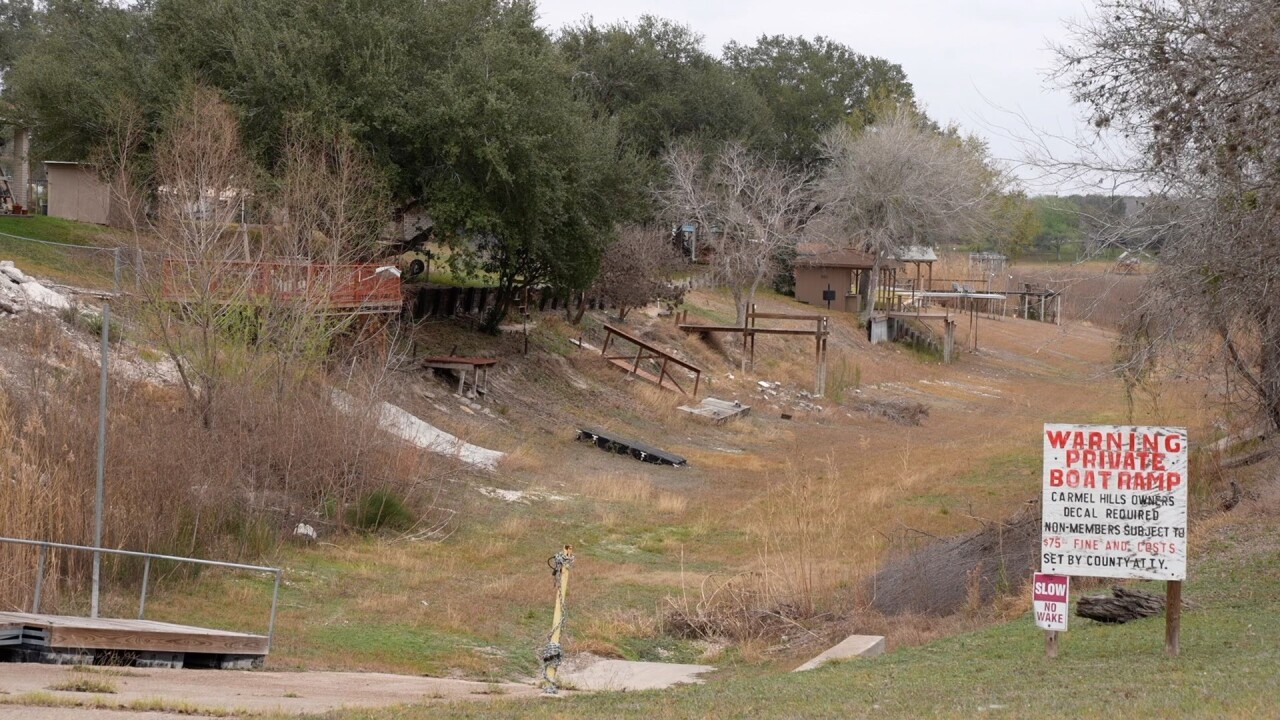
Glenwood Weber, a lifelong resident of the lake and owner of Weber's Boat Landing has never seen it so low. "It's devastating to people who have property and people who want to come up and experience the lake," Weber told KRIS 6 News. "It's a really tricky situation because our boat ramp is out of water."
Weber continued, "Most of the other public boat ramps around the lake are out of water, so you really can't back a boat in and launch it at this point. If your boat wasn't already on the water, you wouldn't be able to use your boat on the water."
For a year now, Tamara and William Kemp have had to keep their boat off the water. "It's just hard to watch it and see it," Tamara explained.
The couple also explained the frustrations of neighbors looking to sell their former lakefront properties. "The real estate here, nothing's selling," William told KRIS 6 News. "8 houses are going up for sale. We've known several of them been for sale for a couple of years and not selling."
William added, "They seem to be building new houses. If anybody comes in, they build a new one, they don't buy ones that are already for sale."

However, speaking with Weber, the Kemps, and Eli Medellin, all of them shared the sentiment of retaining their properties. "I'm not trying to sell," Medellin told KRIS 6 News. "I still think it's a beautiful lake. I get the sunrise coming up right over there every morning."
Another shared sentiment among these residents: The water will return.
"If we just hold out, the lake will be back and we won't be having conversations like this. It'll, it'll be about how many people want to make reservations at the cabins," Weber explained.
The Kemps say they pray for rain everyday.
"I'm just praying that it'll it'll come back," Medellin added. "I think it'll come back. I'm hopeful that it'll come back because I'd like to see it come back."
In regard to the region's outlook, Zanoni said the National Weather Service has warned that if drought conditions continue, the Nueces River itself could go dry. He also told the council that Lake Texana, one of the city's eastern water sources that currently supplies the majority of the city's water, is declining fast enough that regional curtailment from that supply could begin around mid-April.
"Choke Canyon, Lake Corpus Christi — those for decades have been the workhorse for water supply, but they are in dire condition today and they're not going to rebound with one storm or one hurricane," Zanoni told KRIS 6 News earlier this week. "Maybe a year ago we were expecting them to recharge, but at this point we're almost to the point where we're expecting them not to."
Last Tuesday, the Corpus Christi council approved two major projects intended to add new water supply.
The first was a nearly $175 million brackish water desalination plant at the O.N. Stevens Water Treatment Plant, approved 8-1. The project involves a contract with FCC Aqualia USA Corp. of Katy, Texas, for a containerized reverse osmosis system, along with a 13-mile pipeline from the Western Well Field. Nick Winkelmann, interim chief operating officer of Corpus Christi Water, told the council the plant could deliver a first phase of treated water within 11 months, with full capacity of approximately 21.3 million gallons per day reached within two years.
The second was a unanimous vote to approve more than $213 million in contract amendments with Pape-Dawson Engineers and Garney Companies to advance the Evangeline Groundwater Project in San Patricio County — a plan to drill 22 new wells and build roughly 35 miles of pipeline connecting that water to the city's existing system.
Both projects were approved using the city's emergency procurement authority, which bypasses competitive bidding. The authorization stems from the Texas Governor's drought disaster declaration for the region. Zanoni told the council a traditional procurement process would take 10 to 12 months.
For the latest local news updates, click here, or download the KRIS 6 News App.
Catch all the KRIS 6 News stories and more on our YouTube page. Subscribe today!
