



CORPUS CHRISTI, Texas —
The city’s Western Well Field began discharging water into the Nueces River this week, and a threatened cut from Lake Texana has been postponed. Two developments city officials said Friday are improving the region’s immediate water outlook even as they continue preparing for a possible Level 1 water emergency.
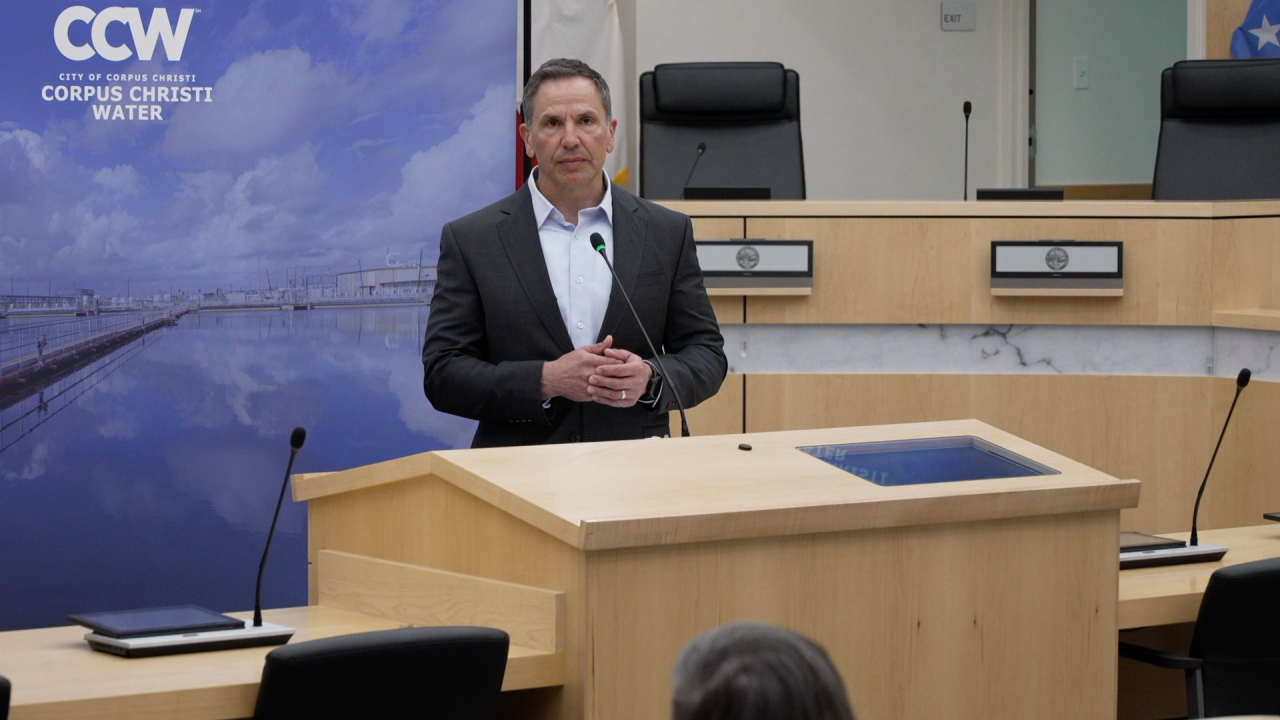
In the first of what will be weekly water briefings, City Manager Peter Zanoni told reporters the Texas Commission on Environmental Quality (TCEQ) on Wednesday awarded the city a bed and banks permit to discharge groundwater from the Western Well Field into the Nueces River.
As of Thursday, the well field was discharging about 5 million gallons per day, with four wells operational.
Production is expected to reach 13 million gallons per day by the end of April, 21 million by the end of May and the full 26 million by late June or mid-July, Zanoni said. The water is being discharged into the river as a temporary conveyance to the O.N. Stevens Water Treatment Plant while a 13-mile pipeline is designed.
The permit is temporary and expires in three years or when the governor’s drought disaster proclamation ends, whichever comes first.
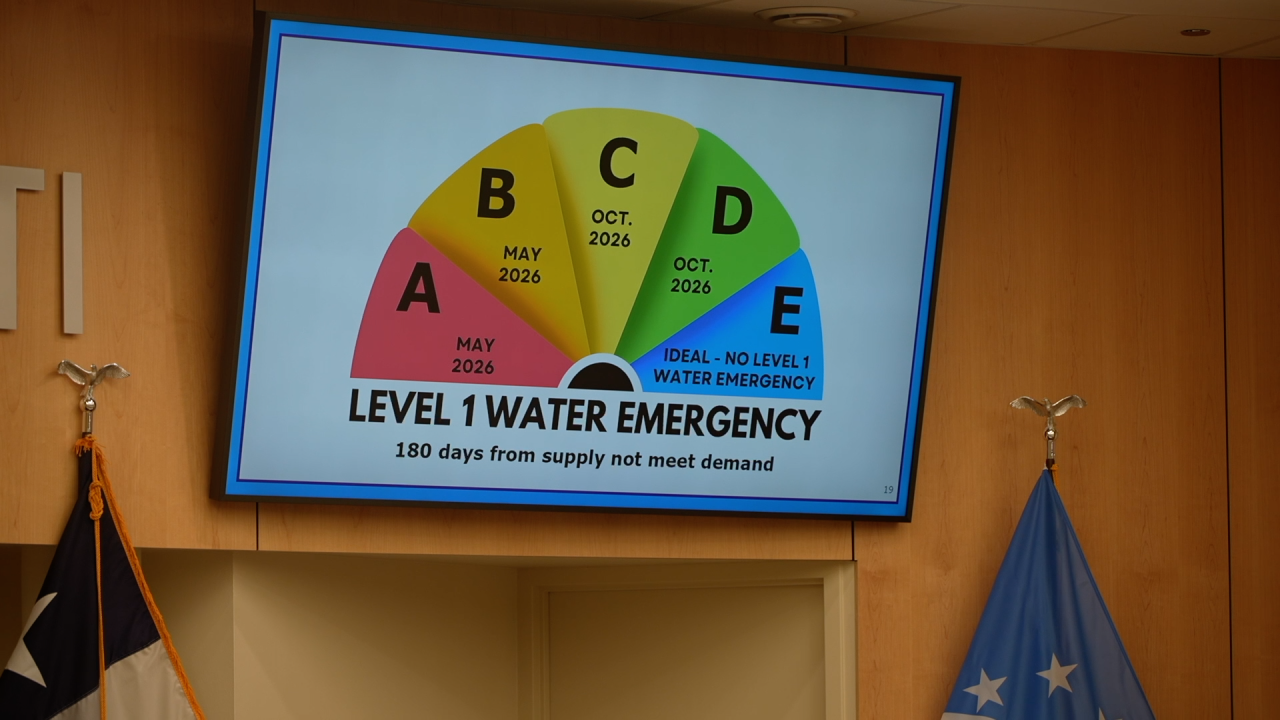
On Tuesday, CCW presented the City Council with five updated forecasting models for when a Level 1 water emergency could be declared, a point where supply is projected to be insufficient to meet demand within six months.
The models ranged from a worst-case scenario in May to a best-case scenario where no Level 1 emergency is called. Two models showed a declaration in May, two showed October and one showed none.
Zanoni said the water now coming online from the Western Well Field arrived about 30 days earlier than projected and will shift the models favorably.
He said two additional pieces of information will help determine which model the city ultimately uses to guide decisions: an adjustment to the water quality management plan for the Western Well Field and permits for the Evangeline groundwater project in San Patricio County.
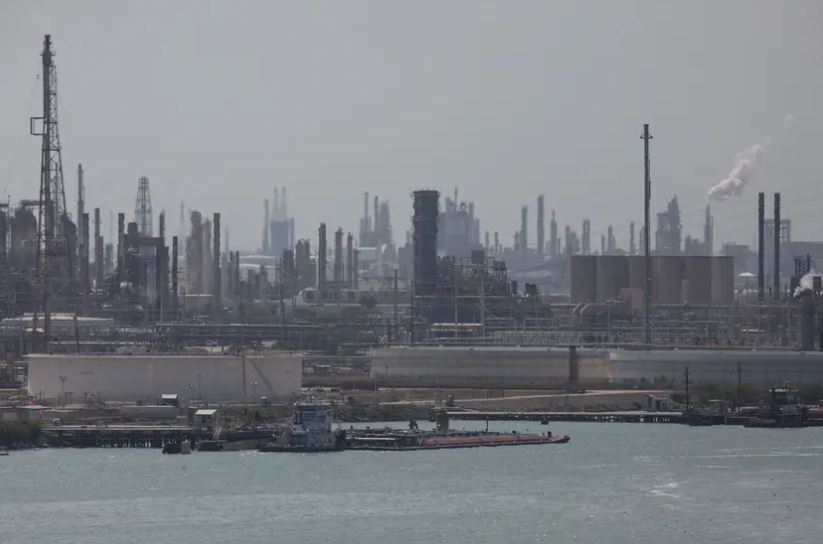
Zanoni clarified that if a Level 1 emergency is declared, curtailment, a mandatory percentage reduction in water use, would apply to all customer classes, including large industrial users.
He said about 10 large-volume customers participate in a voluntary insurance program established about eight years ago, paying an additional 31 cents per 1,000 gallons. That program exempts them from any future surcharge, but not from curtailment.
“Nobody is exempt from curtailment,” Zanoni said. “There’s no insurance program for curtailment.”
He said the city has no plans to physically shut off industrial customers, citing safety concerns, but will monitor usage closely through meter data.
Zanoni also said the city’s current drought contingency plan, approved by City Council, calls for all commercial car washes to close if a Level 1 emergency is declared. That policy, he said, will be part of upcoming discussions with council.
“If we declare a level one water emergency on that declaration, car washes, all commercial car washes, whether they use recycled water, whether it’s the old fashioned kind with the wand and the bay, whether it’s one at H-E-B or one at a gas station, all of them have to close down,” Zanoni said.
City Council will hold workshops on Level 1 emergency policies on April 8 and April 28, Zanoni said.
When asked what would prevent the city from entering a similar crisis in the future, Zanoni said the city is fundamentally changing its water system to add redundancy and resiliency.
“The water system that we have here in Corpus Christi, we’re changing for the better, and we’re changing it for generations to come,” he said. “We should not be in this position at all. We’re in it and we’re going to get out of it, and we’re not going to be in it again based on the work that we’re doing.”

Zanoni said the city is adding 76 million gallons per day of new water supply through projects including groundwater wells and desalination, and that unlike in past droughts, these projects are designed to be permanent.
“What has happened in the past in this city is that when these projects were brought on to get us past the drought, they were then taken offline,” he said. “They were either forgotten. They canceled leases, they stopped paying royalty rights on rancher’s property where wells were. And they went away and the reservoirs were full and everybody thought everything was great. And it’s not. And that’s why we’re here today.”
For the latest local news updates, click here, or download the KRIS 6 News App.
Catch all the KRIS 6 News stories and more on our YouTube page. Subscribe today!
