CORPUS CHRISTI, Tx — Editor's note: This story has been updated to include a response from the City of Corpus Christi.
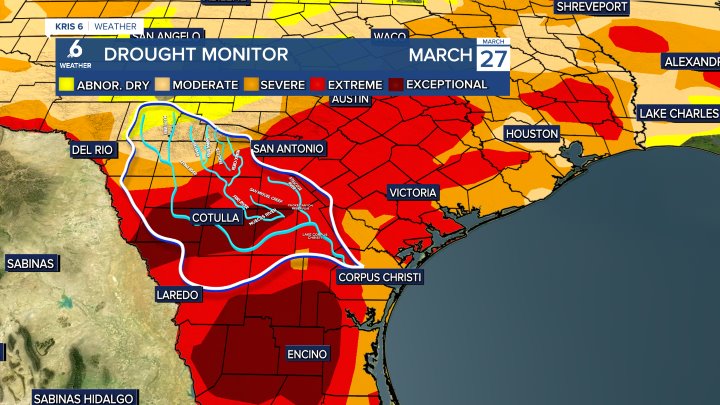
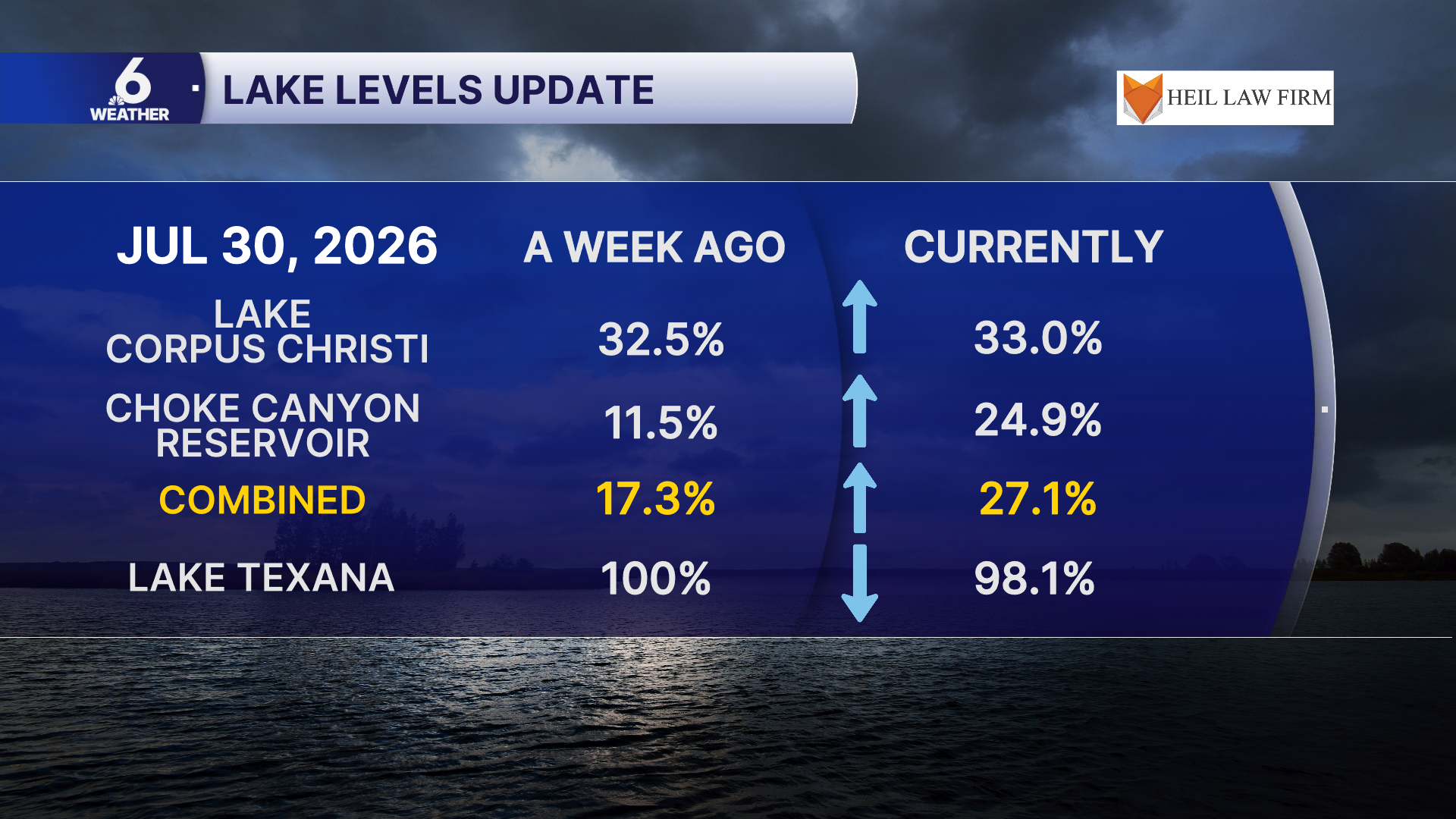
State Rep. Denise Villalobos (R-House District 34) is working on multiple pieces of legislation aimed at overhauling how Texas manages water — but she acknowledged Wednesday that none of it will come in time to resolve Corpus Christi's current crisis.
Her comments came one day after Gov. Greg Abbott publicly blasted city leadership over the ongoing water situation. Abbott warned that the state could "take over and micromanage" the city if local leaders fail to act, saying he was fully committed to ensuring residents have the water they need.
Villalobos described Abbott's statement as reflecting the structural friction between local and state government. She said the city council can pivot quickly on decisions, while state government moves far more slowly — and that mismatch is driving frustration at the state level.
A state role in water infrastructure
The centerpiece of Villalobos' proposals would create a more regionalized, state-managed water infrastructure — similar in concept to the state highway system. Under the model she described, state-owned water systems would secure a combination of surface water, groundwater and desalinated seawater, then sell it to municipal governments by contract for distribution to customers.
"There's so many different water entities and no one is actually taking the lead," Villalobos told KRIS 6 News, citing the layered web of Corpus Christi Water, Violet Water Supply Corporation, San Patricio Municipal Water District, Nueces County Water Control Improvement District #3, and others, all operating without a clear regional coordinator.
The current state water plan, she said, is built from the bottom up — local entities compile their projects into a regional plan, submit it to the Texas Water Development Board, and compete for funding. The problem, she said, is that no single authority exists to set binding priorities or timelines tied to the state's economic growth.
"There needs to be someone that says, nope, A, B, C, D absolutely needs to happen within the next 10 years or we won't be on track for whatever this future Texas economy looks like," Villalobos said. "And that does not exist today."

Her proposed solution draws on existing models. She compared the concept to the Texas Department of Transportation (TxDOT) — a state-level entity that manages infrastructure across jurisdictions — and said a similar framework is needed for water. She also pointed to discussions about state-owned desalination facilities up and down the Texas coast that could serve smaller municipalities, with spur lines connecting to water entities as needed.
She said the idea has similarities to proposals pushed last session by Sen. Charles Perry, who advocated for state-owned pipelines to move water from north to south and east to west across Texas.
A key feature of the proposal, Villalobos said, is insulating long-term water planning from short-term political decisions. She said a state-level water framework needs to be structured so that a single election cannot undo a regional water plan overnight.
She was also careful to draw a boundary on the proposal's reach. The state, she said, should sell water only to other governmental entities — not directly to private industry — in order to preserve the local control structures that currently allow cities to manage economic development decisions, including decisions about where industry can locate within their jurisdictions.
Protecting bond ratings
A second legislative priority stems directly from the Abbott administration. Villalobos said the governor's office asked her office to examine how the state can protect itself when a city's decisions damage its own bond rating and create negative ripple effects statewide.
In December, Moody's Ratings downgraded the City of Corpus Christi's credit rating, citing the city's urgent need to secure more water and the narrow window in which to do so.
Villalobos said the concern goes beyond Corpus Christi — that a single city's financial decisions should not be able to drag down the bond ratings of surrounding regions or the state itself. She said legislation is needed to create some form of protection against that exposure.

Water governance reform
Villalobos also said she is exploring ways to insulate water governance from the two-year election cycle that can abruptly shift city council priorities. She pointed to El Paso's appointed board overseeing its brackish desalination plant — a joint venture with the Army — as a model for the kind of stability the Coastal Bend needs.
"That's consistency. That's stabilization. That's something that's not able — or has the potential — to flip every two years," she said.
She also said she is looking at monitoring requirements when a municipality's water source is altered, and revising curtailment rules she described as inadequate — particularly the current reliance on surcharges to manage industrial water use.
On the question of large industrial water users, Villalobos said she is also looking at whether the state can provide incentives for high-volume users to develop their own water supplies and reduce their dependence on municipal systems.
The City has not been presented with any legislative proposals under development from Representative Villalobos, but we look forward to collaborating with her and our entire legislative delegation on water security for our region.
A state legislative hearing is coming
As a member of the House Natural Resources Committee, Villalobos said an interim hearing on Coastal Bend water is expected in late April or early May in Austin. The hearing is intended to lay out the full scope of the region's water situation for legislators from across the state who are not familiar with it, and to begin generating ideas for the 2027 legislative session.
Villalobos was direct about the limits of the legislative process. Bills cannot be formally submitted until mid-November, and cannot be heard until March 2027. Everything currently underway is in the idea and drafting phase.
"Legislation that we can create in 2027 does not fix our water crisis that's happening right now in 2026," she said.
As for what state intervention could look like in the near term, she said her office is still researching the scope of emergency authority — including what permitting shortcuts and emergency funding could be unlocked if the state were to step in.
She also said the Texas legislative delegation plans to travel to Washington, D.C., next week, and that she intends to schedule as many meetings as possible focused on water funding for the region. She said U.S. Rep. Michael Cloud has followed up with the Trump administration on requests for federal assistance, though she said she does not know the status of those conversations.