


KINGSVILLE, Texas —
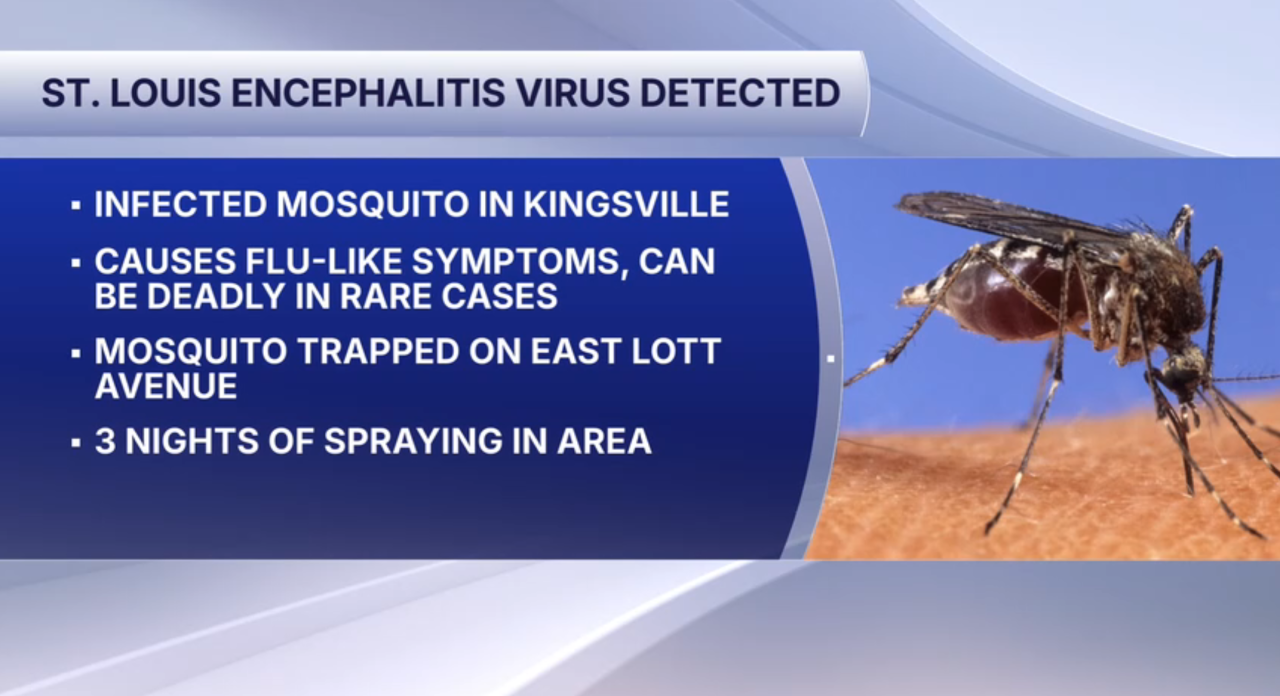
The City of Kingsville Health Department is taking immediate action after a mosquito pool trapped Tuesday, Aug. 4, 2026, tested positive for St. Louis Encephalitis Virus. The infected mosquitoes were found in the 700 block of E. Lott Avenue.
Beginning Friday, Aug. 7, and continuing through Sunday, Aug. 9, city crews will conduct aerial spraying operations within a one-mile radius of the affected area for three consecutive nights. The targeted approach aims to reduce the mosquito population and minimize the risk of virus transmission to residents.
"We are working closely with Region 11 to ensure our response effectively reduces the threat of St. Louis Encephalitis Virus transmission," Emilio Garcia, Kingsville City Health Director, said.
Following the completion of spraying operations, crews will return to trap mosquitoes in the treated areas for retesting to monitor the effectiveness of the intervention.
No human St. Louis Encephalitis infections have been identified in the Kingsville region.
What is St. Louis Encephalitis Virus?
St. Louis Encephalitis Virus, or SLEV, is a mosquito-borne illness that belongs to the same family of viruses as West Nile virus. According to the Centers for Disease Control and Prevention, most people infected with SLEV experience no symptoms. However, the virus can cause serious health complications in some cases.
When symptoms do occur, they typically appear 4 to 14 days after being bitten by an infected mosquito. Mild symptoms include fever, headache, nausea and vomiting, fatigue and body aches, and flu-like illness.
In rare cases, severe symptoms can include stiff neck, confusion and disorientation, dizziness and tremors, inflammation of the brain, and inflammation of the membranes around the brain and spinal cord. In severe cases, SLEV can cause central nervous system damage and death. Among patients diagnosed with St. Louis encephalitis, 5 to 20% may die from the infection.
SLEV spreads through the bite of infected mosquitoes, primarily those in the Culex genus. Mosquitoes become infected when they feed on infected wild birds. Once infected, people and other mammals are considered "dead-end hosts," meaning they cannot pass the virus on to other mosquitoes that bite them.
No vaccines or specific medicines are available to prevent or treat the virus.
How to protect yourself
The Kingsville Health Department urges residents to take the following steps to prevent mosquito bites:
- Avoid outdoor activities at dawn and dusk when mosquitoes are most active
- Wear long pants and long sleeves during outdoor activities
- Use mosquito repellent containing DEET on exposed skin
- Install screens on windows and use mosquito nets over beds when indoors
- Eliminate standing water around homes and businesses where mosquitoes breed
- Empty and clean buckets, tires, and bird feeders regularly
- Maintain lawns and landscaping to reduce mosquito breeding areas
- Check for water accumulation in gutters, flower pots, and other containers
The health department emphasizes that mosquito bite prevention should be practiced not only at home but also when visiting neighboring communities. These precautions are especially important during the warmer months, typically June through October, when mosquito activity peaks.
"This is a community-wide effort," Garcia said. "Every resident can play a role in reducing mosquito breeding sites and protecting themselves and their families."
Residents experiencing symptoms such as fever, headache, or flu-like illness after potential mosquito exposure should consult a healthcare provider for evaluation and care.
For updates on the St. Louis Encephalitis Virus response, residents can follow the official City of Kingsville Facebook page.
For the latest local news updates, click here, or download the KRIS 6 News App.
Catch all the KRIS 6 News stories and more on our YouTube page. Subscribe today!
