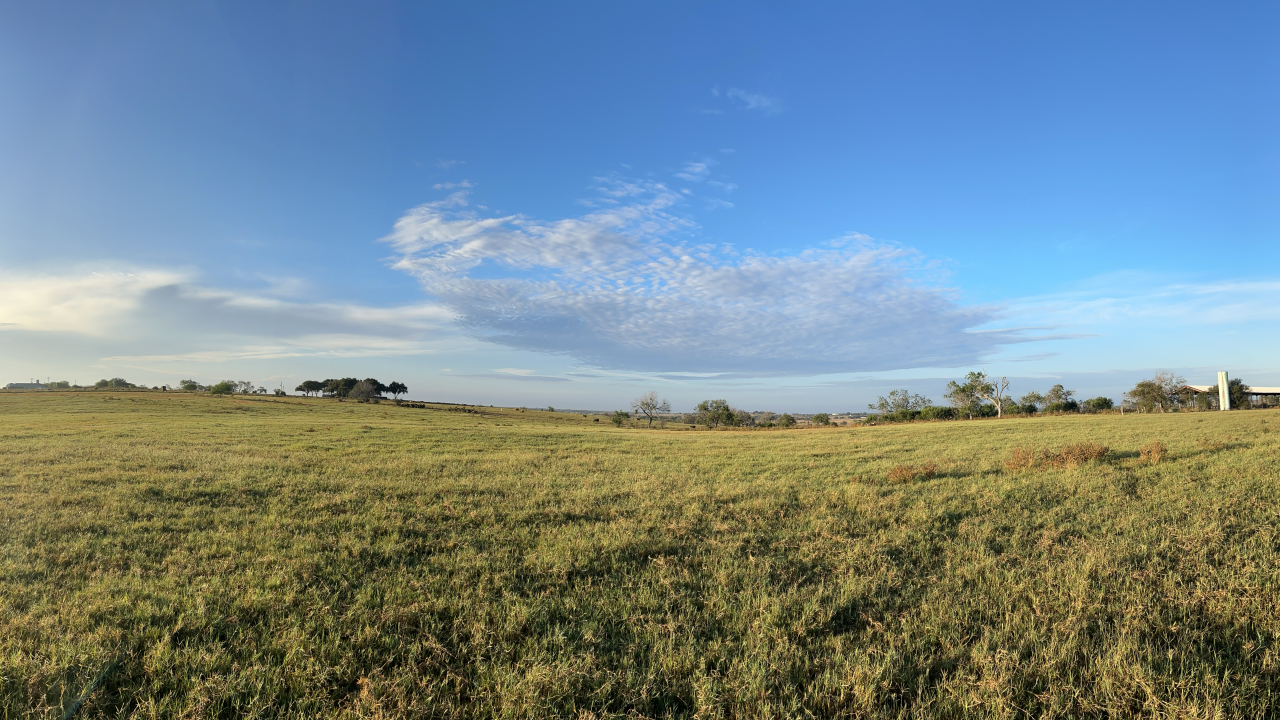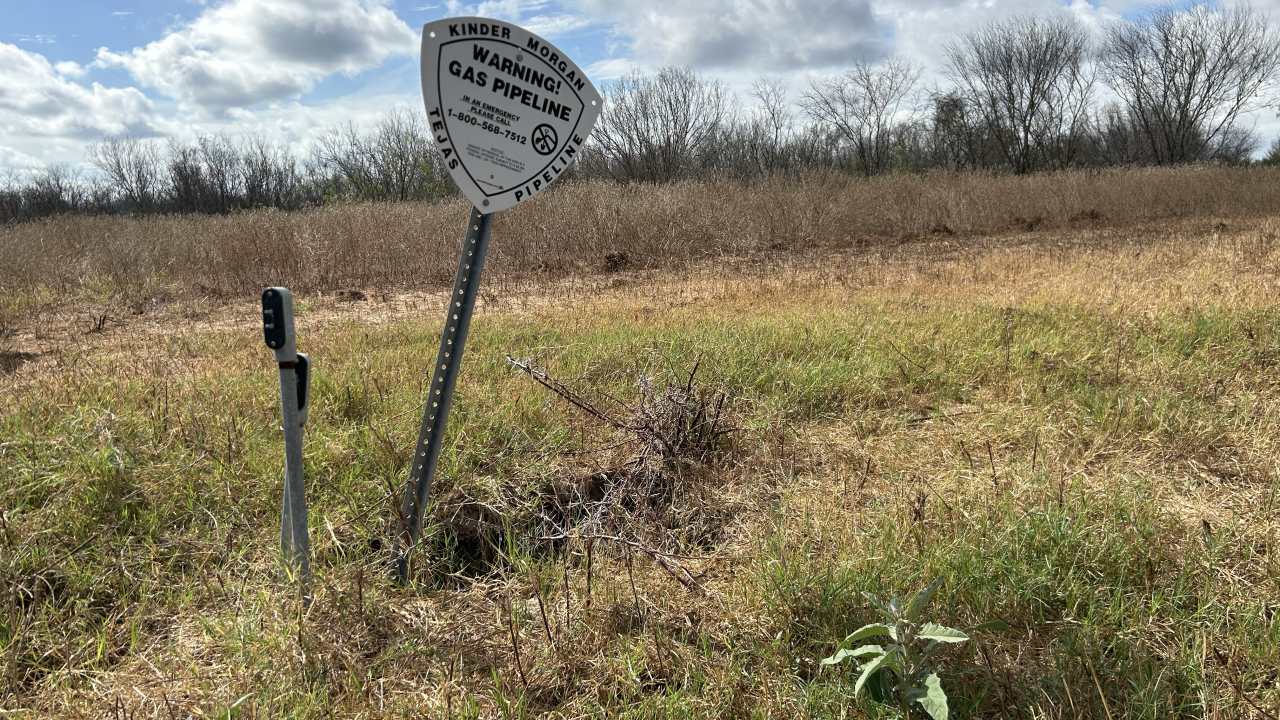


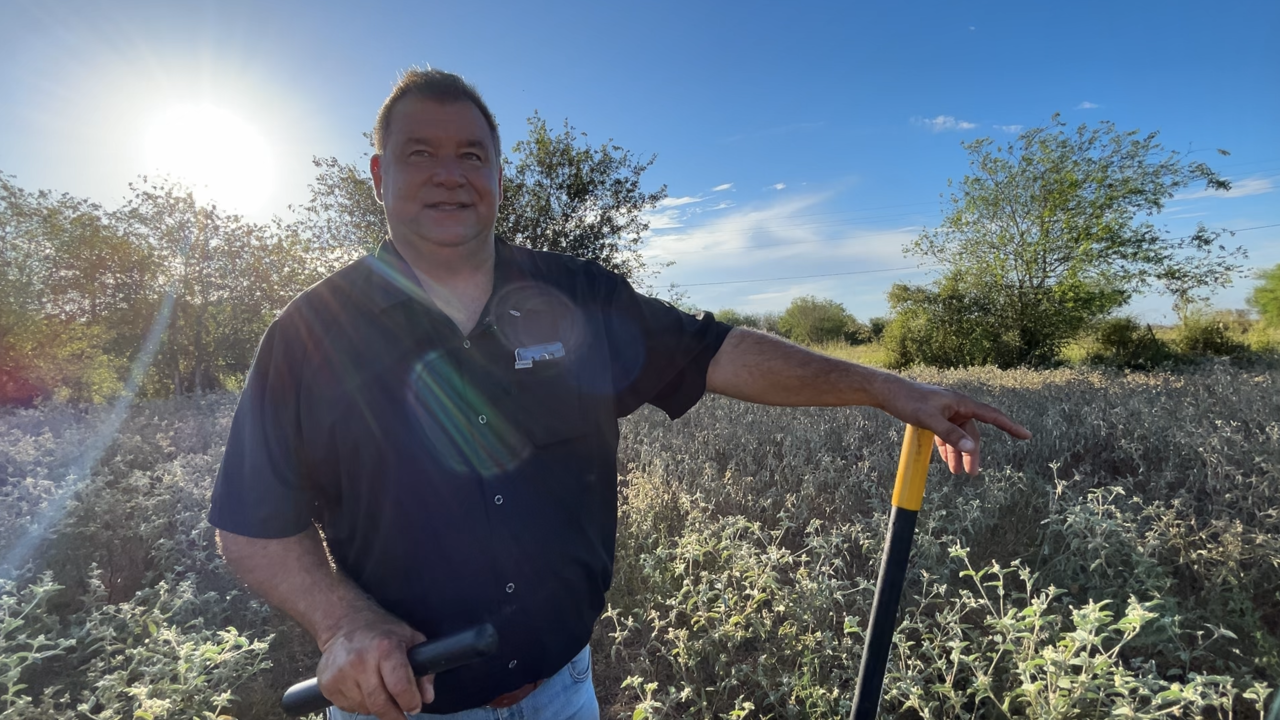
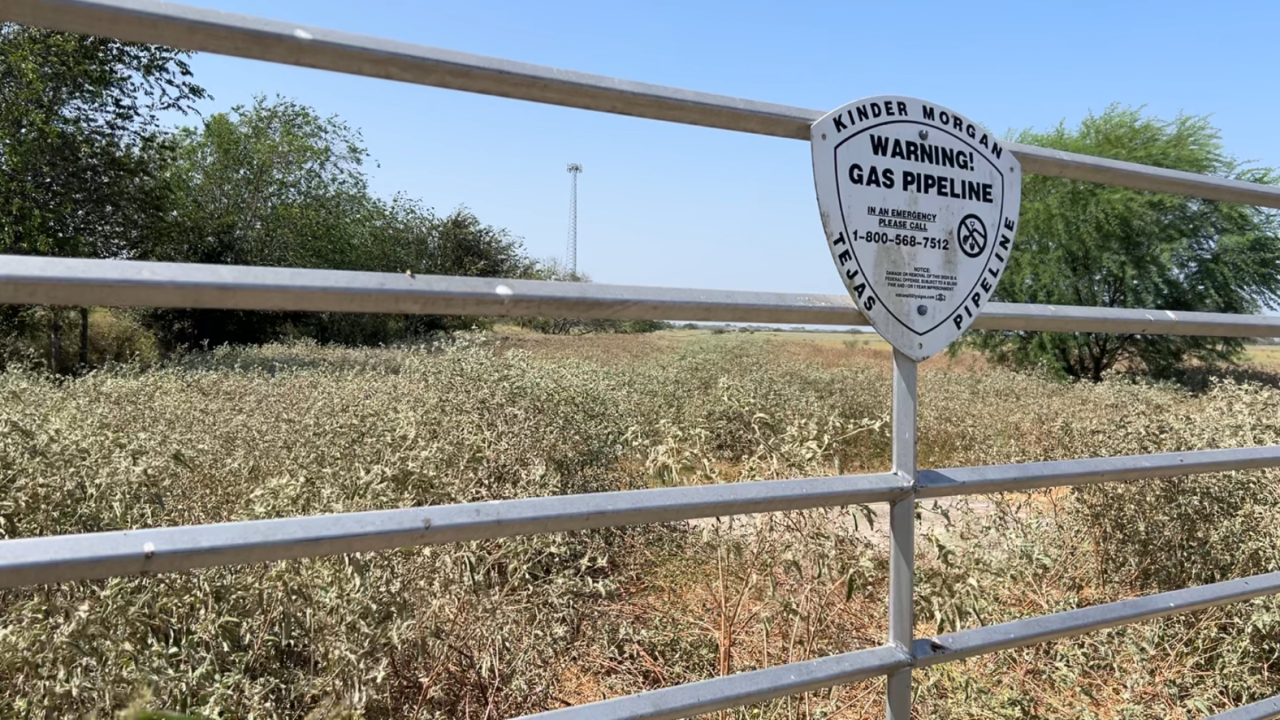
Joe Knolle never expected to watch his cattle fall through his own pasture. Three years after Kinder Morgan Tejas Pipeline LLC installed a 42-inch natural gas line across his dairy farm in Jim Wells County, Knolle says the ground is collapsing beneath his livestock.
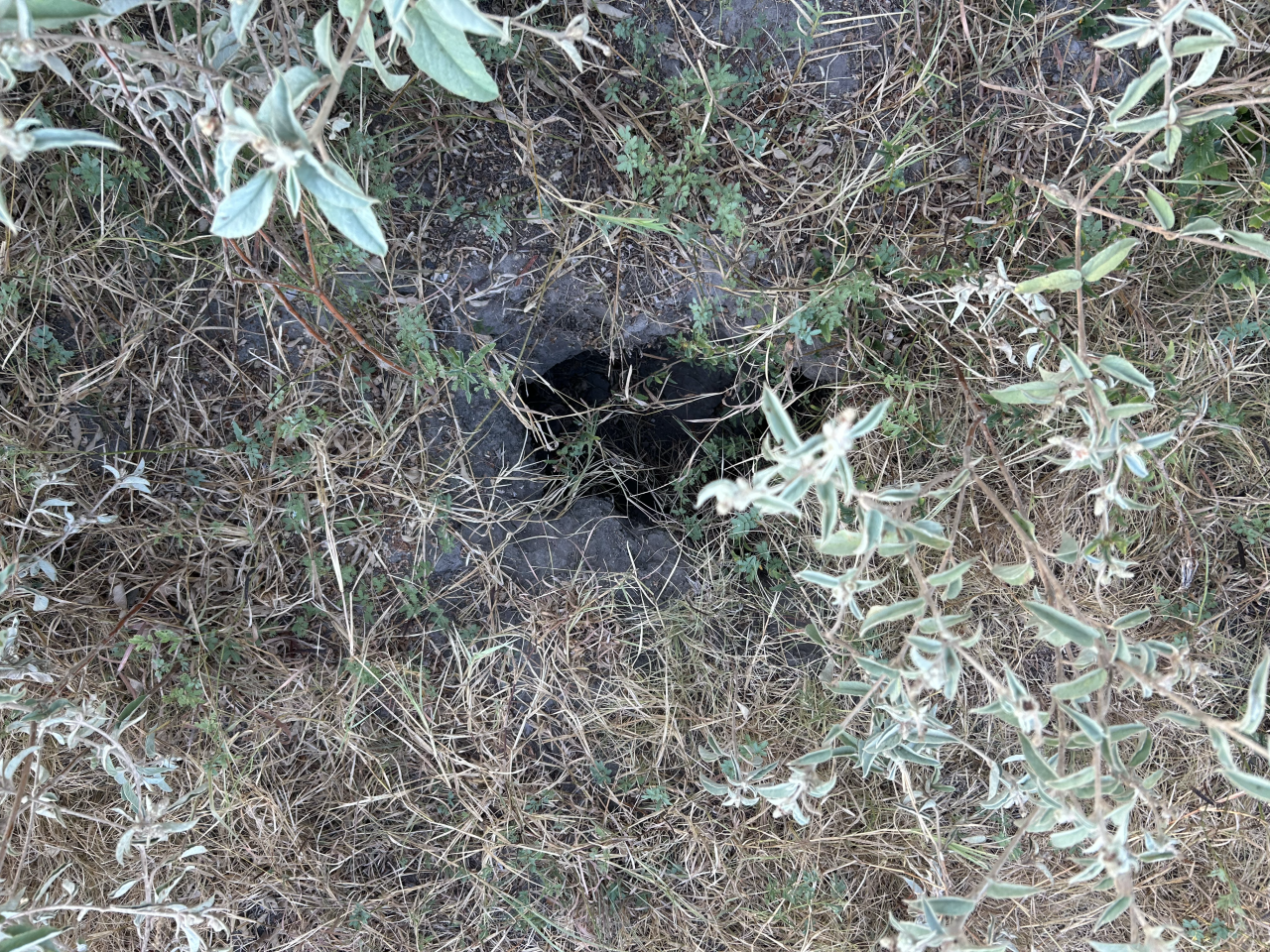
“They’re stepping in right here and falling right in,” Knolle says, pointing to fresh hoof prints vanishing into sinkholes. “Anything beyond a couple of inches can become a potential hoof injury… and we’re seeing a lot of them limping around the property.”
Knolle’s experience reflects a broader pattern: pipeline companies secure easements with promises of full restoration, then leave landowners with lasting damage and few practical remedies under Texas law.
Promises vs. Reality
During negotiations, company representatives told Knolle the land would return “back to normal as it was.” Compensation was set, construction began, and the pipe went in. What followed was extensive excavation that mixed nutrient-rich topsoil with clay subsoil—a practice soil experts call “commingling.”
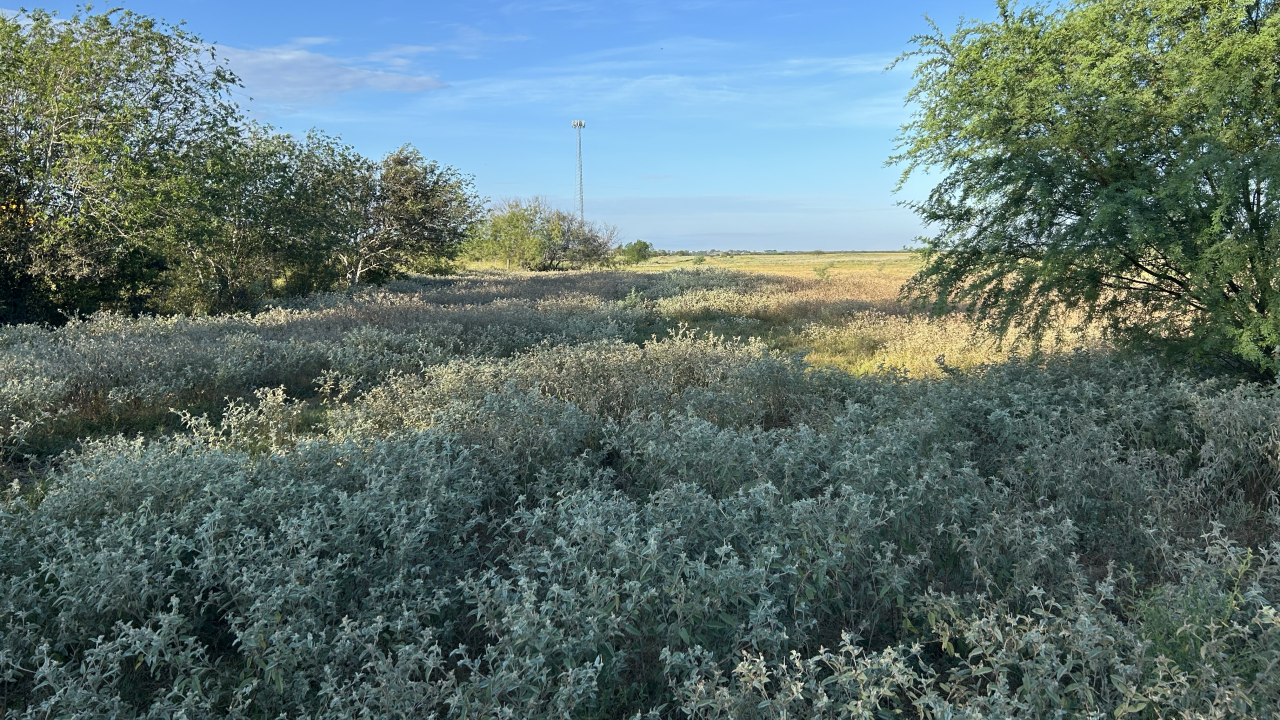
Soil tests Knolle has conducted over 15 years now show elemental composition changes of 150 to 400 percent and altered pH. Grass will not grow properly. The backfill has produced unstable ground prone to subsidence. In the past 60 days alone, new sinkholes have appeared daily.
The economic toll has been steep. Knolle documented six cattle deaths. Livestock ingested plastic construction debris left behind. Irrigation lines were repeatedly cut, forcing the dairy to dump milk for five months. Heavy equipment has fallen through the ground; one hay cutter was hospitalized with whiplash after hitting a sinkhole that formed overnight.
When Knolle complained about flooding caused by the contractors’ own actions, Kinder Morgan sent a June 2023 cease-and-desist letter accusing him of interfering with easement rights and threatening legal action.
Local appraisal districts have since doubled the tax valuation of the damaged tracts, even as their agricultural usefulness has declined.
Limited Oversight and Liability
Texas provides little independent enforcement of restoration standards once a pipeline is in the ground. Liability is often capped near the pre-construction market value of the affected pasture—far below the ongoing losses Knolle describes. Special commissioners set compensation that landowners and critics call inadequate relative to long-term harm. Construction can proceed while compensation fights continue in court, leaving owners to negotiate from weakness.
The Knolle property has already received notices for additional projects, including a 765 kV transmission line. “We’re being asked to concede for gas pipeline easements. Now we’re being asked to concede for high-voltage 765 easements,” Knolle says. “What’s the end of this? Where’s the stewardship?”
Kinder Morgan’s Position
In a September 2026 interview, Allen Fore of Kinder Morgan said the roughly 67-mile project closed on Knolle’s property in March 2023 after what the company considered fair compensation. During construction, Knolle raised issues including irrigation and cattle panels; the company made additional payments and later reached a further settlement.
Fore said soil should be segregated so the same layers return in order: “You want the same soil to go back into the ground that came out in the same order. So you do segregate your soil…” He noted the company holds contractors to standards and had not heard from Knolle since the settlement around 2024.
On the new sinkholes, Fore said: “If he has another issue, we want to know about it because we want to address it… if there are sinkholes and they’re attributable to our pipe, we want to know about that and come out and take a look at them, because that could be a safety concern.” He added that the company would reach out and that landowner concerns remain important after construction ends.
The Path Forward
Knolle argues for basic accountability: “We need an instrument in effect that assures landowners that if their land’s gonna be taken under threat of condemnation, that privately held company has the decency to put stuff back the way they found it.”
Meaningful reform would require independent enforcement of restoration standards, higher bonding requirements, removal of artificial liability caps, and technical rules on soil management with independent verification. Without it, the cycle of promised restoration followed by long-term damage is likely to continue across rural Texas.
“There’s no corporate stewardship. They don’t care. Nor do they have to,” Knolle concludes. The ground is shifting under Texas landowners. The remaining question is whether policymakers will act before more productive farmland is lost.