




ALICE, Texas —
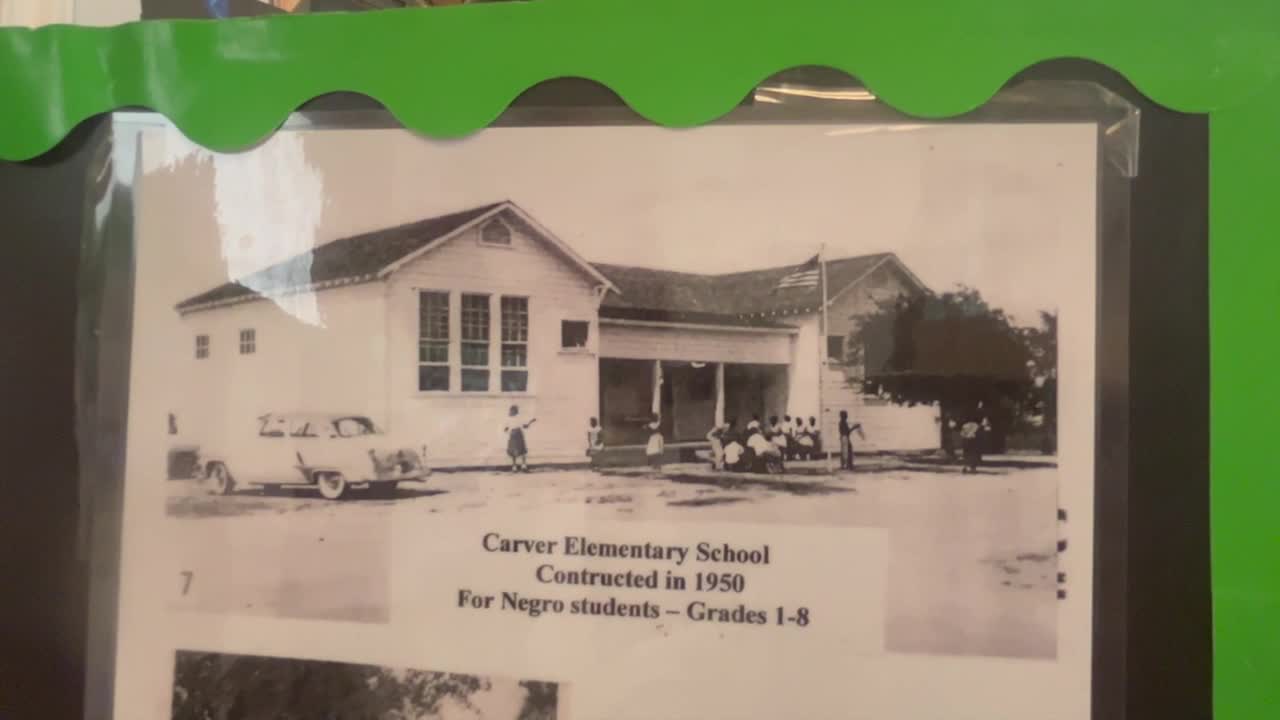
A quiet neighborhood in Alice holds a powerful reminder of the past that most residents don't even know exists. What appears to be just a concrete slab was once the site of George Washington Carver Elementary, where Black students received their education during segregation.
Lonnie Ruth Ferrell's educational journey began at George Washington Carver Elementary on Encinal Street. The school opened in 1949 to serve Black students during the era of segregation.
"It was the norm. We knew that," Ferrell said.
All that remains of the school today are the foundation and two monuments honoring those who attended.
For Ferrell and other students, attending Carver wasn't a choice—it was a requirement under segregation laws.
"Carver was the school we had to go to. So, yes there was a school right down the block from me. But I never thought anything about going there," Ferrell said.
For Ferrell and many others, those classrooms represented hope during a time of judgment. The reality of segregation was understood without needing discussion.
"We basically knew. It wasn't anything that we had to discuss," Ferrell said.
In 1956, Ferrell graduated from Carver Elementary, uncertain about her acceptance at Alice ISD for her continued education.
"I did not know how I was going to be accepted. Surprisingly there were a few that just gravitated towards me. Once I got there and sort of - I'll say - took me by the hand," Ferrell said.
Despite the hardships of segregation, education remained the primary focus for students like Aaron Bonds, who also attended George Washington Carver Elementary.
"I enjoyed going to school. You go there to learn and that was my key. I would say is that be proud cause you had the opportunity to go to a black school. So many kids don't have that opportunity. You do the best that you can," Bonds said.
Before integration, students faced significant challenges to continue their education beyond elementary school. High school students had to travel miles to attend school in Kingsville, overcoming numerous obstacles for the chance at education.
"There was one lady that bused the children - she had a station wagon. So everybody had to get in that station wagon and you know get over there. And then she'd have to go back and pick them up and then come back. And that would've been a big inconvenience," Ferrell said.
Today, the memories of former students serve as a reminder of resilience and the ongoing fight for equal education opportunities.
Ferrell said that while the building is gone, the history built on this foundation remains as an important part of Alice's past.
"This story was reported on-air by a journalist and has been converted to this platform with the assistance of AI. Our editorial team verifies all reporting on all platforms for fairness and accuracy."
For the latest local news updates, click here, or download the KRIS 6 News App.
Catch all the KRIS 6 News stories and more on our YouTube page. Subscribe today!
