


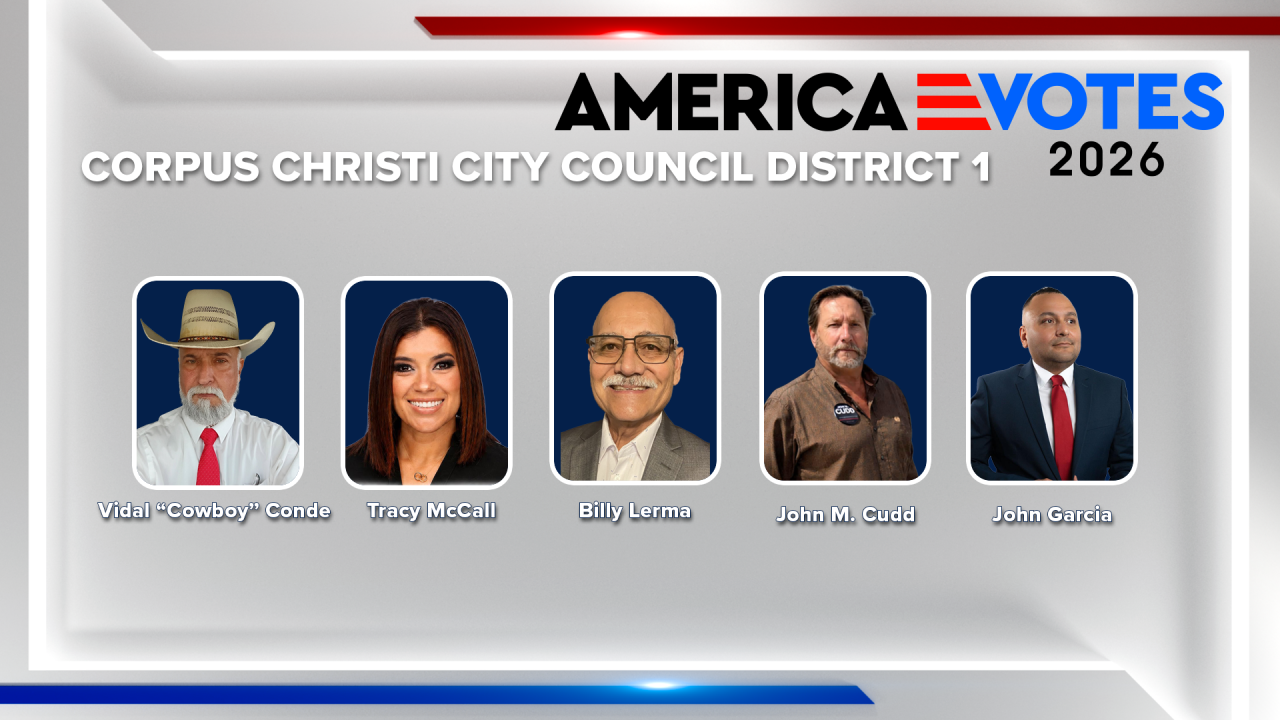
CORPUS CHRISTI, Texas — Water security dominates District 1's crowded agenda as Corpus Christi confronts a severe, multi-year drought that has pushed Lake Corpus Christi and Choke Canyon Reservoir near single-digit capacity.
Industry accounts for more than half of daily water use in the city, with a handful of large users consuming roughly 40% of the annual supply. Residents across District 1 have expressed deep frustration that industrial customers have received drought-surcharge exemptions or fees that allow continued high usage while households face restrictions and rising rates. A petition-driven "Fair Water Amendment" — Proposition B — sought to end or reform those exemptions.
The proposed Inner Harbor seawater desalination plant emerged as a flashpoint in that debate. Supporters argue desalination is essential for long-term water supply. Opponents, including many in the nearby Hillcrest neighborhood, cite cost estimates that have ballooned toward $1.2 billion, brine discharge risks to the bay, and the plant's location adjacent to a historically Black and Hispanic neighborhood already hemmed in by refineries, the ship channel, Interstate 37 and the new Harbor Bridge. City Council has twice halted or delayed the project amid cost overruns, potential state loan repayment liabilities in the hundreds of millions, and environmental concerns.
Polls in 2026 showed water as the overwhelming top issue for voters citywide, with strong disapproval of the council's handling and majority support for some form of desalination once properly vetted.
Streets, potholes, and infrastructure shortfalls
Crumbling residential streets and potholes rank immediately behind water as a daily quality-of-life complaint. Candidates and the current representative have highlighted thousands of pothole repairs and newer "skim coating" techniques, but funding remains strained. The city previously eliminated a street-user fee; restoring or replacing that revenue — or raising property taxes for dedicated street maintenance — has been repeatedly debated. Budget shortfalls threaten to reduce paved miles in coming years even as residents report patch-on-patch repairs that fail after rain.
Sidewalks, traffic flow on corridors such as Leopard Street and Northwest Boulevard, and aging infrastructure compound the problem, especially in older North Side and downtown areas.
Flooding and drainage, especially on North Beach
North Beach's low elevation makes it chronically vulnerable to storm flooding, tidal inundation and poor drainage. After tropical systems, streets and businesses can remain flooded for days, forcing closures and cleanup costs. The city has advanced a multi-phase canal and drainage project — with design work progressing toward construction — intended to alleviate those issues, alongside elevation studies and related improvements. Residents and businesses treat reliable drainage as a survival issue for the peninsula's tourism and residential base.
Crime, homelessness, and public safety
City data has shown District 1 crime rates substantially higher than those in more suburban districts, with burglary, theft, aggravated assault and related offenses prominent. Local leaders have linked those patterns to after-hours establishments, drug access, released inmates, mental-health challenges and a visible unhoused population concentrated downtown and in the North Side.
Homelessness intersects with public safety and quality-of-life concerns. Advocates have pressed for better services and against budget cuts to related programs, while residents report impacts on business districts and neighborhoods. Police and fire staffing levels remain a perennial priority for many voters who want more officers and faster response times.
Industrial encroachment and neighborhood equity
Hillcrest and adjacent Washington-Coles neighborhoods illustrate long-term tensions over industrial encroachment. Once vibrant communities, they have experienced decades of industrial expansion, highway isolation, Harbor Bridge impacts, voluntary buyouts that hollowed out housing stock, and recent rezoning toward light industrial uses. Remaining residents often describe a "sacrifice zone" effect — higher pollution exposure, declining services and limited voice in decisions that favor port and industry growth. These equity and environmental-justice concerns surface whenever major infrastructure or water projects are proposed nearby.
What's at stake for District 1 voters
District 1 mixes tourist-facing North Beach and a revitalizing downtown with working-class and historically minority North Side neighborhoods, plus the more suburban communities of Calallen and Annaville farther northwest. That mix produces overlapping but locally distinct concerns. North Side neighborhoods already contend with industrial pollution and displacement legacies, while Calallen and Annaville households worry about rate hikes and reliability as the city grows.
Street-repair funding mechanisms, water-rate structures, potential sales-tax reauthorizations for drainage and streets, and the future of desalination or alternative water supplies — including groundwater, reuse and regional options — will shape the District 1 vote. Public dissatisfaction with City Council performance has run high in recent polling, creating openness to change even as incumbents and challengers debate the same core problems: securing water without bankrupting ratepayers or harming the bay, repairing the streets people drive every day, reducing flooding and crime, and balancing industrial economic power with residential livability.
For the latest local news updates, click here, or download the KRIS 6 News App.
Catch all the KRIS 6 News stories and more on our YouTube page. Subscribe today!
