


CORPUS CHRISTI, Texas —
Recent disruptions at Corpus Christi City Council meetings have raised questions about the balance between maintaining order and protecting free speech, leading KRIS 6 to consult a First Amendment expert for clarity.
At a recent meeting, an Aransas Pass man was removed after he refused to state his name and city, as required by council rules, and later cursed at the mayor. Several speakers later, a Corpus Christi was removed for failing to comply with the same rules.
Amy Sanders, the John and Anne Curley Professor of First Amendment at Penn State who previously spent six years at the University of Texas at Austin, explained that while the public has a right to comment, that right has limits. Texas Government Code 551.007, established in 2019, grants the public the right to testify at local meetings.
However, according to Sanders, government entities are permitted to create "reasonable rules" that could include something like how long a person can speak or restricting someone to speaking just to agenda items only.
Sanders noted that the First Amendment protects a citizen's right to engage in political speech, and that "includes criticism of government officials."
WATCH THE FULL INTERVIEW WITH AMY SANDERS HERE
The Office of the Attorney General, she said, "has been very clear that government entities are not allowed to prevent people from criticizing the government in these meetings unless the speech is unprotected by the First Amendment or there's a serious disruption."
When Jason Followell took to the podium on Tuesday, he only identify himself as "We the People" and his city as "America." The confrontation escalated near the end of his remarks when Guajardo told him his time was up and asked him to leave. Followell responded angrily, cursing at the mayor, calling her a "f*****g c*** b***h" before officers were called to remove him from the podium.
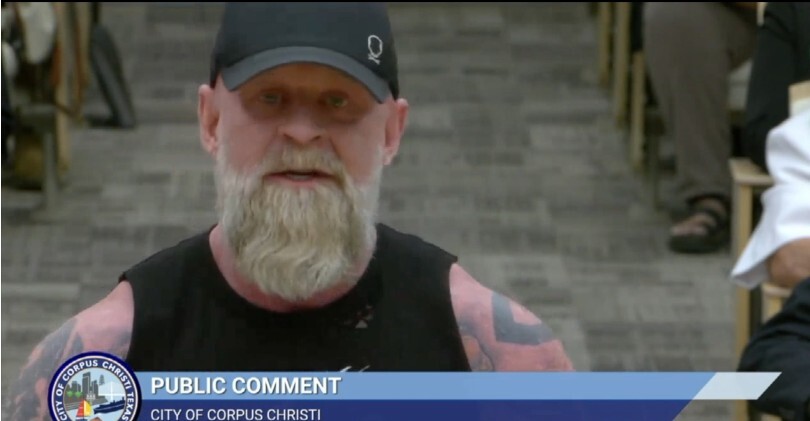
Regarding the use of profanity, Sanders stated, "using expletives, unless they rise to the level of fighting words, and the words that have been used so far don't seem to, it's fully protected."
She added, "just because a city official takes offense to something that someone says doesn't mean that it's not protected by the First Amendment."
Sanders also addressed specific rules within Corpus Christi's decorum policy, which requires speakers to identify themselves by name and city. She explained that "the First Amendment has long protected anonymous speech in this country in various forms" and noted "there's absolutely nothing in the Texas government code that says that a person should be required to identify themselves before they speak on a matter."
Requiring a home address, she added, could raise "privacy concerns" and "safety concerns."
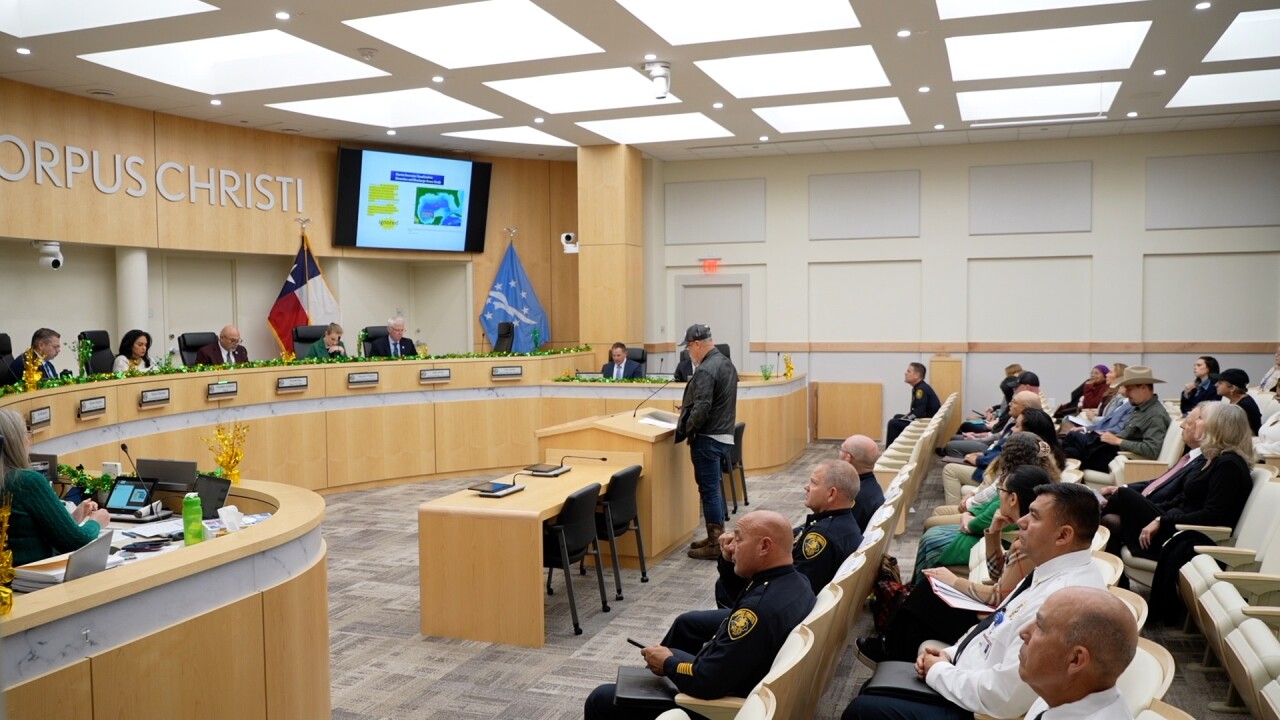
Another rule requires speakers to address the Mayor and City Council as a whole, not as individuals. Sanders acknowledged the goal of discouraging personal attacks but pointed out the importance of engaging with elected officials individually.
"If a particular person represents your district, or if they made a particular point that you want to address and want their specific response, right?" she said. "These folks are elected and appointed to these boards in individual capacities and so to have a right to engage with that person during public comment in an individual capacity seems like a pretty fundamental aspect of First Amendment protected political speech."
"The parameters of the First Amendment have nothing to do with civility or being nice or saying things that aren't offensive," Sanders said. "In fact, the First Amendment was specifically designed to protect that kind of speech."
"When you run for office, you open yourself up to being criticized for the job that you're doing representing the public," she added. "This is particularly true in instances where government officials get paid to do their work, where they get special privileges as a result of their work, and where they have the potential to make policy and impact people's everyday lives."
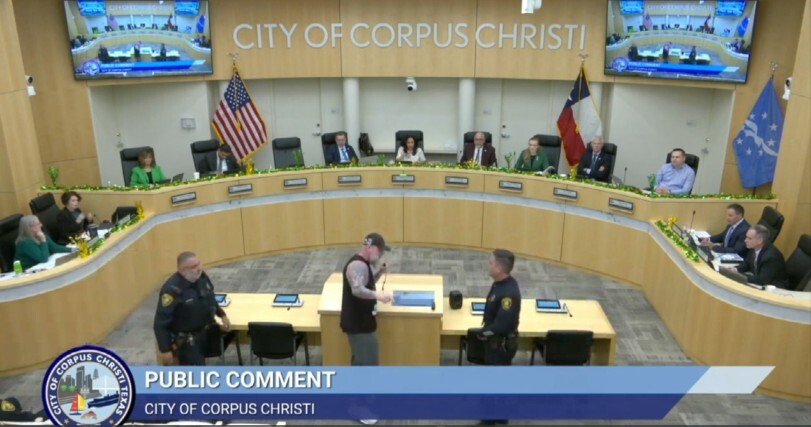
She warned that municipalities that wrongfully remove or arrest someone for their public comment could face legal action under federal law, specifically Section 1983, which protects against civil rights violations by the government.\
"And personally, as taxpayers, we should all care about that because anytime a municipality is facing litigation, anytime a municipality is having to pay fines for violating the Open Meetings or Open Records Act, that's coming out of our pocketbooks, right?" Sanders said.
For citizens who feel their rights have been violated, Sanders suggested educating themselves on the Open Meetings Act through resources on the Attorney General's website and reporting egregious or patterned behavior to the Attorney General's office or the Freedom of Information Foundation of Texas.
For the latest local news updates, click here, or download the KRIS 6 News App.
Catch all the KRIS 6 News stories and more on our YouTube page. Subscribe today!
