


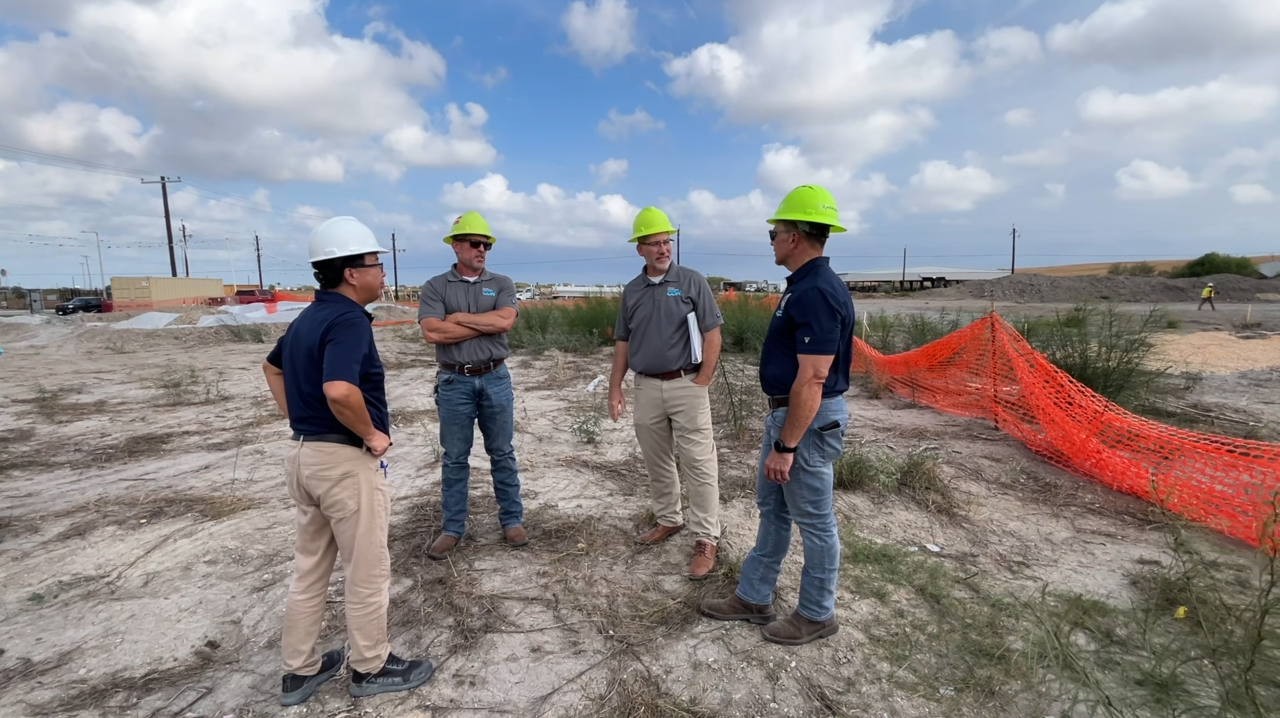
CORPUS CHRISTI, Texas — Corpus Christi Water officials on Wednesday gave City Manager Peter Zanoni and members of the local media a firsthand look at the city's major effluent reuse initiative, touring the Oso Wastewater Treatment Plant and the Greenwood facility.
Wesley Nebgen, Director of Water Utilities for the City of Corpus Christi, led the tour. Nick Winkelmann, chief operating officer of Corpus Christi Water, also participated.
The initiative aims to reclaim approximately 16 to 17 million gallons per day (MGD) of treated wastewater — primarily for industrial cooling — without requiring new groundwater or desalination infrastructure. By redirecting industrial demand away from drinking-quality water, the effort is expected to free up an equivalent volume for the residential grid.
City Council approved a $107.5 million Phase 2 construction contract on June 30, 2026. That phase includes approximately 10.5 miles of 36-inch conveyance pipeline linking the Oso and Greenwood facilities, a pump station and wet well at Oso, and related infrastructure. Officials say this portion alone is expected to increase effluent availability by about 11 MGD, bringing the overall reclaimed-water program to as much as 16 MGD.
The project is roughly 50% complete. Earlier targets slipped due to contract negotiations, labor shortages, and supply-chain delays affecting electrical equipment. Current schedules point to completion between May and July 2027.
A dual-benefit water strategy
Local industry accounts for roughly 60% of treated potable water consumption. The reuse program redirects that demand to high-quality reclaimed effluent, delivering a dual benefit: it puts previously discharged wastewater to productive use while expanding available potable capacity.
Valero is a central partner. The company is funding a major portion of the distribution system — described in project materials as the $100 million-plus second leg from the Greenwood plant toward the ship channel — and has entered a 30-year reclaimed-water agreement with the city. Under the agreement, the city will initially supply up to 3 MGD from Greenwood, with capacity potentially rising to 8 MGD as additional infrastructure comes online. The pipeline has been sized to serve other industrial customers as well, including Citgo and Flint Hills Resources.
Flint Hills has a separate agreement to receive effluent from the Oso facility, starting at up to 1 MGD with possible expansion to 2 MGD.
Technical upgrades and construction details
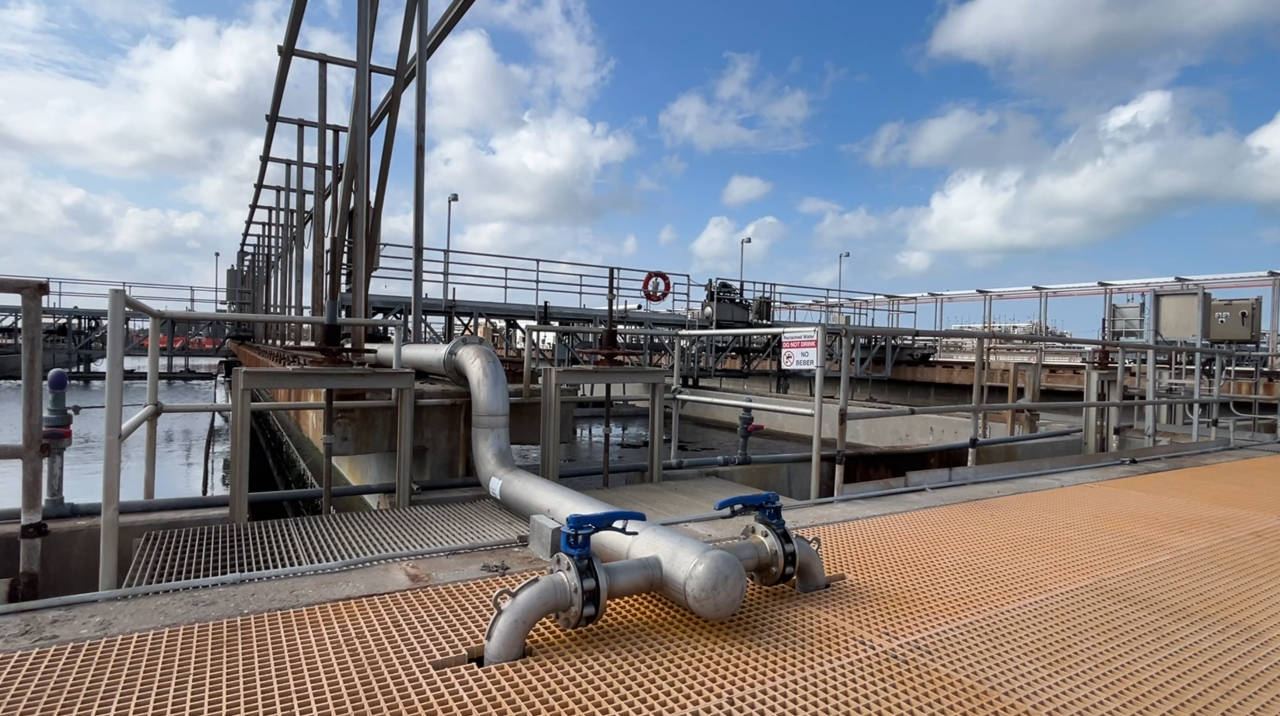
The plants are transitioning to a Membrane Bioreactor (MBR) biological treatment system, replacing 1950s-era equipment — including older blowers, screw presses, and aeration basins — with higher-efficiency motors and a process that requires fewer chemicals.
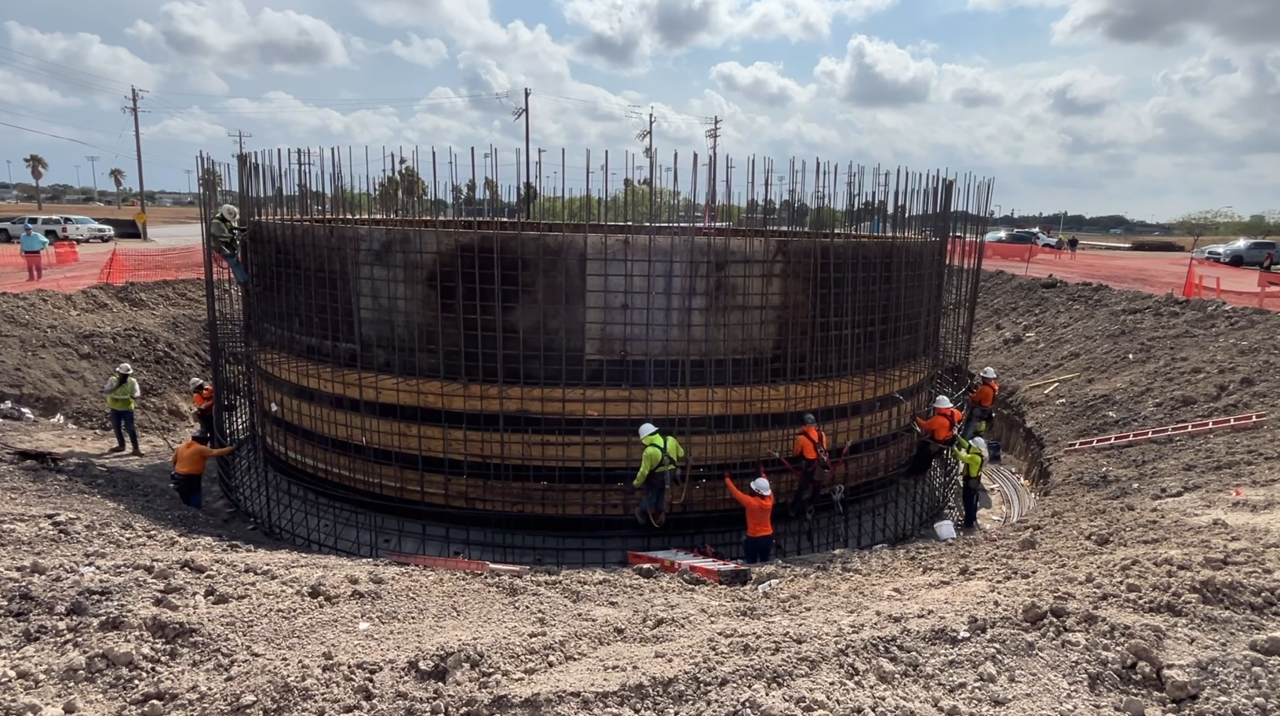
At Oso, crews are installing a 250,000-gallon wet tank measuring 32 feet deep. The tank is being constructed with a sectional pouring-and-lowering method that excavates from the center as concrete is poured, allowing the structure to settle into the ground and reduce visual impact.
New facilities use 800-horsepower pumps to move water through high-pressure lines, an upgrade from the 300-horsepower units previously used at Oso. A large concrete storage structure — roughly 12 times the size of standard tanks — manages non-continuous flows before water is pumped to industrial users.
The overall conveyance network totals about 20 miles of pipeline. Routes largely follow city rights-of-way, creek beds, and existing man-made drainage ditches to limit road closures and traffic disruption. The Valero segment is already installed. Current construction includes the 36-inch line along O'Day Parkway; a temporary closure between Weber Road and Shadow Wood Drive is scheduled through late October.
Environmental safeguards
Officials emphasize that reclaimed water is treated wastewater intended for approved non-potable uses such as industrial cooling; it is not drinking water. The system will continue discharging a portion of treated water — approximately 600,000 gallons daily — into Oso Bay and local bayous to maintain estuary flows and prevent ecological or odor issues during droughts.
City leaders note that reclaimed-water use is not new to Corpus Christi; the current program simply expands capacity and infrastructure substantially. By matching treated effluent to industrial needs that do not require potable water, the initiative is designed to protect residential supplies while supporting the region's industrial base.
For the latest local news updates, click here, or download the KRIS 6 News App.
Catch all the KRIS 6 News stories and more on our YouTube page. Subscribe today!
