

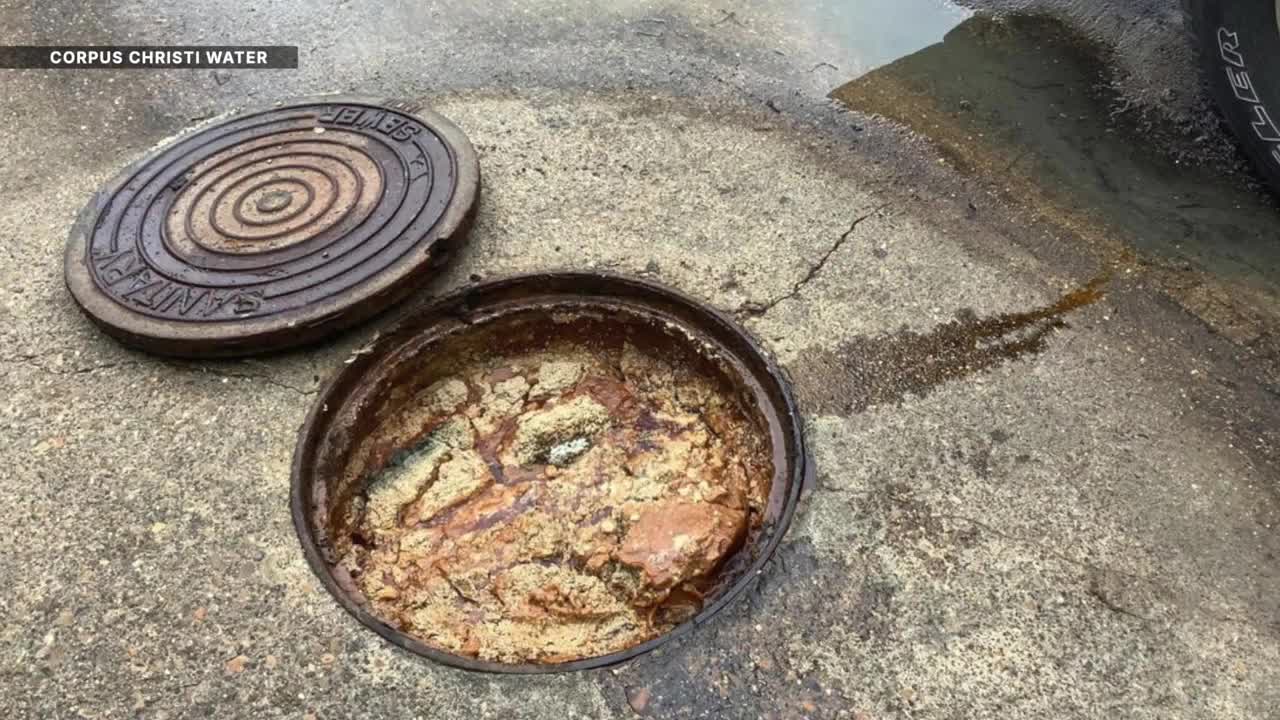


CORPUS CHRISTI, Texas — With Thanksgiving just days away, Corpus Christi Water is reminding residents that what goes down their kitchen sink could lead to costly plumbing problems.
Thanksgiving and Christmas are particularly challenging times for utility crews as families prepare holiday meals, including turkeys and tamales.
During a demonstration on the city's Southside, Gabriel De La Rosa, a utility technician with Corpus Christi Water, showed KRIS 6 News how fats, oils and grease can accumulate inside sewer pipes.
"So right now we're looking at the grease that's stuck onto the pipe. After it cools down, it becomes hard as rock, almost like concrete," De La Rosa said.
The demonstration included a model of a grease-clogged pipe, along with footage and photographs of actual sewer blockages crews have encountered.
De La Rosa explained that one blockage stretched approximately six feet inside an eight-inch sewer pipe, reducing the space available for wastewater to flow by about half.
He also shared photos of grease and other debris that had accumulated inside sewer lines and manholes, including one blockage he described as roughly twice his height.
Nick Winkelmann, chief operating officer for Corpus Christi Water, explained that grease can combine with other materials improperly flushed into the wastewater system, creating blockages that affect more than one household.
"The grease hardens and that backs up the wastewater collection system. That backup can affect an individual's residence, it can affect an apartment complex," Winkelmann said.
He explained that the consequences may not become apparent immediately after grease is poured down the drain.
"We may not see the issue for another couple of weeks or so as that material cools and clogs up in the wastewater collection system," Winkelmann said.
Over the past four years, Corpus Christi Water has replaced approximately 45 miles of wastewater pipes, according to Winkelmann. However, he emphasized that even newer infrastructure remains vulnerable to improper disposal.
"Even new pipe doesn't stop a clog caused from grease or debris or other things that have been inappropriately flushed or put down in your sink," Winkelmann said.
When a blockage prevents wastewater from reaching a lift station and eventually a treatment plant, sewage can back up through manholes or into residential properties.
Beyond the potential damage to homes, clearing these blockages requires additional maintenance and resources.
Winkelmann said clearing grease-related blockages requires additional maintenance and can take crews away from infrastructure improvements. Those added costs could eventually affect residents' utility bills.
"It delays the progress in our infrastructure upgrades, and eventually over time those additional costs do get reflected in the rate structure," Winkelmann said.
For utility workers, the cleanup can also be unpleasant.
De La Rosa described using high-pressure water jets to break apart hardened grease and other debris inside sewer lines. He said the process can create a mist that leaves a lingering odor on workers' clothing.
"This is one of the worst times to work this year. Just because of all the cooking that's about to go on," De La Rosa said.
To prevent blockages, Corpus Christi Water encouraged residents to remember three simple steps: cool it, can it and trash it.
De La Rosa demonstrated how residents can line a tin can or suitable container with aluminum foil, collect leftover cooking grease and allow it to cool and harden before throwing it in the trash.
He also recommended wiping greasy pots and pans with a paper towel before washing them.
Other methods he mentioned included using coffee grounds or kitty litter to help absorb and solidify grease before disposal.
Winkelmann emphasized that grease and solid food waste should never be disposed of in sinks, sewer drains, or on lawns.
He also encouraged homeowners to make sure their sewer cleanout caps are properly secured to prevent foreign materials from entering the wastewater system.
Corpus Christi Water advised residents who suspect a clog in their home's plumbing to contact a plumber.
However, if the problem involves the city's sewer infrastructure, such as a wastewater manhole in the street, residents should call 3-1-1 to report it.
Winkelmann said residents calling outside regular business hours should listen to the recorded message for information about the city's emergency contact number.
For more information, click here.
