



BRROKS COUNTY, Texas —
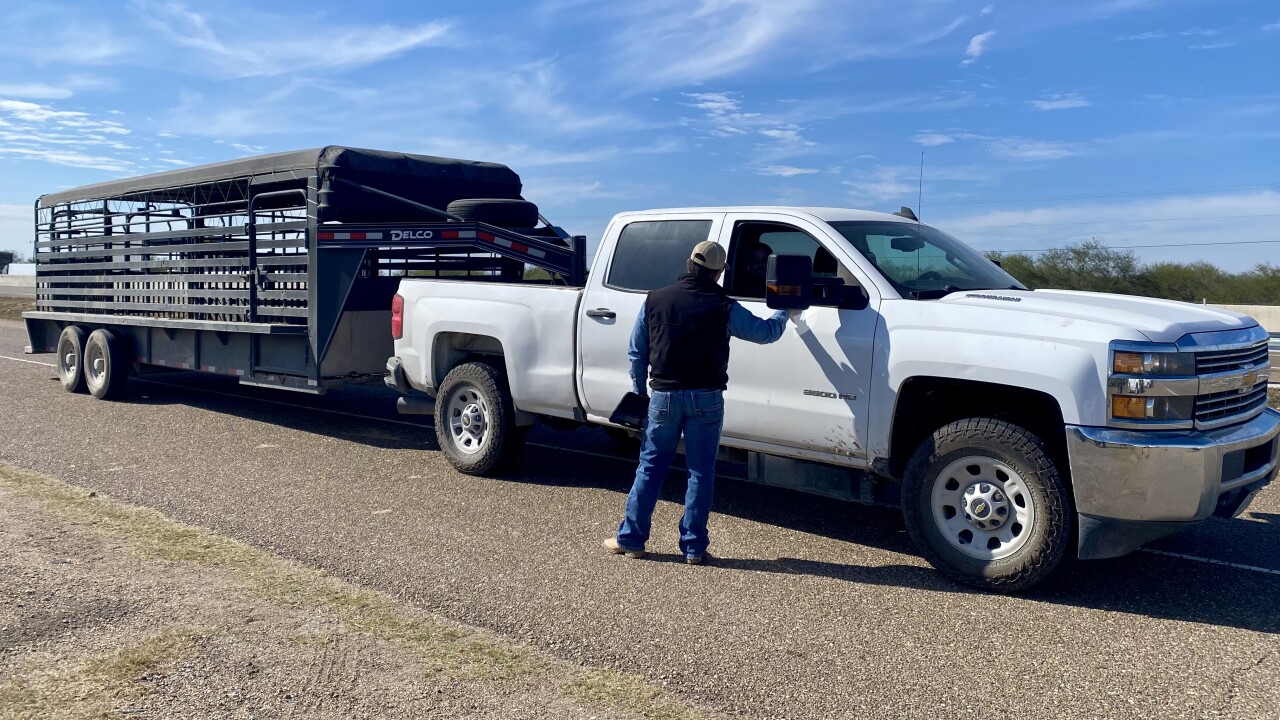
Texas Animal Health Commission inspectors were not screening every livestock trailer crossing from Mexico into Brooks County on Tuesday, Dec. 2, as officials work to prevent the return of screwworms, a devastating pest once eradicated from the United States.
The screwworm fly, which lays eggs in open wounds on animals, was declared eradicated in the U.S. in the 1960s but remains active in Mexico. The closest confirmed case is approximately 70 miles south of the Texas border.
Dr. Michael Vickers, a Brooks County veterinarian who has treated animals for more than five decades, understands the potential consequences if screwworms cross into Texas.
"Hopefully it doesn't get here because — my feeling is — if it does get here other states are going to quarantine Texas cattle," Vickers said.
The inspection stations operate just south of Vickers' clinic, providing a critical screening point for early detection.
"They're checking every load of livestock or horses that come through that checkpoint. And they just look at the animals and check them over to make sure that there's no evidence that screwworms have infected them," Vickers said.
Vickers recalls the devastating impact of screwworm infestations during the 1970s and 1980s, when the pest ravaged cattle and wildlife and even caused human cases.
"It's gonna be a huge, huge issue for our meat supply, food supply and it'll be a huge biosecurity issue for the state of Texas and the whole United States," Vickers said.
Eli Benavidez from the Texas Animal Health Commission emphasized the broad threat screwworms pose to multiple species.
"Screwworm in particular is devastating to the livestock industry. It's got very many hosts. So it can infest cattle, horses, sheep, goats, any of our agricultural animals. And it also can infect humans," Benavidez said.
The Texas Animal Health Commission maintains that roadside outbreaks can appear anywhere, making routine checks along major highways essential for early detection and prevention.
Currently, no cases have been confirmed in Texas. Officials are urging ranchers to inspect their animals daily and immediately contact their veterinarian and report to the Texas Animal Health Commission if they discover any suspicious wounds.
For ranchers in South Texas, one missed case could trigger a devastating outbreak, making these border inspections a critical line of defense for the state's livestock industry.
This story was reported on-air by a journalist and has been converted to this platform with the assistance of AI. Our editorial team verifies all reporting on all platforms for fairness and accuracy.
For the latest local news updates, click here, or download the KRIS 6 News App.
Catch all the KRIS 6 News stories and more on our YouTube page. Subscribe today!
