

NUECES COUNTY, Texas — Neighbors are concerned over the city of Corpus Christi's groundwater pumping activities in western Nueces County. This week, Chief Meteorologist Stefanie Lauber explains the science behind your two biggest concerns: Could this activity dry up neighboring wells in rural communities? And are we depleting the aquifer?
LET'S START WITH DRAWDOWN
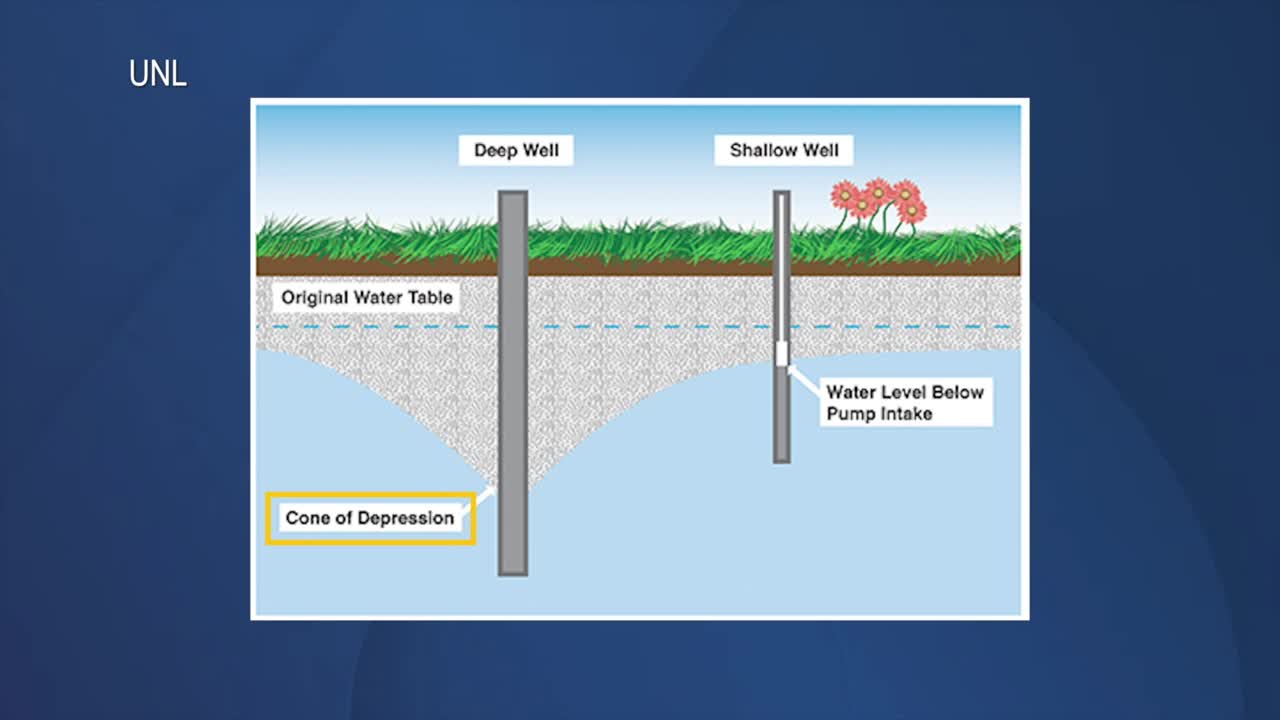
Pumping groundwater creates a drop in the water table as water is removed from the ground and drawn to the surface. This drop in water level is known as the "cone of depression." With the current water crisis, Corpus Christi Water wants to maximize every drop in its supply. But with more than a dozen wells in western Nueces County, the cone of depression can span several miles in radius.

Neighbors in rural communities say all that pumping could draw down wells in nearby towns like Orange Grove, Bishop, and Banquete. And yes — that is possible. In fact, it's identified as a potential impact for this project in the 2026 Coastal Bend Regional Water Plan.
However, this well interference is only allowed to go so far. Groundwater districts have rules to limit this interference. In the well permits for the western well field, the city has a duty to "be a good neighbor" and work with owners of neighboring wells to reduce drawdown.
During a recent water briefing, I asked the city what neighbors can expect if their well has been affected. Corpus Christi Water says the first step is to report the issue. Nick Winkelmann, Chief Operating Officer of Corpus Christi Water, says "we willreach out to them, review the data they have, discuss the problem, observe it and try and do our best to understand the cause. And then if there is an issue that's caused by the city well fields, we'll move forward on a on a correction method."
ARE WE DEPLETING THE AQUIFER?
As for the aquifer, groundwater districts have set the cap for how much water can be taken. In Nueces County, the Modeled Available Groundwater, or MAG, is 6,787 acre-feet per year, or just over 2 billion gallons. This cap protects the aquifer from depletion.
But the aquifer recharges at an extremely slow rate, only about one-tenth of an inch each year. This is where Aquifer Storage and Recovery — or ASR — comes in. ASR helps replenish the aquifer and it's a way to store water quite literally "where the sun don't shine", meaning no loss to evaporation like that which happens at Lake Corpus Christi and Choke Canyon.

The challenge? Corpus Christi is still in the early stages of designing its ASR system.
Have a question about the water crisis?
Send an email to Stefanie ( stefanie.lauber@kristv.com ) or to our news team ( newsroom@kristv.com )
This story was reported on-air by a journalist and has been converted to this platform with the assistance of AI. Our editorial team verifies all reporting on all platforms for fairness and accuracy.