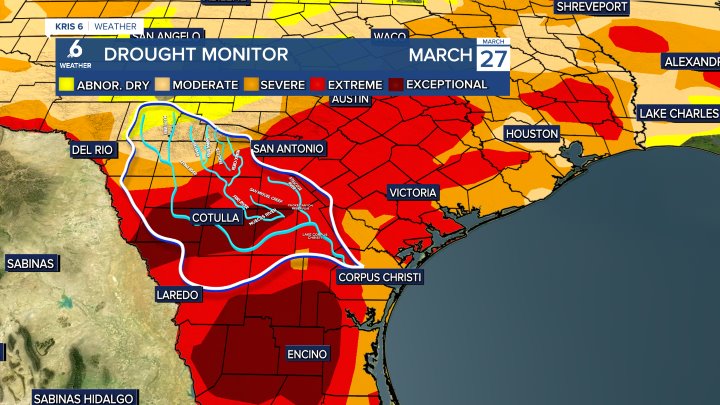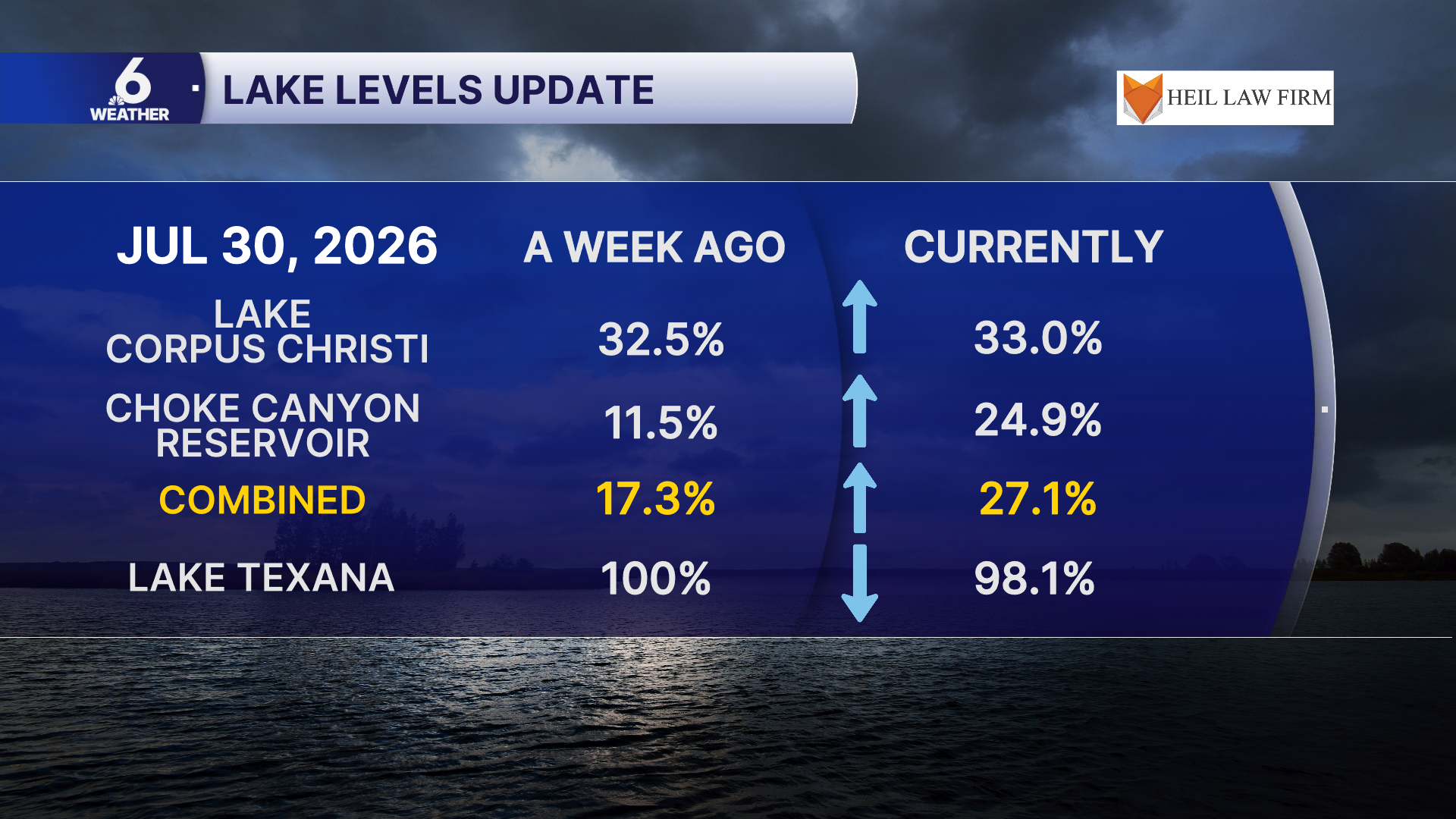


CORPUS CHRISTI, Texas — A neighbor in Riviera named Henry recently sent in an interesting question about the ongoing water crisis in the Coastal Bend.
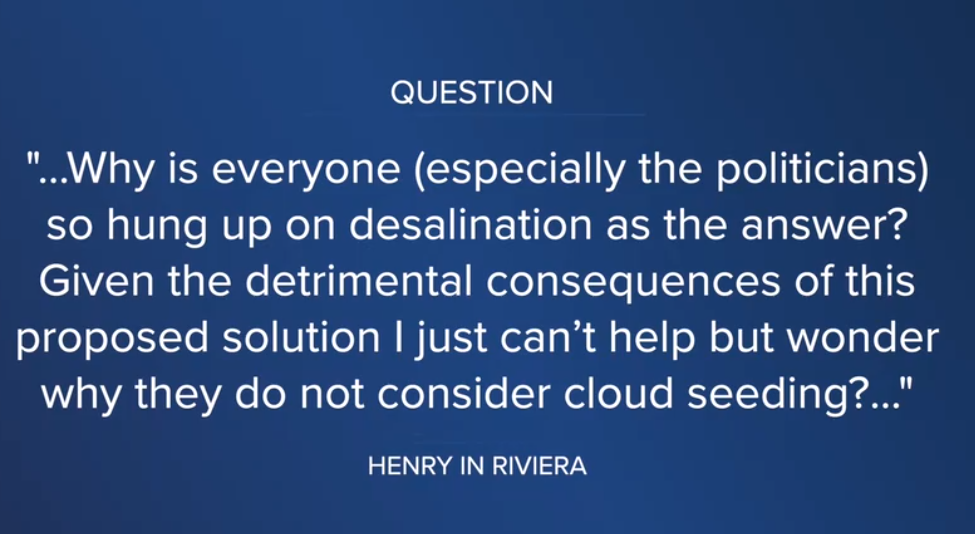
"Why is everyone so hung up on desalination as the answer? Given the detrimental consequences of this proposed solution, I just can't help but wonder why they do not consider cloud seeding?" Henry said. It's a great question. Here's an explanation of what cloud seeding is and whether it could help solve the water crisis.
Think about how water condenses when you crack open a cold soda can on a hot summer day. The same process creates clouds. Water vapor in the air will condense onto little particulates: specks of dust, smoke, soot, and salt. Together, these tiny cloud droplets can make a visible cloud. Cloud seeding aims to take it one step further, enhancing rainfall.
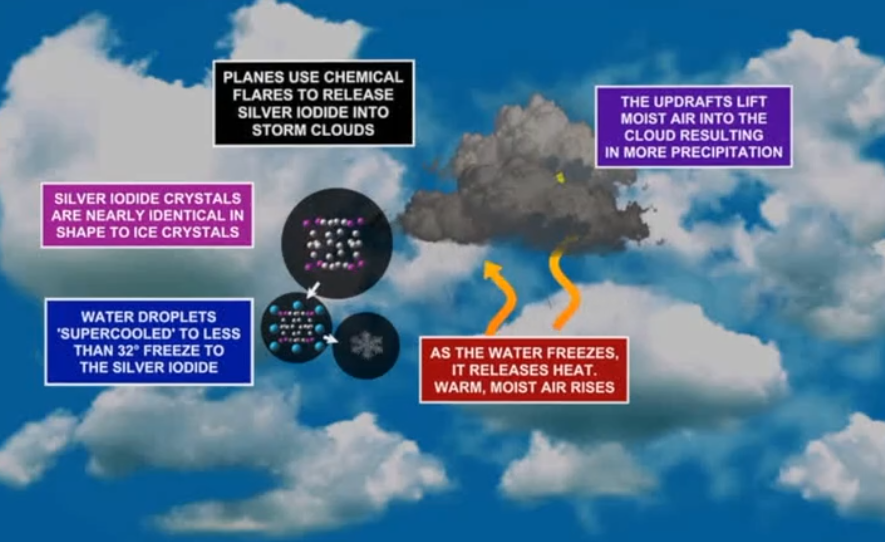
Think of it like giving Mother Nature a little nudge. Using airplanes, tiny particles are released into clouds. In Texas, those particles are usually silver iodide or calcium chloride, a food-grade salt. Inside the cloud, there are super-cooled water droplets — water that's colder than 32 degrees but still liquid. When these droplets bump into the artificial seeds, they coalesce or grab onto the 'seed'. Typically, the water droplet freezes on contact. This process is a form of condensation, and it releases heat into the air, creating a chain reaction that keeps the process going.
The Texas Department of Licensing and Regulation monitors cloud seeding operations. One study in West Texas tracked cloud seeding for ten years. The results showed rainfall increased by eight to 20 percent — that's about two extra inches of rain per year. The entire 10-year project cost about $1.5 million.
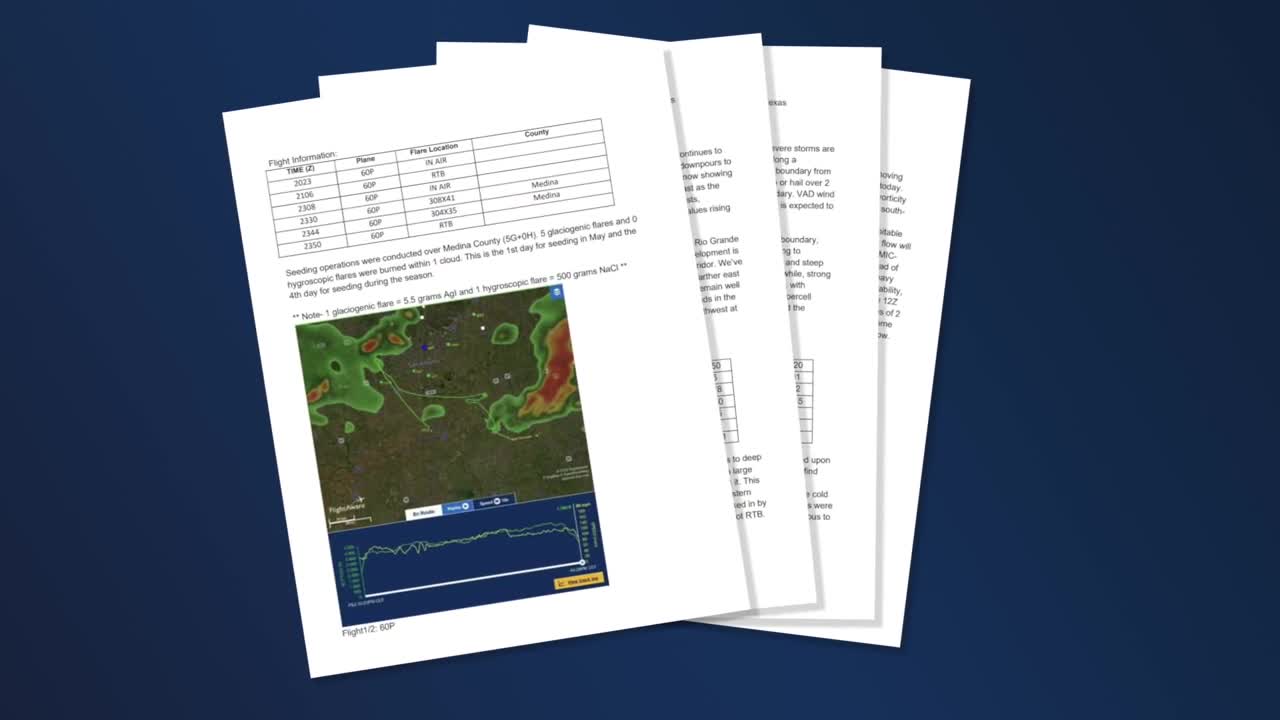
The TDLR has a copy of a recent cloud seeding event from 2025 on its website. I reached out to the contact provided for the South Texas Weather Modification Association for an update on the latest cloud seeding projects. They said the company I contacted does not operate in Texas. I also reached out to the state, but have yet to hear back.
So, Henry, here's the reality: cloud seeding can help, but alone can't solve the water crisis. You still need clouds to seed, and during severe droughts — when water is needed most — there is often not enough storm activity to make it effective. That's why desalination, despite its challenges, is a more productive source of water to the Coastal Bend than cloud seeding.
This story was reported on-air by a journalist and has been converted to this platform with the assistance of AI. Our editorial team verifies all reporting on all platforms for fairness and accuracy.