

CORPUS CHRISTI, Texas — The city of Corpus Christi is facing a new setback in its fight to avoid a water emergency. A key part of its water plan — pumping groundwater from wells in Nueces County — is not producing as much water as city leaders said it would just one week ago.
City Manager Peter Zanoni said Thursday that updated projections will be shared with City Council at a workshop Tuesday, April 22, at 10 a.m.
What city leaders said last week
One week ago, on April 9, Zanoni told reporters the city felt good about its western well field — a newer set of wells drilled to pump groundwater into the Nueces River as an emergency water source.
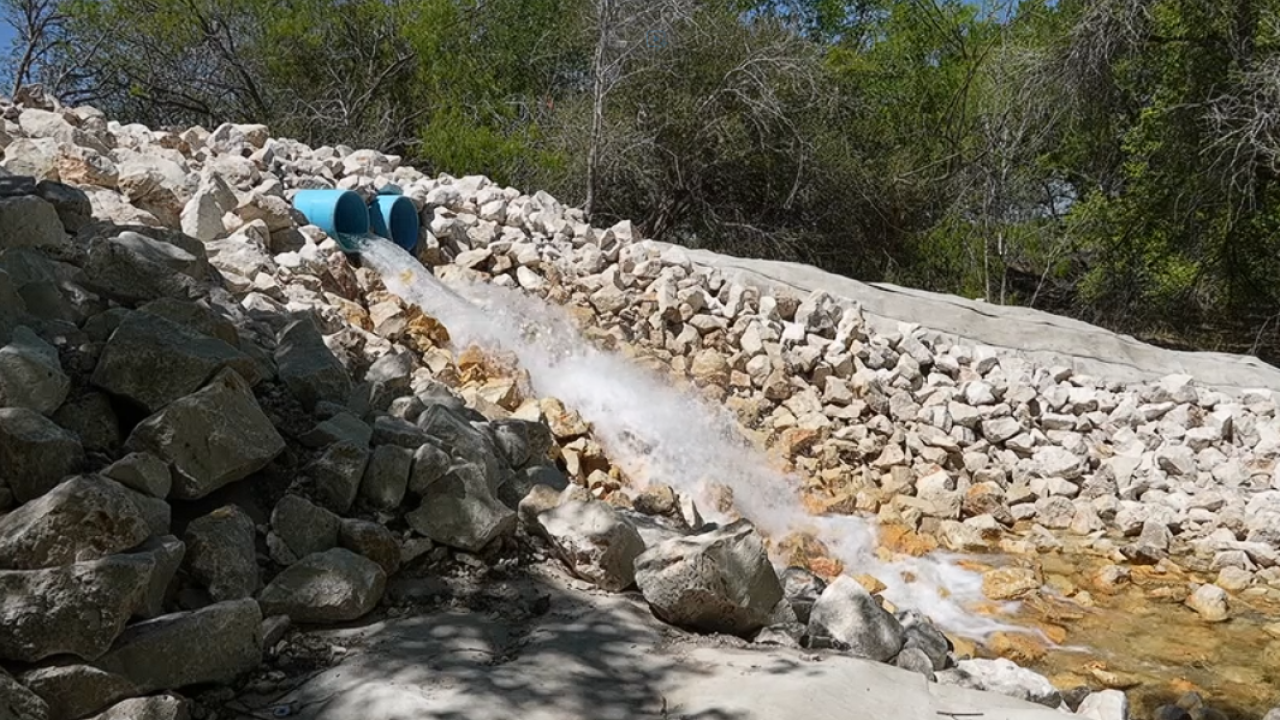
The city has two well fields in Nueces County. The eastern well field came online first. It has 8 wells and is permitted to produce up to 10 million gallons per day. But its water has a higher salt content, and state monitoring rules have limited it to about 4 million gallons per day.
The western well field is newer, with 6 wells. Its water has roughly half the salt content of the eastern field. That is why city leaders were more confident it could pump at or near full capacity. Zanoni projected the western field and the neighboring Ed Rachal Foundation property could together deliver 26 million gallons per day into the river.
"We feel pretty confident today — with four wells running at about 10 million gallons, there is no issue on the water quality management plan..." Zanoni said April 9. "The western, we're seeing pretty decent results right now."
That projection was consistent with what Zanoni said publicly when the western wells first began flowing in late March, when he said: "Over the next couple of weeks and into June, we'll have a total of 26 million gallons of water" from the western field.
______________________________________
WATCH THURSDAY'S WATER SUPPLY INITIATIVE BRIEFING
______________________________________
What he said Thursday — and why it matters
On Thursday, Zanoni said those expectations did not hold up.
The city had assumed the western field's lower salt content would allow it to pump far more water than the eastern field. That assumption proved wrong. Both fields are hitting roughly the same ceiling under state monitoring rules — regardless of salt levels.
"Even with half the level of TDS, we're still only able to pump about half the water we could pump into the river..." Zanoni said Thursday. "We don't think that's acceptable."
In total, the city's 14 wells — 8 eastern, 6 western — could produce 21 million gallons per day if running at full capacity. Because of state water quality rules, the city has been limited to about 14 million gallons per day, roughly two-thirds of what the wells can do.
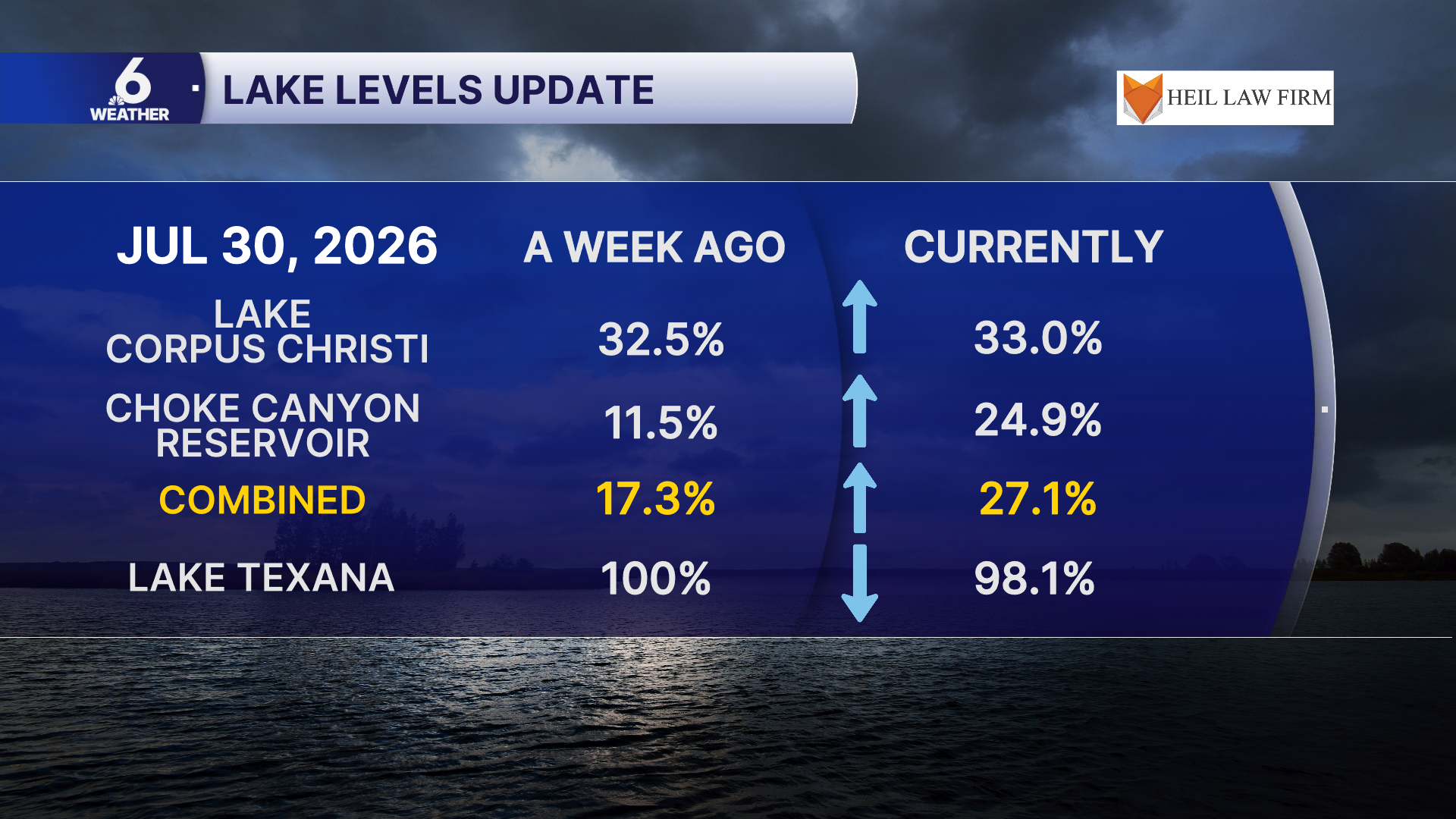
That gap matters because the city has to make up the difference by pulling water from Choke Canyon Reservoir and Lake Corpus Christi. As of Thursday, those two reservoirs stand at a combined capacity of 7.9%, with no signs of natural recovery.
Why the state is limiting how much water the city can pump
The Texas Commission on Environmental Quality, known as TCEQ, requires the city to monitor the salt content — measured as total dissolved solids, or TDS — of water it discharges into the Nueces River. The city uses the river to move well water roughly 13 miles to the O.N. Stevens Water Treatment Plant. When salt levels get too high, the city must reduce pumping or shut wells off.
Sources have told KRIS 6 News that TCEQ has shown little appetite to waive that monitoring plan. Zanoni agreed with that assessment at an April 3 briefing.
"We've heard the same thing," Zanoni said April 3. "TCEQ is pretty concerned about total dissolved solids, or salt content, into the river. Ultimately, they have to decide. If they don't, the result is we'll have less water and we could enter a Level 1 water emergency sooner than later."
The city has applied to TCEQ for an emergency order to unlock the full capacity of the Nueces County well fields.
Zanoni said Thursday there is a longer-term solution underway that would eventually eliminate the river monitoring problem altogether. The city this week executed a construction contract with Aqualia for a $175 million brackish water treatment plant at the O.N. Stevens Water Treatment Plant. The project includes a 13-mile pipeline that would carry well water directly from the western well field to the treatment plant, bypassing the Nueces River entirely.
What does this mean for the water emergency timeline?
At a March 17 City Council meeting, Corpus Christi Water interim COO Nick Winkelmann presented six scenarios. Scenarios A and B projected a Level 1 water emergency as soon as May. Scenarios C and D projected October. Scenario E was the only outcome that would prevent a Level 1 emergency entirely.
Zanoni said Thursday that modeling those scenarios at 66% well field output instead of 100% shifts the picture. He said May is probably not the trigger date, and October is not likely either. He said he does not yet know exactly how much sooner the timeline has moved.
New projections will be presented at the Tuesday, April 22 City Council workshop.
When will residents know what to expect?
City Council is scheduled to vote on a formal Level 1 Water Emergency Plan on April 28.
The plan will spell out how much water residents, businesses, and large industrial users would have to cut back and whether they would face higher water bills. Those details have not yet been finalized or approved by the council.
Hospitals and other critical facilities may be exempt from cuts. Schools and businesses seeking budget guidance have also been waiting on answers. Zanoni said the goal is to have all questions answered by April 28.
"Residents, commercial businesses, and large volume industrial customers will know what the plan is," Zanoni said Thursday.
What about the city's credit rating?
In a memo sent to Mayor and Council Thursday morning, Zanoni said Moody's Ratings has maintained the city's A1 credit rating on its General Obligation bonds and Utility System revenue debt. However, Moody's has placed Corpus Christi "under review" — meaning a downgrade is possible within the next 60 to 90 days depending on progress on water projects.
The memo states Moody's will notify the city and meet with officials before its Rating Committee makes a final decision on whether to raise, lower, or hold the rating.
Zanoni said Moody's chose to hold rather than downgrade immediately, citing two upcoming milestones: a legal hearing April 28 on permits for the Evangeline Groundwater Project and a desal contract vote now set for June 2.
Fitch Ratings had previously affirmed the city's credit rating but moved its outlook from stable to negative, citing concern over the city's ongoing drought and the risk that key water projects — including Evangeline and effluent reuse — would not come online on time.
Standard & Poor's, the third major rating agency, is expected to release its annual surveillance update in the coming weeks. Zanoni said the city has met with S&P and provided information but does not yet know what decision the agency will reach.
Key dates to know
- Tuesday, April 22, 10 a.m. — City Council workshop; updated water emergency projections presented
- April 28 — City Council vote on Level 1 Water Emergency Plan; Evangeline permit hearing
- June 2 — Inner Harbor desalination contract vote
- 60–90 days — Moody's window to finalize credit rating decision