

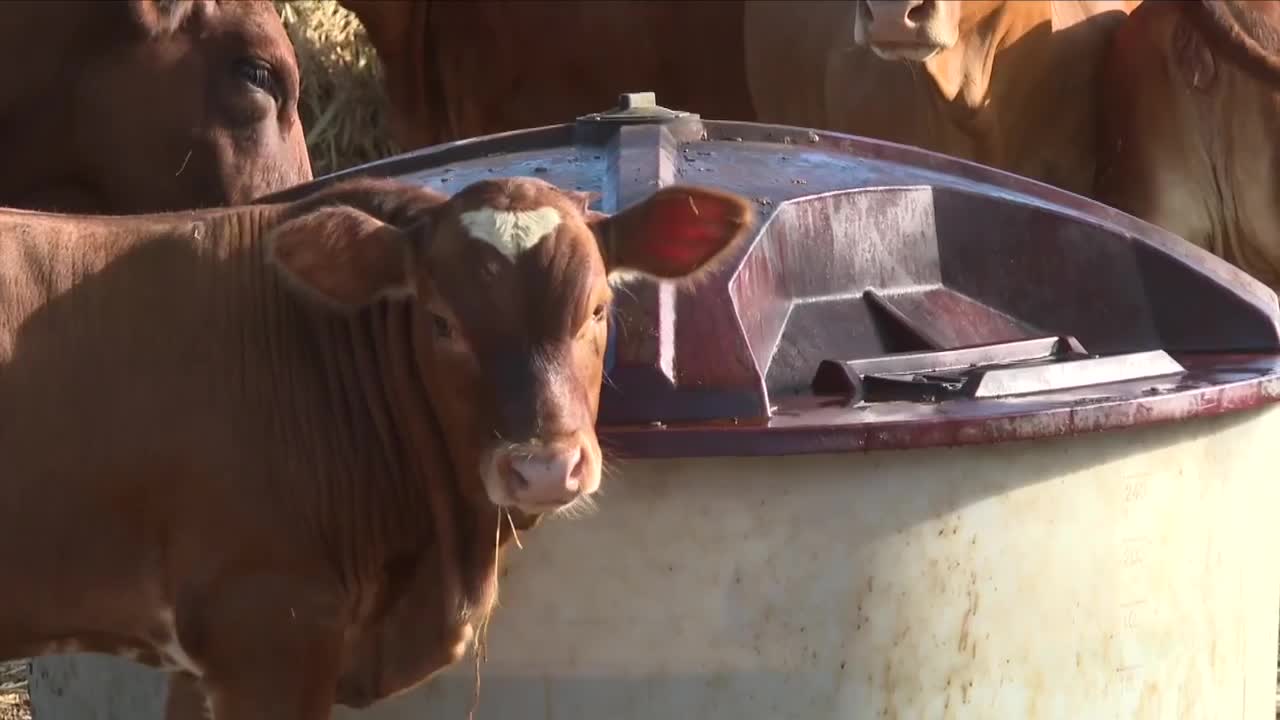


MATHIS, Texas — The price of ground beef has been climbing steadily since 2025. In July, the national average hit $6.89 a pound — just a penny short of the all-time high set in April.
Part of the reason is simple: there aren't enough cattle.
"The US is at a 75 year low on their herd. And their cattle herd, and I believe from 25 to 26, it's gone down another 4%," Mathis rancher Javier Gonzalez said.
Last month, President Donald Trump signed an order to import 300,000 tariff-free metric tons of beef. Cattle ranchers pushed back, worried cheap imports would undercut domestic prices. Gonzalez says he doesn't think it will solve the real problem.
"I think, you know, what Trump is doing is just probably a temporary fix. I don't think it's gonna fix the cattle shortage entirely in the US," Gonzalez said.
In the Coastal Bend, ranchers are dealing with an additional challenge: drought. Gonzalez says the historic dry spell has forced some ranchers to sell off cattle they didn't want to part with — simply because they couldn't keep them watered and fed.
"I think what's hurt us more than what Trump did is, is this drought. And a lot of people are, are, you know, taking their cattle to the market because of the drought, because of the cost of, of grass and fuel and things like that," Gonzalez said.
Gonzalez says the import order may bring short-term relief at the grocery store, but for ranchers, the real hope is also help with fuel costs.
"The way Trump attacked the cattle prices or is trying to uh resolve the, the cattle issue, the cattle shortage, we're hoping that he's gonna do something, maybe release reserves or do something to where we can get those fuel prices down, back down, cause it's definitely affecting us," Gonzalez said.
Gonzalez says that no matter the circumstance, he and other cattle ranchers will continue to raise cattle and monitor the beef market as they have for years.
For the latest local news updates, click here, or download the KRIS 6 News App.
Catch all the KRIS 6 News stories and more on our YouTube page. Subscribe today!
