



CORPUS CHRISTI, Texas — A new Texas law is forcing the Corpus Christi-Nueces County Public Health District to restructure its food service permit and inspection fees, with some costs more than tripling for local businesses starting in March.
Senate Bill 1008, which took effect September 1, 2025, prohibits cities, counties and public health districts from requiring local food service establishments to obtain permits or charge fees that exceed what the Texas Department of State Health Services would charge under state law.
The law fundamentally changes how food businesses are charged, shifting from an employee-based fee structure to one based on gross annual food sales.
Major changes to food establishment permits
Under the current system, food service establishments pay permit fees ranging from $125 to $880 based on the number of employees. The new state-mandated structure will charge fees based on gross annual food sales:
- Businesses with $0 to $49,999.99 in annual sales: $258 (compared to current fees of $125-$225)
- Businesses with $50,000 to $149,999.99 in annual sales: $515 (compared to current fees of $225-$370)
- Businesses with $150,000 or more in annual sales: $773 (compared to current fees of $370-$880)
The city is proposing to adopt the exact state fee amounts with no local adjustments.
The changes also introduce new inspection fees that many businesses have never paid before. Initial inspections for new establishments will cost $100 under the city's proposed structure, compared to the state requirement of $150. Currently, these inspections are free.
Reinspection fees, which verify that previously cited violations have been corrected, will increase from the current $50 to $150 under the city's proposal. The state requires $200 for reinspections.
For the first time, the Public Health District will charge amendment fees for changes of name or ownership:
- Businesses with $0 to $49,999.99 in annual sales: $125
- Businesses with $50,000 to $149,999.99 in annual sales: $250
- Businesses with $150,000 or more in annual sales: $375
These fees are currently free but will match state requirements exactly.
Food trucks and mobile vendors face some of the steepest increases. Mobile food unit health permits will jump from $140 to $250, while mobile food unit vending permits will increase from $120 to $250. Amendment fees for mobile units, currently free, will cost $125.
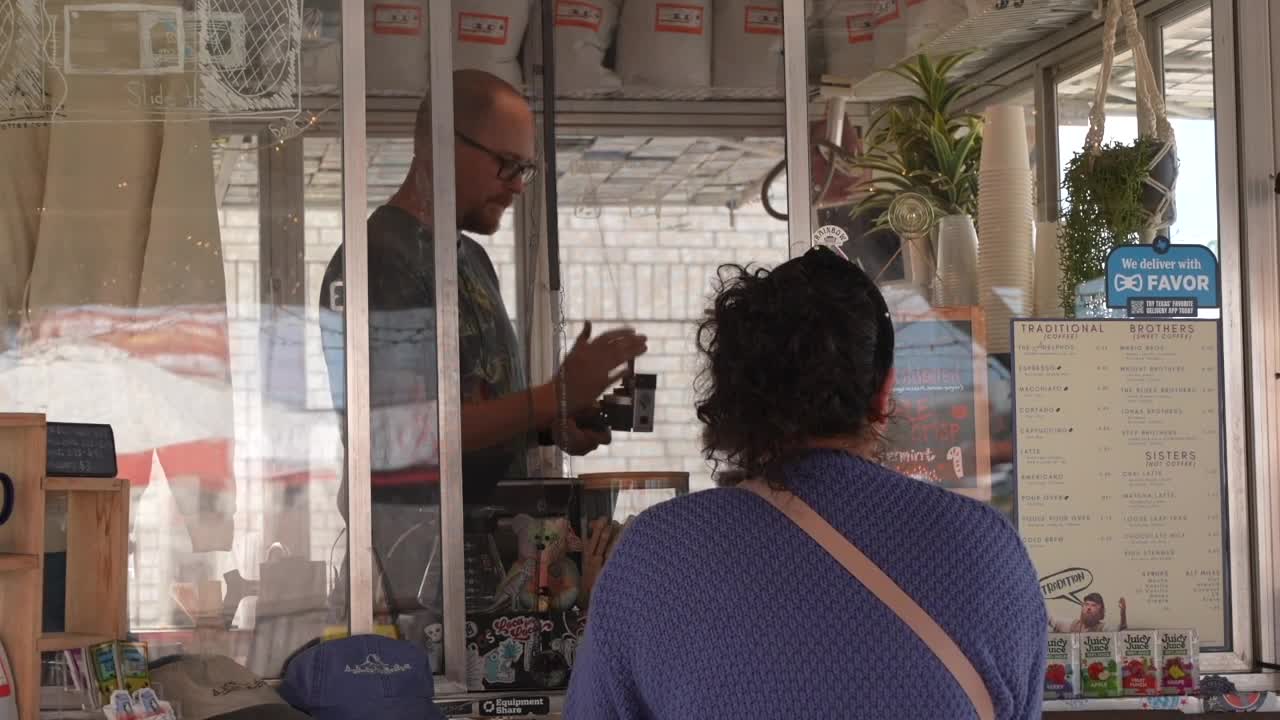
"You're just giving small business owners the middle finger. You're giving them bigger hurdles to jump over in a race that's already stacked against them," said Keenan Laymon, owner of Adelphos Coffee Roosters.
Laymon said the increases come at a particularly challenging time for food businesses.
"The economy is definitely different now than it was 10 years ago. The margins that you even make on your coffee aren't nearly as significant," Laymon said.
The fee structure for temporary food establishments will also change significantly. Instead of paying $35 for one day with an additional $15 for each extra day, businesses will pay $52 for a single event lasting up to 14 days or $200 for multiple events over two years.
Public schools will face entirely new expenses under the state law. School-based food establishments will now pay $258 for permits and $150 per inspection, with inspections required twice per year. These are costs schools have never had to pay before.
Private and for-profit schools will face the same new permit and inspection fees.
The fee increases are particularly frustrating for business owners already struggling with economic pressures.
"It's not the biggest problem, but it is just annoying. And the question is, do you even need to be doing that to people? You're kind of just making it more difficult for people to start their own business. Its already difficult enough with all the red tape you're having to cut through and now you're just adding fees," Laymon said.
City council members have also expressed concern about the impact on local businesses.
"The states are out of touch with the restaurants here in Corpus Christi. We have 10 restaurants out of business, chain restaurants, and now we have small businesses struggling. It's ridiculous," said Eric Cantu, District 3 councilman.
"The state with a $33 billion surplus; a $33 billion surplus and then nickel and diming again, us, the small business," said Sylvia Campos, District 2 councilwoman.
The Public Health District began its required 60-day stakeholder notice period on December 17, 2025, notifying local food establishments, schools and the Texas Department of State Health Services about the proposed changes.
City council will hold two readings to approve the revised ordinances and fees: the first reading on February 17 and the second reading on February 24.
The new fee structure will be implemented on March 2.
Within 30 days of implementation, the city must submit its updated fee schedule and ordinance summary to the Texas Department of State Health Services for inclusion in a statewide registry.
All proposed city food service-related fees are subject to change depending on state fee schedule updates, according to the Public Health District.
This story was reported on-air by a journalist and has been converted to this platform with the assistance of AI. Our editorial team verifies all reporting on all platforms for fairness and accuracy.
