

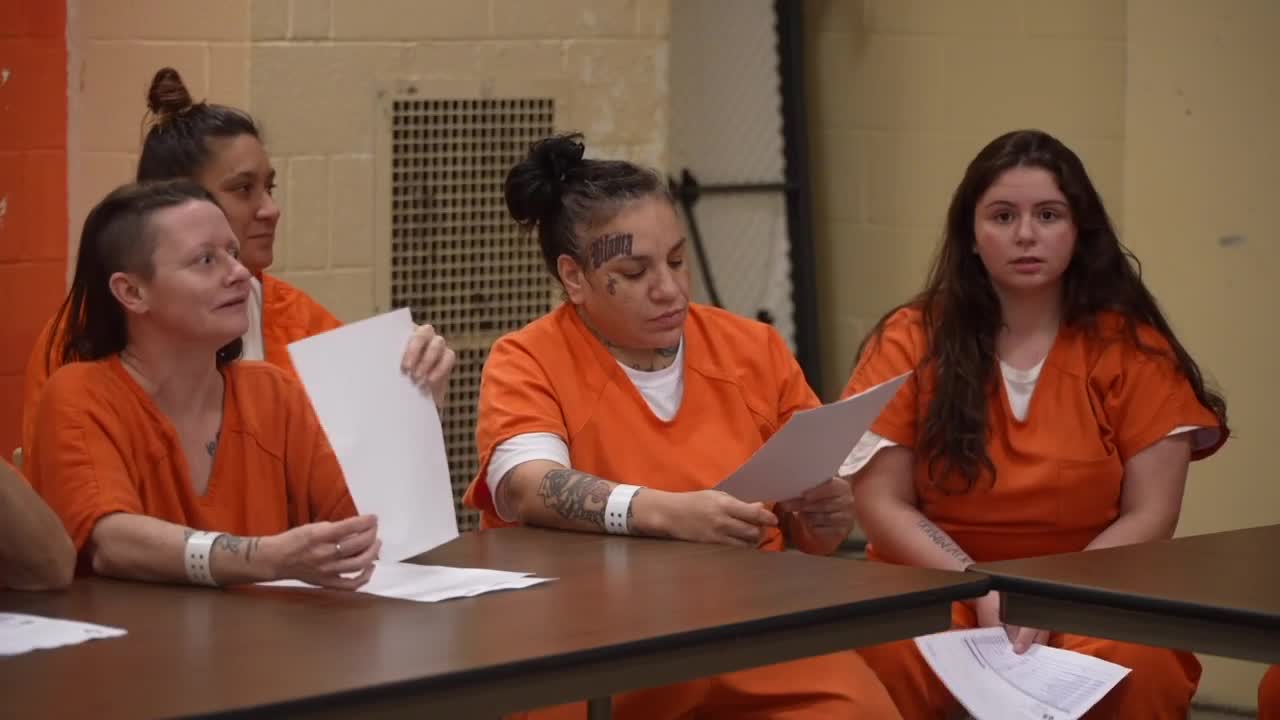


CORPUS CHRISTI, Texas — On a late Thursday night inside the Nueces County Jail, while most of the building winds down, a small group of inmates is wide awake, notebooks open, pens in hand, learning lessons many said they never received on the outside.
The topic is not law, discipline or punishment.
It’s financial literacy.
The class is led by Alimursal Ibrahimov, a financial analyst and doctoral candidate at Texas A&M University–Corpus Christi, who volunteers his time to teach inmates how to budget, manage bank accounts, understand credit and prepare financially for life after release.
“Financial literacy is a human right, not a privilege,” Ibrahimov told Neighborhood News Reporter, Alexis Scott. “I realized that if people don’t understand money, it impacts every part of their life, where they live, what they eat, how they raise their children and whether they return to the system.”
Ibrahimov, who has a background in finance and economic research, designed the program after years of studying financial behavior and inequality. He said many inmates he meets have never opened a checking account, reviewed a bank statement or learned how interest and credit scores work.

“In a nutshell, I’m not just teaching finance, I’m teaching how to teach finance. I want them to walk out of here knowing how to continue learning and making informed decisions," Ibrahimov added.
During a recent class, Ibrahimov challenged inmates with practical questions: the benefits of local community banks versus national banks, how to identify hidden fees on statements and how to create a realistic budget using limited income.
“If you’re not reviewing your bank statements, you have no idea how many hidden fees you’re being charged,” he told the group of inmates.
For inmate Stephanie Fuentes, the lessons have already changed her daily routine.
“I’ve been practicing my budget here with my commissary,” Fuentes said. “I’m learning how to separate my wants from my needs. I never really did that before.”
Another inmate, Rebecca Alcala, said the class helped her understand the long-term importance of credit.
“Learn this as young as you can,” Alcala said. “Your credit is everything.”

Alcala has already begun passing what she’s learning to her son.
“When he was old enough, I gave him a checking account and debit card and showed him how to use it,” she said. “He could see all his money right there. That’s something I never had growing up.”
The program has strong backing from the court.
Judge Melissa Madrigal, a magistrate judge in Nueces County, said financial education is a critical tool for preventing repeat offenses.
“We don’t want anyone coming back into this system,” Madrigal said. “So much of what brings people here is tied to financial stress, instability and poor decision-making. This program helps them get their life in order before they’re released.”
Madrigal said the court views the class not just as education, but as prevention.
“When someone leaves jail with no plan, no skills and no understanding of how to manage money, they’re already at a disadvantage,” she said. “This gives them a real chance to succeed.”
Ibrahimov believes the impact of the program reaches far beyond the jail walls.
“When you educate one woman, you educate one family. When you educate one family, you educate one neighborhood. And when you educate one neighborhood, you educate the whole society,” he said.
The financial literacy class is held every other Thursday inside the Nueces County Jail. Organizers hope the program will continue expanding, with more sessions and additional resources to support inmates after release.
For Fuentes and Alcala, the lessons represent more than numbers on paper.
“It’s about our future,” Fuentes said.
This class may be one of the most effective tools yet to help ensure that when people leave the jail, they don’t come back.
For the latest local news updates, click here, or download the KRIS 6 News App.
