

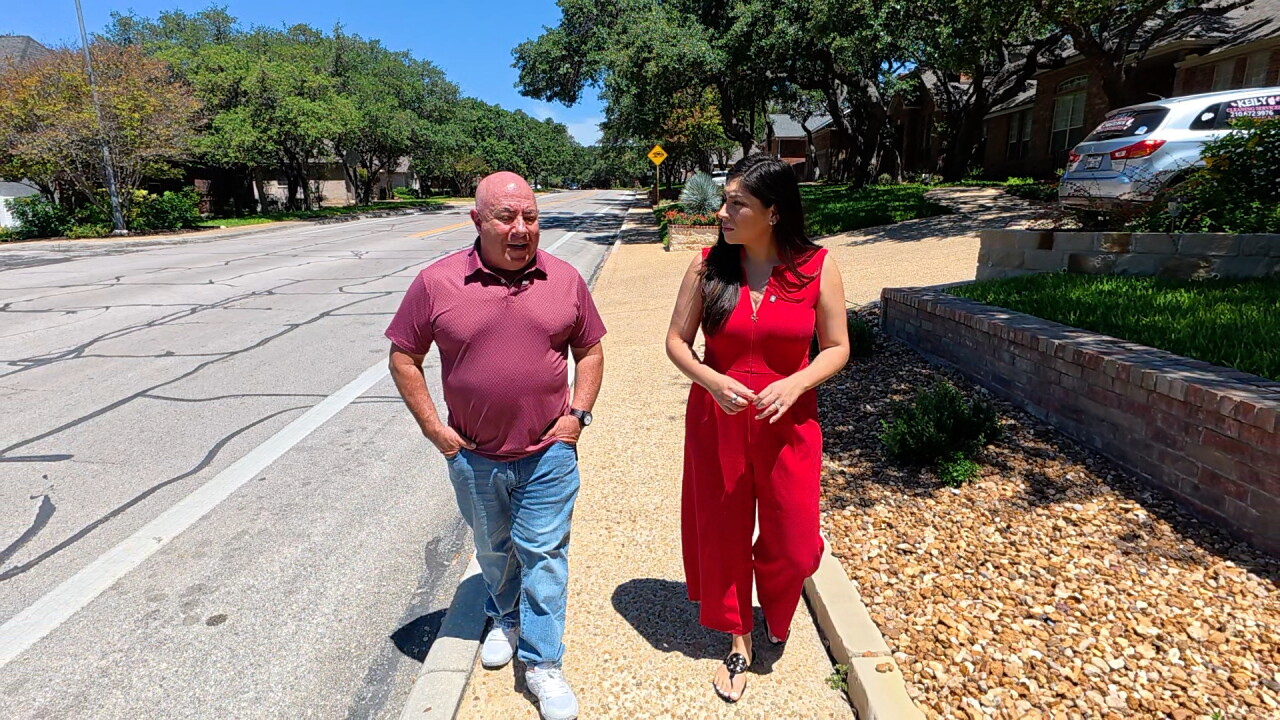



CORPUS CHRISTI, Texas — Steve Viola spent 27 years in Naval Special Warfare — 15 years before 9/11 and 15 years after. He joined the military originally to have his schooling paid for, until a friend changed his trajectory.
"I'm going to go to BUDS. What is BUDS? It's where they train SEALs. What is SEALs? So I started working out with him and went to training in 89 and became a SEAL," Viola said.
Out of 108 candidates training to become Navy SEALs, only 36 made it. Viola was one of them, spending the next two decades in one of the country's most elite military units.
But the transition home from war proved to be its own battle. Viola described the stark contrast between how veterans of earlier generations returned home and how modern combat veterans do.
"Transit time from those cities and those countries — they were overseas on boats; they went home the next day. So they had time to sit and talk with each other and remember Joey that got blown up or Billy that got shot and decompress; they had a decompression stop as we call it. Now a days — like my first Afghanistan tour, I was in the thick of things, in Indian country, so to speak, and 48 hours later I'm home holding my 3-year-old son, and I'm like…" Viola said.
Post-9/11, the suicide rate among veterans increased dramatically compared to veterans of the Greatest Generation. In a blog post written by combat veteran Nathan Fletcher — titled "The War Didn't Kill Us, Coming Home Did" — Fletcher writes that when he reached out for help, the VA had a 14-month waitlist to see a specialized counselor. In the meantime, veterans were sent home with a cocktail of medications.
Viola described the experience.
"It's horrible, you're numb, exactly like you said. I would liken it to wrapping your hand in cellophane; you can feel pressure, but you can't feel the sensation," Viola said.
While those medications work for some veterans, they do not work for others — and some have turned elsewhere for solutions.
Amber Capone watched the effects of war take hold of her husband Marcus, a 13-year Navy SEAL veteran who, after returning to civilian life, was on the verge of suicide. As a last-ditch effort to save her husband and the father of her children, she convinced Marcus to seek treatment in Mexico involving ibogaine — a psychedelic drug used for centuries in Africa for spiritual healing.
The decision came after a devastating loss. Logan Davidson, VETS director of policy and advocacy, said the loss of a fellow service member made the need for action undeniable.
"It was shortly after a close friend on the teams died by suicide, and it was really clear to them they needed to do something," Davidson said.
That something was ibogaine. The psychedelic comes from the iboga plant found in Central Africa and has shown the ability to treat addiction, help veterans with PTSD, and address traumatic brain injuries. Early research suggests ibogaine may increase neuroplasticity — the brain's ability to form new neural connections, repair damaged communication pathways, learn healthier behaviors, and adapt after injury or prolonged substance use.
For Marcus, the treatment was life-saving. The outcome compelled the Capones to create VETS — Veterans Exploring Treatment Solutions — a non-profit with a mission to fight the high veteran suicide rate with alternative treatment options, including ibogaine.
The drug is currently not approved by the FDA and is illegal in the United States, meaning those who seek treatment must travel outside the country. VETS provides grants to veterans who are desperate for a way forward.
"The scale of need in the United States is in the millions, and that is why the legislation and the research are so important. To bring this treatment home, because you are never going to be able to heal America one treatment at a time in Tijuana, Mexico — it has to become available in CC, Dallas, NY, across the country, and especially in Texas," Davidson said.
So far, VETS has helped more than 1,400 veterans, with 93% of them reporting positive results from the treatment. Lawmakers are now paying attention to those results and working to bring the treatment to more veterans who are suffering.
Viola now coaches others and says the treatment changed how he experiences the world around him.
"Listen to that, you hear that? That is a red-shouldered hawk — before, I would never be able to hear that," Viola said.
To apply for a healing grant from VETS, click here.
This story was reported on-air by a journalist and has been converted to this platform with the assistance of AI. Our editorial team verifies all reporting on all platforms for fairness and accuracy.
More Veterans In Focus stories are available here, along with resources for local veterans.
Contact Veterans In Focus reporter Pat Simon at pat.simon@kristv.com
