

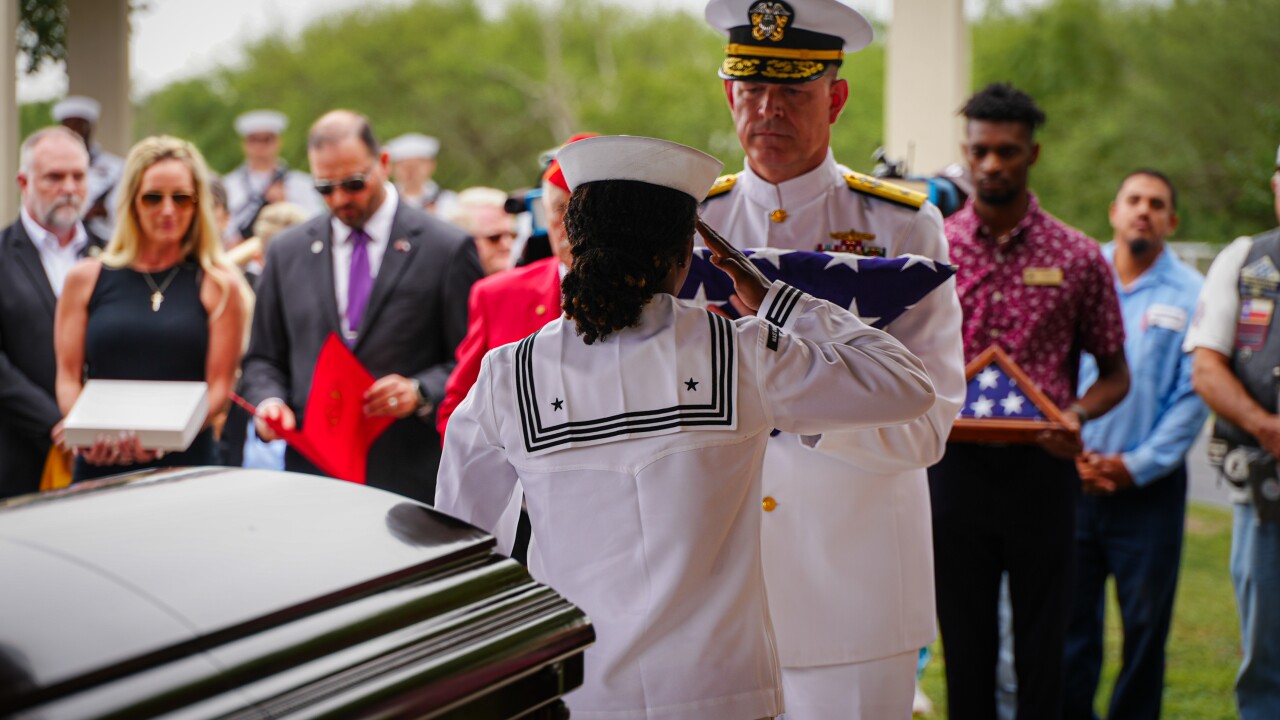


CORPUS CHRISTI, Texas — When the United States marks 250 years of independence, it will celebrate innovation that has shaped the nation. Today, that innovation is rewriting history, helping identify American service members lost in World War II and returning them to the families who spent decades wondering whether they would ever come home.
For the family of Navy Seaman 1st Class Clyde Clifton McMeans, that wait lasted more than 80 years.
Click here to read Clyde's story.
"We are here to celebrate the homecoming of my uncle Clyde," his niece, Linda Lynch, said as family, veterans and community members gathered at the Coastal Bend State Veterans Cemetery for his funeral service in May.

McMeans was serving aboard the USS *California* on Dec. 7, 1941, when Japanese aircraft attacked Pearl Harbor, killing more than 2,400 Americans and drawing the United States into World War II. For decades, his family knew how his story began. They simply didn't know whether he would ever come home.
"He was killed in Pearl Harbor," Lynch said. "He's been real to us our whole lives."
Although she never met her uncle, Lynch said stories about McMeans were woven into her childhood. To her parents and grandparents, he was never forgotten.
"Family talked about him all the time," she said. "He was so real to our parents."
Years ago, the Defense POW/MIA Accounting Agency asked McMeans' surviving relatives to submit DNA samples, hoping new technology could help identify his remains.
"We remember when we got the kit for the DNA," Lynch said. "My dad and my uncle and my aunt were so excited to give their DNA."
The family waited. Then they waited some more.
Before her father died, Lynch said one conversation stayed with her.
"He said, 'I wonder if they'll find Clyde,'" she recalled. "I told him, 'I know they're going to find Clyde. It's just going to take a little while.'"
That "little while" turned into decades.
More than 80 years after McMeans' death, the Defense POW/MIA Accounting Agency identified his remains using DNA analysis, forensic anthropology, dental comparisons and military records. The identification allowed the Coastal Bend sailor to return to Texas this year, where he was laid to rest with full military honors.
"It's amazing," Lynch said. "They didn't give up."
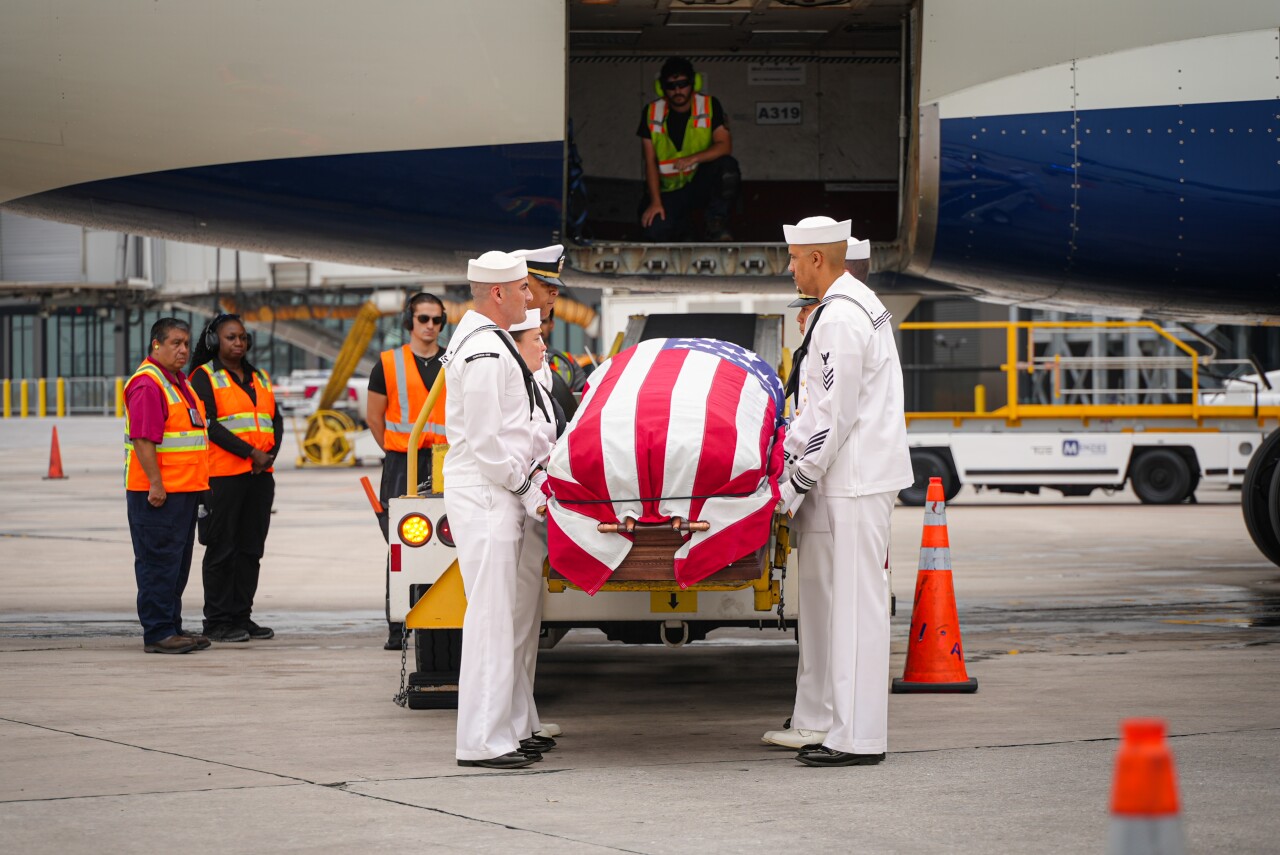
McMeans is among a growing number of Pearl Harbor service members identified through advances in forensic science decades after the attack. He is the second sailor from Texas' Coastal Bend to be returned home within a six month timeframe, following another Pearl Harbor casualty whose remains were identified and buried last fall.
Lynch said that family helped prepare them for a journey unlike any other.
"They kind of helped us and showed us the ropes," she said. "We were very, very appreciative."
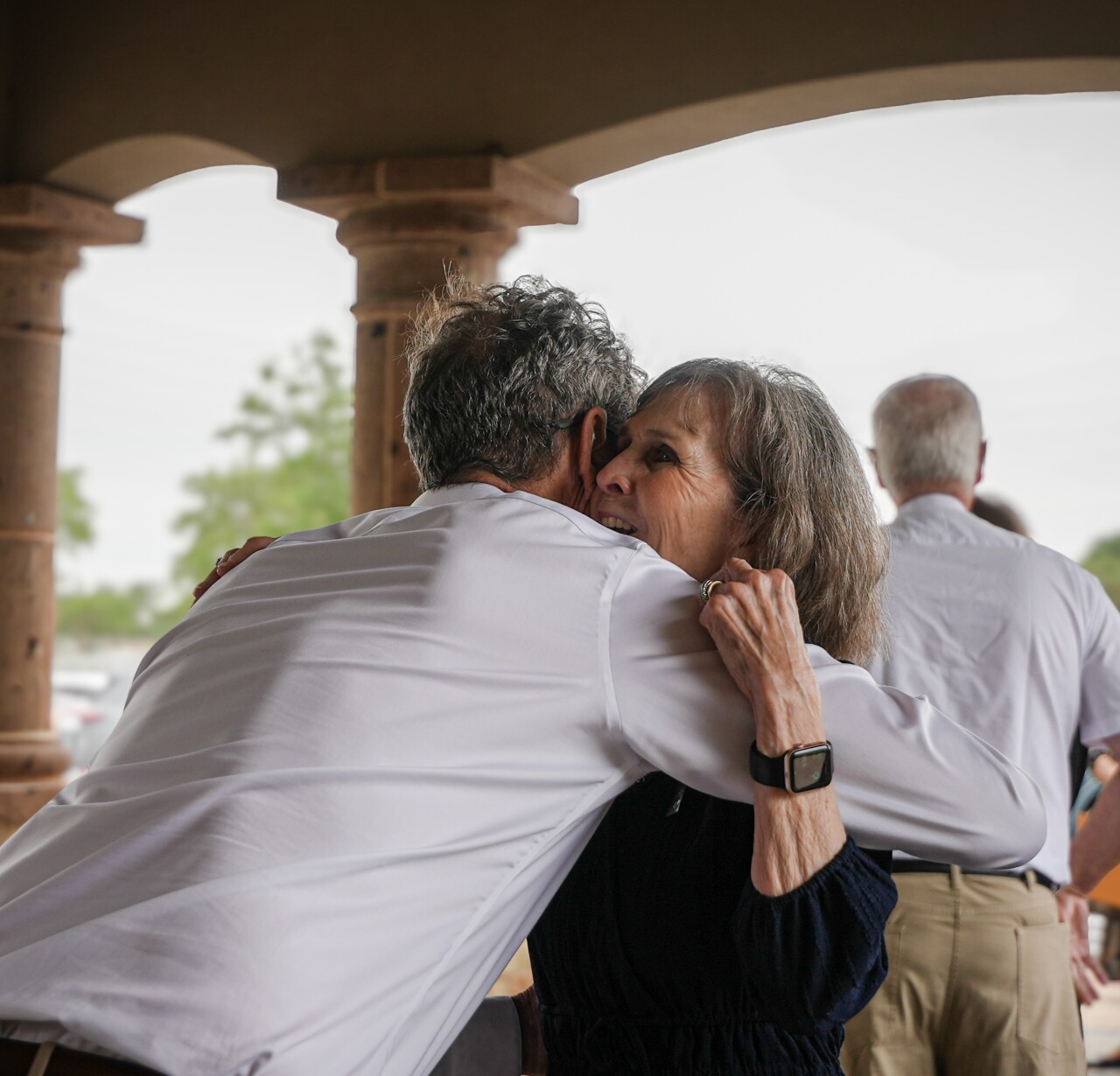
What surprised her most, however, was the outpouring of support. The McMeans family expected relatives to attend. Instead, veterans, friends and strangers arrived to honor a sailor most had never known.
"We're a little overwhelmed that people were so interested in our story," Lynch said. "People still have that love for their veterans and that love for their country."
Among those paying their respects was Navy veteran Ernie Whitson of Three Rivers. When Whitson learned McMeans had been identified, he discovered the two men shared an unexpected connection. McMeans had attended school in Agua Dulce with Whitson's father decades before World War II.
"I felt the need that I really needed to represent my dad," Whitson said.
His father enlisted in the Navy a year after McMeans was killed at Pearl Harbor. Unlike McMeans, he survived the war, returned home and eventually raised a family. Whitson later followed that same path of service, joining the Navy as a Seabee during the Vietnam War. Working as a construction electrician alongside Marine units, he said military service became part of a family legacy that stretches back generations.
"I'm either fourth or fifth generation Navy," he said.
For Whitson, the ceremony honored more than one sailor. It reflected a promise that service members are never forgotten, no matter how much time has passed.
"The Navy's efforts? I love it," he said. "I'm proud of my military history. I'm proud of the Navy, and I'm proud to be a patriot."
Officials say every DNA sample submitted by a family member helps investigators identify another missing American service member. Thousands of cases remain open, and advances in forensic science continue to provide answers once thought impossible. Lynch hopes families asked to participate will answer that call.
"We live in an awesome country," she said. "Look how much we respect someone that has been gone and missing for over 80 years. If the Navy asks you for DNA, give the DNA. They're hard at work."
As America prepares to mark 250 years of independence, McMeans' return serves as a reminder that history is not only preserved in museums and monuments. Sometimes it is rewritten in a laboratory, fulfilled through a family's patience and faith, and completed with a flag-draped casket finally making its way home.
More Veterans In Focus stories are available here, along with resources for local veterans.
Contact Veterans In Focus reporter Michelle Hofmann at michelle.lorenzo@kristv.com
