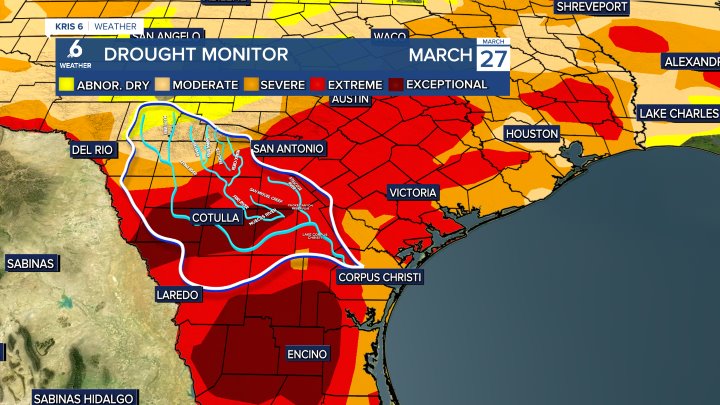
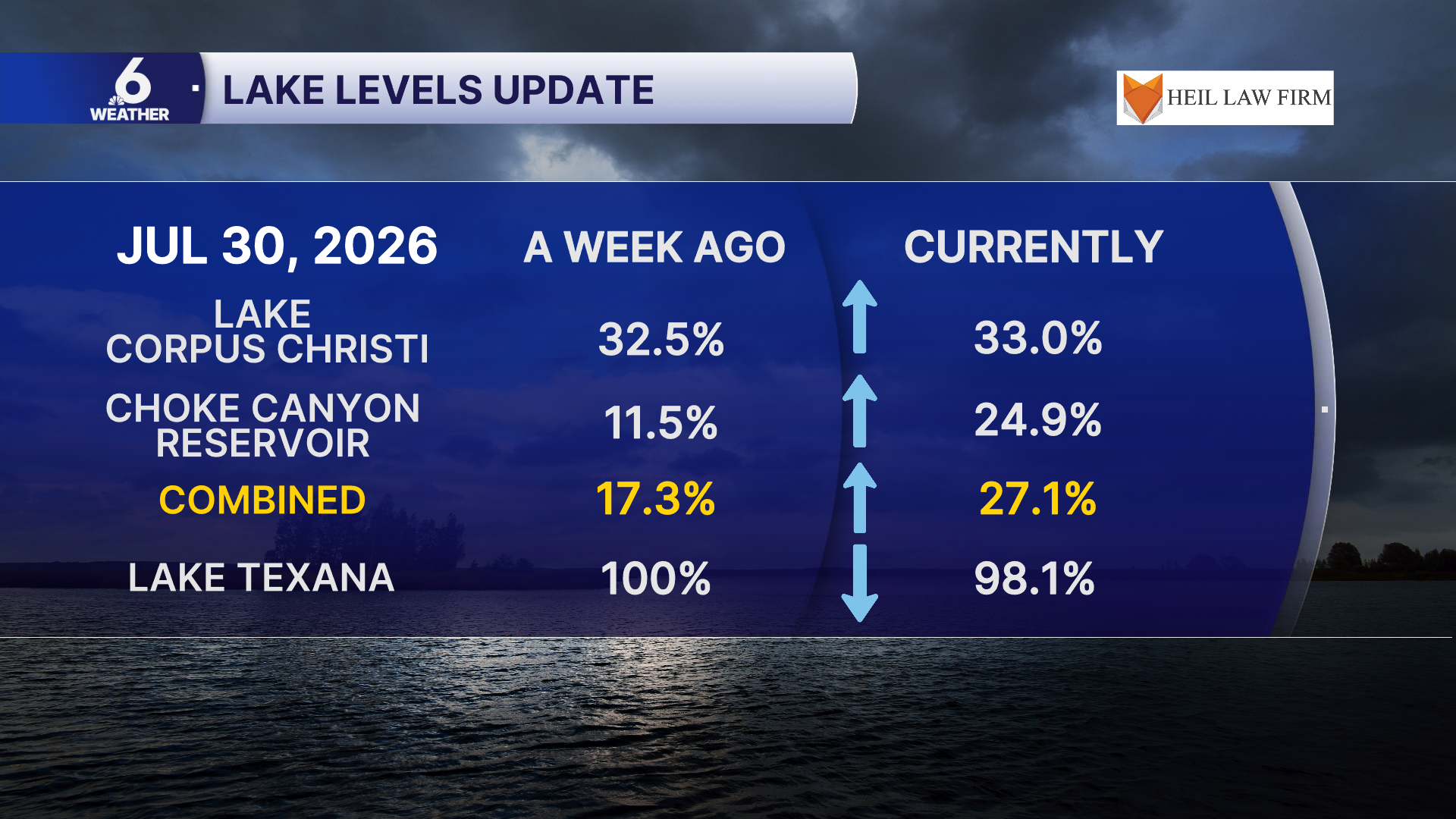
CORPUS CHRISTI, Texas — As Lake Corpus Christi and Choke Canyon in the west drop to historically low levels, some residents have asked what happened to the region’s water supply in the east that reaches the Coastal Bend through the Mary Rhodes Pipeline.
The Mary Rhodes Pipeline, often called the MRP, functions as a water highway that brings water from two eastern sources: Lake Texana and the Colorado River. The pipeline was built in the 1990s during one of the worst droughts on record, at a time when the combined capacity of Lake Corpus Christi and Choke Canyon had fallen to about 25 percent.
The project was promoted by and named after former Corpus Christi Mayor Mary Rhodes, who pushed for its construction as a solution to the region’s shrinking water supply. She died of cancer, shortly before the pipeline was completed in 1998.
From the beginning, the pipeline was controversial. Political leaders rushed to get it built despite opposition that raised concerns about its high cost, potential environmental impacts, and long-term sustainability. Critics argued the system could not simply be drained, since other regions also depend on water from Lake Texana and the Colorado River.
Maintenance was another major concern. Since opening, the Mary Rhodes Pipeline has experienced at least 33 leaks or failures. Some of those incidents were serious enough that engineers recommended reducing water pressure in parts of the system. After a major leak in 2022, the city said it needed to be more cautious about pulling water through the pipeline.
Today, Corpus Christi Water reports the pipeline delivers about 70 to 72 million gallons of water per day. However, CCW customers require roughly 100 million gallons per day to meet daily needs.
The Mary Rhodes Pipeline remains part of the region’s water system, but it was designed only to supplement the primary water supply. With population growth and increased industrial demand over the past 30 years, the Coastal Bend has entered a new period of low water supply