

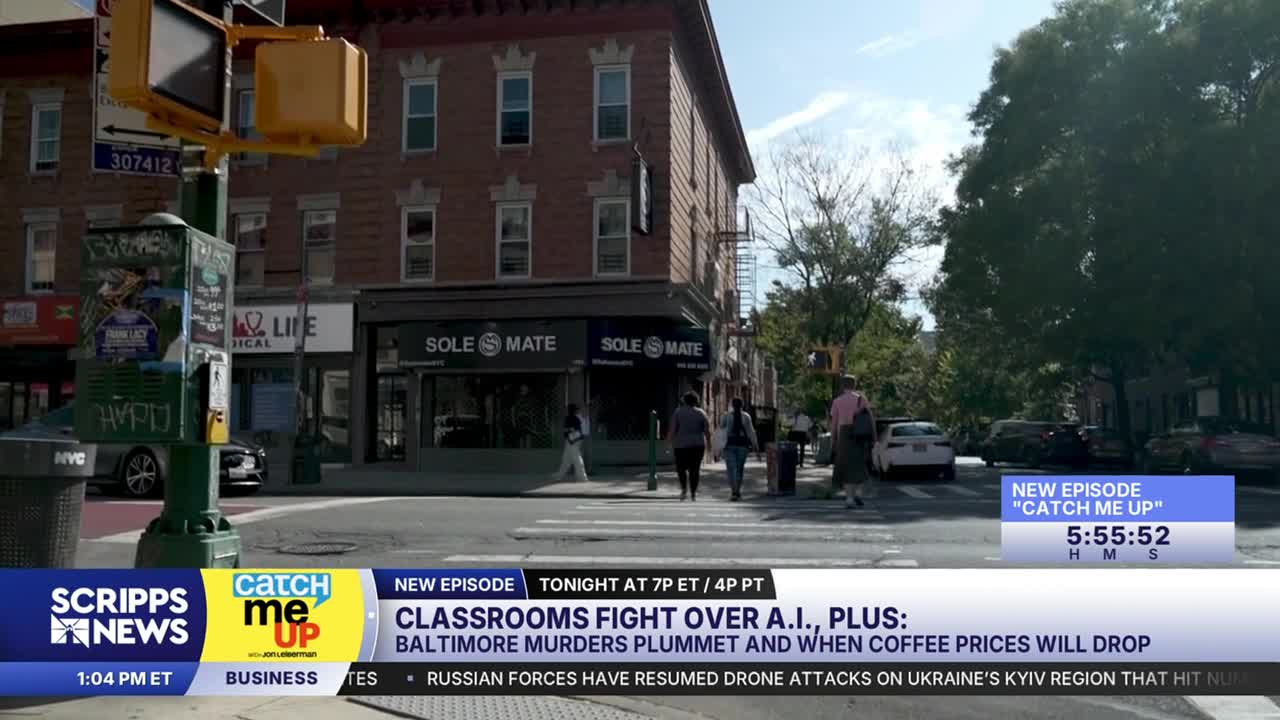


At least 5,000 Haitian immigrants in New York City — and roughly 300,000 across the country — have lost their ability to work legally in the U.S. after the Trump administration ended Temporary Protected Status for Haiti. Businesses that depended on those workers are now struggling to stay open.
Wesly Simon, who owns a popular Haitian restaurant in Brooklyn's Little Caribbean neighborhood, told Scripps News he was forced to fire longtime workers after the TPS designation ended.
"It's like I'm firing the whole family," Simon said. “I'm firing the kids, I'm firing their wife. I'm firing them.”
The impact of the decision extends beyond his workforce. Haitian immigrants across the country now weigh every trip outside against the risk of deportation, keeping customers home and away from businesses like his.
"They're just in limbo, working around, whatever, living on their savings,” Simon said about his former employees. “Now, some of them never go out.”
Simon said the situation is more damaging for business than the COVID-19 pandemic, which is when he opened his restaurant.
RELATED STORY | TPS for Haitians officially ends; DHS offers $2,600 for individuals to leave US
"This is actually worse than COVID. COVID we have the stimulus. There's no stimulus. The business is not getting employee retention,” Simon said.
Porez Luxama, president of Life of Hope, an organization that supports Haitian immigrants in Brooklyn told Scripps News the effects of TPS termination are being felt across the broader community.
"I feel like it's COVID for us again," Luxama said. “It feels like it's a ghost-like town. The fear and the anxiety.”
“They go home. They're scared,” Luxama said about Haiti immigrations who lost their legal status. “They're afraid about whatever is going to happen to them. They don’t want to go on the street.”
Simon said he believes the consequences will ”have a ripple effect for years to come.”
The U.S. plans to increase deportation flights to Haiti at a rate of 250 Haitians per week. It is unclear how many TPS holders are now aboard those flights, which have been ongoing for weeks.
The Department of Homeland Security posted a video depicting a deportation flight on social media, saying, “Haiti TPS has been TERMINATED. Those with terminated TPS are in our nation Illegally. They have two options: LEAVE IMMEDIATELY or be DEPORTED.”
The video shows Black immigrants shackled and boarding a flight. It is unclear whether the video is authentic or generated with artificial intelligence. The agency has not responded to questions about the video and whether the flight included former TPS holders.
RELATED STORY | DHS is placing ankle monitors on Haitians who were in the US under Temporary Protected Status
Haitian TPS holders were first welcomed into the U.S. following a devastating 2010 earthquake in Haiti. Both Luxama and Simon said they were once seen as contributors to their local communities and the U.S. economy but have now been criminalized overnight.
Simon said Haitian immigrants would return to Haiti if it were safe, but that the country's ongoing instability — the reason TPS has been extended over the past 15 years — makes that impossible.
"Give the ones that are law-abiding a chance to live their lives,” Simon said. “That's all Haitians are asking for, a chance to live their dream."
