

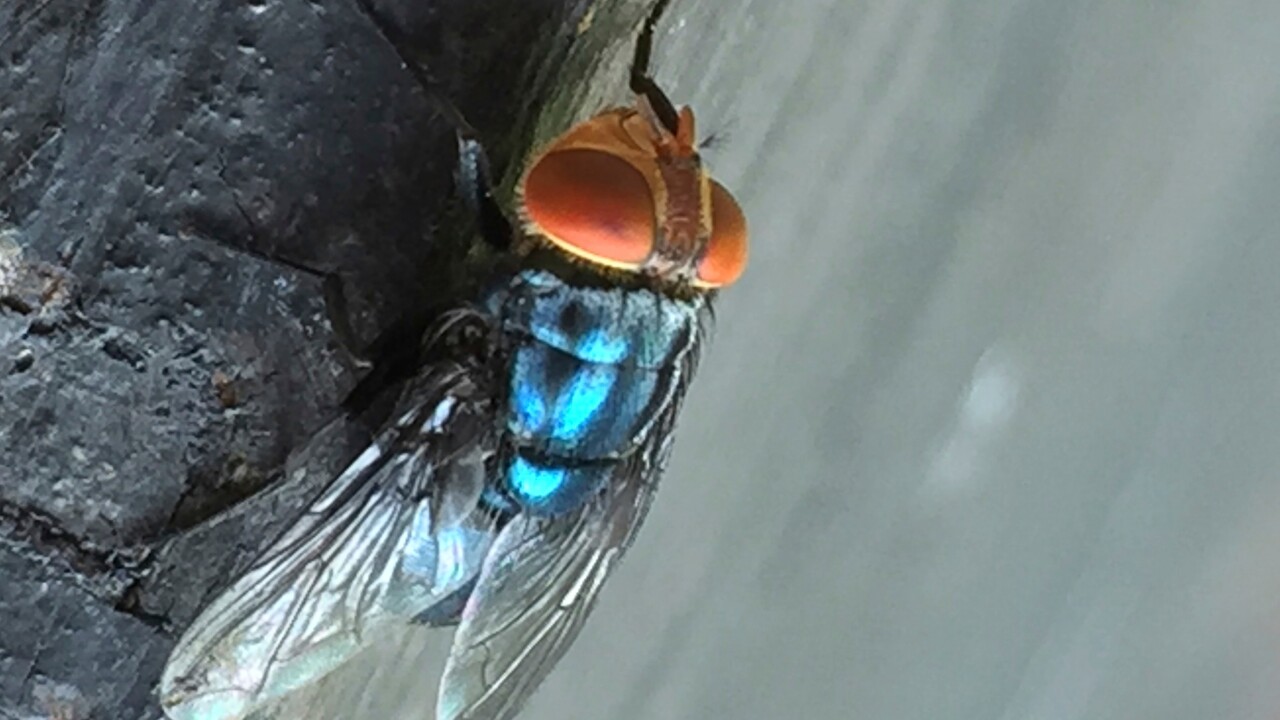

The detection would be the first in the United States in decades and only the third time the pest has ever appeared in the U.S. The USDA said it was testing a sample from a potential infestation of the fly's flesh-eating larvae at its National Veterinary Lab in Iowa. The agency did not specify where the potential case was detected.
The insect is not a threat to the nation's food supply. However, its eggs produce flesh-eating larvae that can harm cattle herds.
U.S. Secretary of Agriculture Brooke Rollins said Wednesday that plans to contain and eradicate the insects are already in operation, including the release of millions of sterile male New World Screwworm flies.
"Today, we are taking immediate action. This afternoon and evening has already begun to deploy to contain and eradicate this -- this case of the New World Screwworm in South Texas. We have number one, formed a unified incident command team with the Texas Animal Health Commission and deployed our APHIS (Animal and Plant Health Inspection Service) response team and personnel to the area. They are already on the ground." Rollins said.
Rollins said a 20-kilometer (approximately 12 miles) infested zone has been established around the detection, with quarantines, movement controls and surveillance being implemented in the area.
"We've established a 20-kilometer (approximately 12 miles) infested zone around the detection and implementing quarantines, movement controls and surveillance in this area. We have expedited targeted release of the sterile New World Screwworm flies, which is how we solve for the issue, of course, by immediately deploying a four million ground release chambers in the area, in addition to the four million sterile flies per week already being released aerially in the area. We are increasing trapping and surveillance for New World Screwworm flies along the border just outside of the dispersal area. We are implementing New World Screwworm surveillance for the New World Screwworm flies along the border and just outside of the dispersal area. We are implementing additional surveillance and management strategies in wildlife and of course conducting targeted outreach in the -- in the local area as well as across the state. To date, as I mentioned, there have been no further detections of New World Screwworm in the United States. Top line, this pest does not cause any sort of a food safety issue. It is not a disease, but simply an insect that feeds on living tissues. Once removed and cleaned, animals treated early enough, including the calf that -- that we're talking about, the eight-week-old bovine, that calf and those animals, if they're treated early enough will recover and are safe to enter the food supply system." Rollins said.
Rollins traced the pest's northward spread through Central America, beginning in 2021, and said it reached the southern states of Mexico in November 2024.
"In 2023, Panama reported a significant increase in the number of New World Screwworm cases. And since 2023, beginning in 2021 that New World Screwworm has spread northward through Central America. In 2024, November 2024, it reached the southern states of Mexico, and -- and we all, as you know, have been talking and tracking and working around the clock to contain it, but we have not. Mexico, with the illicit movement of cattle and not having enough sterile flies, certainly has led us to today, June 3rd, 2026, the U.S. confirming its first New World Screwworm case in the state of Texas since 1966." Rollins said.
In April, the USDA announced a $750 million investment to build a new sterile fly production facility at Moore Air Base in South Texas. When fully operational, the facility will have the capacity to produce 300 million sterile flies per week. It is expected to be operational in the fall of 2027.
"And in April of this year, we announced our additional investment of $750 million to build the largest facility on record at the Moore Air Base in South Texas, further increasing our ability to protect U.S. Agriculture from this threat. When this facility is fully operational, it will have the capacity to produce 300 million sterile flies per week. This facility is expected to be operational in the fall of 2027, next year. Also, our USDA (United States Department of Agriculture) National Veterinary Stockpile stands ready to assist and will provide resources, including treatments, equipment, and logistics support to this response as needed." Rollins said.
This story was reported on-air by a journalist and has been converted to this platform with the assistance of AI. Our editorial team verifies all reporting on all platforms for fairness and accuracy.
For the latest local news updates, click here, or download the KRIS 6 News App.
Catch all the KRIS 6 News stories and more on our YouTube page. Subscribe today!
